
The classic baking soda and vinegar volcano is a missed opportunity; the real lesson isn’t the fizz, but the scientific method it unlocks.
- Reframing simple reactions as multi-stage experiments teaches kids to observe, hypothesize, and test—core STEM skills.
- This « kitchen lab » mindset is more valuable than any single kit and applies to everything from coding to nutrition.
Recommendation: Instead of demonstrating a ‘magic trick,’ guide your child to change one variable at a time (temperature, quantity, container) and document the results. You’re not making a mess; you’re making a scientist.
Admit it. You’ve seen it, you’ve done it, or you’re about to do it: the baking soda and vinegar volcano. It’s the quintessential « at-home science » project, a rite of passage for parents wanting to sprinkle a little educational magic into a rainy afternoon. We mix the two ingredients, watch the glorious, sticky fizz, and declare, « See? Science is fun! » We check the « STEM activity » box for the day and move on. But in our rush for the « wow » moment, we are teaching a lie. We are teaching science as a magic trick—a single, predictable outcome from a rigid recipe.
What if that fizz wasn’t the grand finale, but the opening bell? What if we stopped making volcanoes and started training tiny scientists instead? The true power of kitchen chemistry isn’t in the eruption itself, but in using it as a launchpad to teach the one thing that truly matters for a future in STEM: the scientific method. It’s about empowering a child to ask « What happens if…? » instead of just watching what happens. This shift in perspective transforms your kitchen from a place you make dinner into the most accessible, affordable, and powerful laboratory your child will ever have.
This guide isn’t a list of more experiments. It’s a new operating system for your brain. We’ll dismantle the « magic trick » and show you how to use simple, everyday concepts—from the sounds of letters to the food on their plate—to instill a powerful framework of observation, hypothesis, and experimentation. We will explore how this mindset scales from a simple chemical reaction to choosing robotics kits, learning to code, and even understanding the profound impact of early-life nutrition on the very structure of the brain.
To navigate this explosive journey from kitchen counter to cognitive development, we’ve structured our exploration into key areas. This roadmap will guide you through the fundamental building blocks of learning, the tools of modern experimentation, and the foundational principles that set the stage for a lifetime of curiosity and problem-solving.
Summary: From Fizz to Focus: A Parent’s Guide to Building a STEM Mindset
- Decoding Phonics: Why You Should Never Teach ‘uh’ at the End of Letters?
- Oily Fish Twice a Week: Why DHA Is Critical for Neural Connections?
- Scratch Programming: How to Help Your Child Code Their First Game?
- Lego Spike vs Micro:bit: Which Robotics Kit is Worth the Investment?
- Stargazing in the City: How to Spot Planets Without a Telescope?
- Chess Strategy: Does It Really Improve Problem Solving Skills?
- Window Sill Gardening: Growing Food from Scraps?
- The First 1000 Days: How Nutrition Directly Impacts Brain Structure Before Age 2
Decoding Phonics: Why You Should Never Teach ‘uh’ at the End of Letters?
Our scientific exploration begins not with a beaker, but with a sound. Before a child can read code, they must decode language. Here, we encounter our first « baking soda and vinegar » moment. Many well-meaning parents teach letters by adding a vowel sound, an « uh, » at the end: « buh, » « cuh, » « duh. » This seems harmless, but it’s the educational equivalent of focusing only on the fizz. It adds a false ingredient to the reaction. When a child tries to blend « cuh-a-tuh, » they don’t get « cat. » They get a jumble of sounds, a failed experiment that leads to frustration.
The correct method is teaching the pure sound, the crisp /b/, /k/, /d/. This is about understanding the fundamental properties of your ingredients. It’s the difference between knowing your white powder is sodium bicarbonate (a specific base) versus just calling it « the fizzy stuff. » By teaching the pure sound, you give your child the true building blocks of language. They can now conduct their own experiments, blending sounds to form words with predictable, successful outcomes. This isn’t just about reading; it’s their first lesson in a core STEM principle: success depends on understanding the pure, unaltered properties of your foundational components.
Just as a chemist needs pure reagents, a reader needs pure phonemes. Getting this first step right transforms reading from a confusing magic show into a logical, repeatable process—a true science.
Oily Fish Twice a Week: Why DHA Is Critical for Neural Connections?
If phonics provides the software for learning, then nutrition provides the hardware. We can’t talk about building a powerful thinking machine without considering the physical materials required for its construction. Enter DHA (docosahexaenoic acid), an omega-3 fatty acid that is a primary structural component of the human brain and retina. You can have the best coding tutorials and robotics kits in the world, but if the underlying neural architecture isn’t properly built and maintained, it’s like running complex software on a faulty processor.
Think of DHA as the ultimate building block. It’s not just « brain food »; it’s the literal bricks and mortar of neural cell membranes. Consuming oily fish like salmon, mackerel, or sardines is a direct deposit of these critical materials. DHA is essential for the fluidity of cell membranes, which allows for faster and more efficient transmission of signals between neurons. It’s the difference between a rusty, sticky connection and a well-oiled, high-speed data transfer. For a developing child, this isn’t a minor tweak; it’s a fundamental upgrade to their cognitive infrastructure, impacting everything from memory and learning to problem-solving. This isn’t about a single « brain-boosting » meal; it’s about consistently supplying the lab with the high-quality raw materials it needs to operate at peak performance.
Neglecting the biological foundation of cognition is the ultimate scientific oversight. A well-nourished brain is the most important piece of lab equipment you will ever cultivate.
Scratch Programming: How to Help Your Child Code Their First Game?
With a brain primed for learning, it’s time to introduce the tools of modern experimentation. Forget the stereotype of a lone coder in a dark room. Think of programming as the ultimate « What happens if…? » playground. Scratch, a visual block-based language from MIT, is the perfect entry point. It takes the abstract concept of coding and makes it as tangible and fun as mixing baking soda and vinegar. Instead of a fizz, the result is a character moving, jumping, or speaking. It’s immediate, rewarding, and a powerful way to teach the scientific method in a digital format.
The connection to our kitchen lab is direct. Remember when you wondered, « What if I use more vinegar? » In Scratch, this translates to, « What if I change the ‘move 10 steps’ block to ‘move 50 steps’? » This is variable control, a cornerstone of all science and engineering. According to educational data, over 100 million children globally have used Scratch, demonstrating its massive appeal and effectiveness. By building a simple game, a child isn’t just learning to code; they are learning to form a hypothesis (I think this code will make the cat jump), test it (run the program), observe the result (it worked… or it crashed!), and debug (find the error and fix it). This is the scientific method loop in action.
Your Action Plan: Build a ‘Flying Cat’ Game in Scratch
- Create a free Scratch account at scratch.mit.edu and start a new project. This is your new digital lab notebook.
- Choose your ‘reagents’: Pick the ‘Blue Sky 2’ background and the ‘Flying Cat’ sprite to make learning engaging and fun.
- Start the reaction: Use the ‘when green flag clicked’ Event block. This is the equivalent of pouring the vinegar into the baking soda.
- Create a continuous loop: Add the ‘forever’ Control block. This ensures your experimental actions run continuously, not just once.
- Introduce variables: Click ‘Make a variable’ in the Variables section to create a ‘Score’ tracker. This is how you measure your experiment’s outcome.
- Test and iterate: Test frequently by clicking the green flag. Debugging isn’t a failure; it’s the most important part of the learning process.
There’s no mess to clean up, and « failure » is just data that helps you find the right solution. You’ve successfully moved the scientific method from the countertop to the computer screen.
Lego Spike vs Micro:bit: Which Robotics Kit is Worth the Investment?
Once your child has mastered the digital realm, it’s time to bring that logic into the physical world. This is where robotics kits come in, acting as the advanced equipment in your home laboratory. The two dominant players for beginners are Lego Spike and the Micro:bit, and choosing between them is a classic scientific dilemma: which tool is best for the job? It’s not about which is « better, » but which one aligns with your experimental goals. This decision itself is a lesson in evaluating systems and making informed choices based on data.
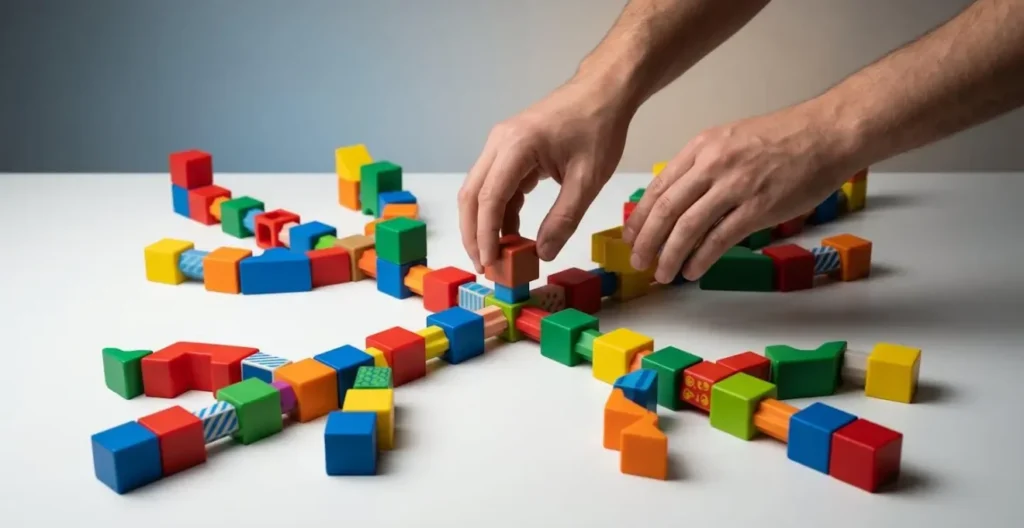
The Lego Spike ecosystem is a structured, polished experience. As the RoboCamp Educational Review Team states, « SPIKE Prime is the best learning kit for school produced by LEGO Education to date. » It guides the user through the process of invention, resulting in a well-designed, functional robot. It’s perfect for learning engineering principles within a framework. The Micro:bit, on the other hand, is a bare-bones microcontroller that prioritizes open-ended experimentation and logic. It encourages tinkering, connecting external sensors, and building from scratch. One is a guided-tour experiment, the other is a true field expedition.
To make an informed decision, a direct comparison is essential. This table breaks down the key differences based on an analysis from the Carnegie Mellon Robotics Academy, helping you choose the right « lab equipment » for your young scientist.
| Feature | Lego Spike Prime | Micro:bit |
|---|---|---|
| Target Age Range | 10+ years (upper elementary to middle school) | 8+ years |
| Build Time | 3-5 minutes for basic car | 1 minute for basic car |
| Programming Interface | Block-based (Scratch) and Python support | MakeCode, Python, MicroPython |
| Physical Building | Structured Lego builds with O-frame pieces | Minimal physical assembly required |
| Sensor Expansion | Limited – hub has 6 ports, less flexible expansion | Highly flexible – easy to add sensors |
| Educational Focus | Process of invention with polished products | Open-ended experimentation and logic |
| Competition Use | Ideal for First LEGO League Challenge | Suitable for various coding competitions |
| Approximate Price | $330 | $30-40 for basic kit |
Ultimately, Lego Spike teaches you how to build a better car, while the Micro:bit teaches you why a car works at all. Both are valid paths to understanding, and choosing one is your child’s next great experiment in cognitive flexibility.
Stargazing in the City: How to Spot Planets Without a Telescope?
The scientific method begins with a single, crucial step: observation. But what if your laboratory conditions are less than ideal? This is the challenge of urban stargazing. The prevailing myth is that city lights have ruined the sky, making astronomy impossible without a remote mountain cabin. This is like saying you can’t do chemistry because you don’t have a Bunsen burner. You just need to adapt your experiment to your environment. In fact, learning to observe under challenging conditions is a more valuable scientific skill than having perfect, easy data handed to you.
The key is to manage your expectations and change your target. Instead of searching for faint, distant nebulae, focus on the bright, close, and spectacular. According to urban astronomy guides, Venus, Mars, Saturn, and Jupiter are all bright enough to see even through light pollution. These aren’t just faint pinpricks; they are other worlds you and your child can identify with the naked eye. The trick is knowing that planets don’t twinkle like stars do; they shine with a steady, unwavering light. This simple observation is your first data point. From there, you can use a planetarium app on your phone to confirm your sighting. This isn’t « cheating »; it’s using a tool to verify a hypothesis, a cornerstone of scientific work. Your experiment becomes tracking these « wandering stars » across the sky over several nights, a profound demonstration that the universe is a dynamic, moving system, not a static backdrop.
You haven’t just spotted a planet; you’ve proven that with the right method, valuable data can be extracted from even the noisiest environments. This is a lesson that extends far beyond astronomy into every field of science and data analysis.
Chess Strategy: Does It Really Improve Problem Solving Skills?
From the vastness of space, we turn to the 64 squares of a chessboard. For centuries, chess has been lauded as the ultimate brain-training tool, a direct path to improved logic and problem-solving. But is this a tested scientific fact or a long-held cultural belief? Applying our scientific mindset means we must question this assumption and look for evidence. This is where things get interesting, because the data itself tells a complex story, perfectly illustrating how science is not a set of facts, but a process of inquiry with often conflicting results.
On one hand, the anecdotal evidence and some studies suggest chess players show improvements in attention, memory, and logical thinking. On the other hand, more rigorous, controlled studies paint a different picture. This is where we must act like true scientists and examine the methodology. A well-designed experiment can challenge a popular hypothesis, and that’s exactly what one study did.
Case Study: The Limits of Chess Instruction
A rigorous 2017 study published in Learning & Behavior tested this very question. Researchers took nearly 250 third and fourth graders and split them into three groups: one received 25 hours of chess instruction, an active control group played checkers, and a passive control group did neither. When tested on mathematical problem-solving tasks, the results were surprising. There was no statistically significant difference between the three groups. The study suggests that the skills learned in chess don’t automatically transfer to other domains when tested with proper scientific controls.
This doesn’t mean chess is useless. It means our initial hypothesis (« playing chess improves problem-solving ») was too simple. The real lesson is in metacognition—thinking about thinking. It’s not playing chess that matters, but *how* you teach it. If you use it as a tool to discuss strategy, predict outcomes, and analyze mistakes, you are teaching the scientific method. If you just teach the rules, you’re just teaching a game.
Window Sill Gardening: Growing Food from Scraps?
After the instant fizz of chemistry and the rapid-fire logic of coding and chess, it’s time for an experiment in patience: biology. Window sill gardening, particularly regrowing vegetables from scraps (like the base of a lettuce head or a green onion), is a masterclass in long-term observation and understanding life cycles. Unlike the volcano that erupts and is over in 30 seconds, a plant experiment unfolds over weeks or months. This introduces a critical scientific concept: time as a variable.
This isn’t just about a « free » vegetable; it’s about running a long-duration experiment. Your lab notebook is no longer in your head; you need to physically track progress. How much does it grow each day? How does the amount of sunlight affect its color and height? What happens if you give it more water versus less? Each of these questions is a mini-experiment in itself. Your child learns to collect data not for a few minutes, but over an extended period, creating charts and logs. This process teaches an invaluable skill: the ability to see and understand slow, gradual change. It demonstrates that not all scientific results are immediate and explosive. Some of the most profound discoveries, in nature and in science, require sustained, patient observation.
Furthermore, it’s a powerful lesson in systems. The plant isn’t an isolated object; it’s part of a system that includes water, light, soil (or lack thereof), and air. It’s a living, breathing demonstration of the interconnectedness that defines all complex biological and ecological systems.
Key Takeaways
- Shift from « recipe follower » to « active experimenter » by asking « What if…? » instead of just following instructions.
- Focus on teaching the scientific method (Observe, Hypothesize, Test, Iterate) rather than just achieving a single « wow » moment.
- Recognize that every activity, from reading to eating, is an opportunity to discuss foundational STEM concepts like building blocks and system variables.
The First 1000 Days: How Nutrition Directly Impacts Brain Structure Before Age 2
We’ve journeyed through coding, robotics, and the stars, but our final destination brings us back to the very beginning, to the most critical scientific experiment a parent will ever conduct: the first 1000 days of a child’s life. This period, from conception to a child’s second birthday, is a time of explosive brain development, where the very architecture of cognition is laid down. Every concept we’ve discussed—building blocks, variable control, system inputs—converges here with staggering importance. The nutrition a child receives during this window isn’t just « food »; it’s the primary environmental input that sculpts brain structure.
During this phase, over a million new neural connections are formed every second. The « ingredients » you provide through diet—the proteins, fats like DHA, vitamins, and minerals—are not optional extras. They are the non-negotiable raw materials for building the hardware that will run every piece of software for the rest of that person’s life. A deficiency in a key nutrient is not a temporary setback; it can lead to permanent alterations in brain architecture. This is the ultimate « kitchen lab » experiment, where the parent is the principal investigator, and the variables you control—diet, stimulation, environment—have lifelong consequences. The quality of these inputs directly impacts everything we want for our children: their ability to learn, their capacity to solve problems, and their overall cognitive potential.
The fizz of baking soda and vinegar is fleeting, but the impact of a well-nourished, well-stimulated brain in the first 1000 days is permanent. Your greatest contribution to your child’s future in STEM begins long before they can say « science, » right at the kitchen table.