
Many parents fear that raising a child with two languages will cause speech delays. This article debunks that myth, revealing that phenomena like code-switching are not signs of confusion but of advanced cognitive flexibility. We’ll explore the science showing how bilingualism actually enhances executive functions, boosts logic skills, and how to effectively support your child’s journey, even when they respond in the dominant language.
For families speaking a second language at home, from Polish to Urdu, a common anxiety surfaces: will juggling two languages confuse my child or delay their English? This concern is perfectly understandable, especially when you notice your toddler mixing words or a school-aged child seemingly struggling to keep up. The conventional wisdom often whispers that we should stick to one language to avoid « overloading » their developing brains. You might even receive well-meaning but misguided advice to drop the heritage language to help them integrate faster at school.
But what if this perspective is fundamentally flawed? What if the very signs that cause worry—like mixing languages—are not symptoms of confusion, but hallmarks of a sophisticated cognitive workout? As a linguist, my goal is to provide reassurance grounded in science. The fear of language delay is one of the most persistent myths surrounding bilingualism, yet decades of research point in the opposite direction. Bilingualism isn’t a handicap to overcome; it’s a cognitive superpower in training.
This article will dismantle these common anxieties one by one. We will explore why « Spanglish » or « Ponglish » is a sign of linguistic prowess, not weakness. We’ll provide concrete strategies for when your child responds in English, look at the surprising link between bilingualism and logical skills, and offer practical ways to keep your heritage language alive. By understanding the underlying mechanics, you can shift from a position of worry to one of confident encouragement, celebrating every step of your child’s unique linguistic journey.
To help you navigate these common questions and concerns, this guide is structured to address each myth with evidence-based insights. Below is a summary of the key areas we will explore to empower you on your bilingual parenting journey.
Summary: A Parent’s Guide to Debunking Bilingual Myths
- Mixing Languages: Why ‘Spanglish’ Is a Sign of Proficiency, Not Confusion?
- OPOL Strategy: What to Do When Your Child Answers You in English?
- Does Bilingualism Actually Help with Maths and Logic Skills?
- Language Loss: How to Keep Heritage Alive When School is All-English?
- Is 7 Too Old to Start a Second Language for Fluency?
- Makaton Signing: Why It Doesn’t Delay Speech Development in Toddlers?
- Decoding Phonics: Why You Should Never Teach ‘uh’ at the End of Letters?
- Homework Wars: How to Support Maths Mastery Without Confusing Your Child
Mixing Languages: Why ‘Spanglish’ Is a Sign of Proficiency, Not Confusion?
One of the most visible—and often misunderstood—behaviours in bilingual children is « code-switching, » the practice of mixing two languages within a single conversation or even a sentence. A parent might hear « Mummy, can I have more sok? » (juice in Polish) and worry it’s a sign of confusion. The reality is precisely the opposite. This act, sometimes called translanguaging, is not a sign of a language deficit; it is an indicator of advanced cognitive processing and efficiency. The child’s brain is not confused; it is simply selecting the most accessible and appropriate word from its entire linguistic toolkit.
This behaviour demonstrates a high degree of cognitive flexibility. Far from being a random jumble, code-switching is a complex bilingual behavior governed by sophisticated, albeit unconscious, grammatical rules. The child instinctively knows not to violate the syntax of either language. As researchers in Child Development Perspectives note, this is a natural and adaptive mechanism for bilingual individuals:
Code-switching is a common and natural aspect of many bilingual individuals’ everyday language use.
– Researchers in Child Development Perspectives, Missing the mix: Perceiving code-switches as a mechanism for bilingual adaptation
Instead of correcting this behaviour, it’s more effective to see it as a window into your child’s developing brain. They are demonstrating an enhanced executive function, the set of mental skills that helps us plan, focus attention, and juggle multiple tasks. By seamlessly navigating two linguistic systems, they are building a mental agility that will serve them in many other areas of life.

Think of it not as two separate languages competing for space, but as one integrated communication system. When your child code-switches, they are using all available resources to express themselves most effectively. It’s a sign of resourcefulness, not a red flag for delay. The brain is doing exactly what it’s supposed to do: finding the most efficient path to communication.
OPOL Strategy: What to Do When Your Child Answers You in English?
Many families adopt the « One Parent, One Language » (OPOL) strategy, where each parent consistently speaks a different language to the child. It’s a popular method, but it often leads to a specific challenge: you ask a question in Polish, and your child confidently answers in English. This can be disheartening, making parents feel their efforts are failing. However, this is a completely normal and predictable phase, especially in an English-dominant environment like the UK. It’s a matter of receptive versus productive bilingualism; your child understands you perfectly but finds it easier or more automatic to respond in the language they use most at school and with peers.
The key is not to panic or see it as rejection of the heritage language. Your response in this moment is critical. Research shows a direct correlation between parental attitudes and a child’s long-term language maintenance. A 2025 study highlights that a parent’s positive attitude towards the heritage language and its cultural transmission is a statistically significant predictor of success. Instead of showing frustration, you can use gentle, encouraging strategies. A simple, « Great, and how would we say that in Polish? » or simply recasting their answer (« Ah, you want the red car. Chcesz czerwony samochód.« ) reinforces the heritage language without creating a battle.
Case Study: Understanding Language Dominance in Toddlers
A longitudinal study published in NCBI observed Spanish-English and French-English bilingual toddlers. It found that children were more likely to code-switch to English (the dominant language) than from it. The researchers concluded this wasn’t confusion, but a direct reflection of their environment and linguistic proficiency. For the children, using English was often the path of least resistance, showing an intelligent adaptation to their social context rather than a failure to learn the heritage language.
Remember, consistency is your greatest ally. Continue providing rich, engaging input in the heritage language. The child’s brain is still absorbing the grammar, vocabulary, and sounds, even if they aren’t producing it as much. By maintaining a positive and low-pressure environment, you are keeping the door to the heritage language wide open for when they are ready to use it more actively.
Does Bilingualism Actually Help with Maths and Logic Skills?
While the social and cultural benefits of bilingualism are clear, parents are often surprised to learn of its powerful connection to analytical thinking. The mental workout required to manage two languages directly strengthens the brain’s executive functions, which are foundational for mathematical and logical reasoning. This is not about knowing more words; it’s about how the brain learns to manage information.
The core skill at play is cognitive flexibility. A bilingual child’s brain is constantly, unconsciously, inhibiting one language while activating the other. It learns to switch between different sets of rules (grammar, syntax, phonology) depending on the context. This constant mental « switching » is like a workout for the dorsolateral prefrontal cortex, the part of the brain responsible for problem-solving, task switching, and focusing attention. These are the very same skills needed to tackle a complex maths problem, which might require holding multiple pieces of information in mind and approaching the problem from different angles.
Imagine a child sorting blocks, first by colour, and then being asked to re-sort the same blocks by shape. The mental effort required to ignore the previous rule (colour) and apply a new one (shape) is a form of cognitive flexibility. A bilingual brain performs a far more complex version of this task thousands of time a day. This enhanced ability to switch perspectives and ignore irrelevant information gives bilingual children an advantage in tasks that require abstract thinking and pattern recognition—the heart of mathematics and logic.
Therefore, when you are nurturing your child’s heritage language, you are not just giving them a communication tool. You are providing them with an underlying cognitive framework that can enhance their ability to think critically and analytically. The benefits extend far beyond conversation, building a more flexible, resilient, and efficient processing system for all kinds of academic challenges.
Language Loss: How to Keep Heritage Alive When School is All-English?
Once a child starts primary school in the UK, English often becomes the dominant, and sometimes exclusive, language of their daily life. This immense exposure can lead to « language attrition, » where the child’s proficiency in the heritage language begins to fade. This is a source of great sadness for families who want to pass on their cultural and linguistic identity. With over 1.7 million pupils in the UK being bilingual, this is a widespread challenge. The key is not to fight a losing battle against English, but to strategically and joyfully increase the « language vitality » of your heritage tongue at home.
This means consciously creating a rich environment where the language is not just spoken, but lived. It’s about making the language relevant, useful, and engaging beyond simple commands. This involves curating media, fostering social connections, and integrating the language into beloved family rituals. The goal is to associate the heritage language with warmth, connection, and fun, not as a chore or a test.
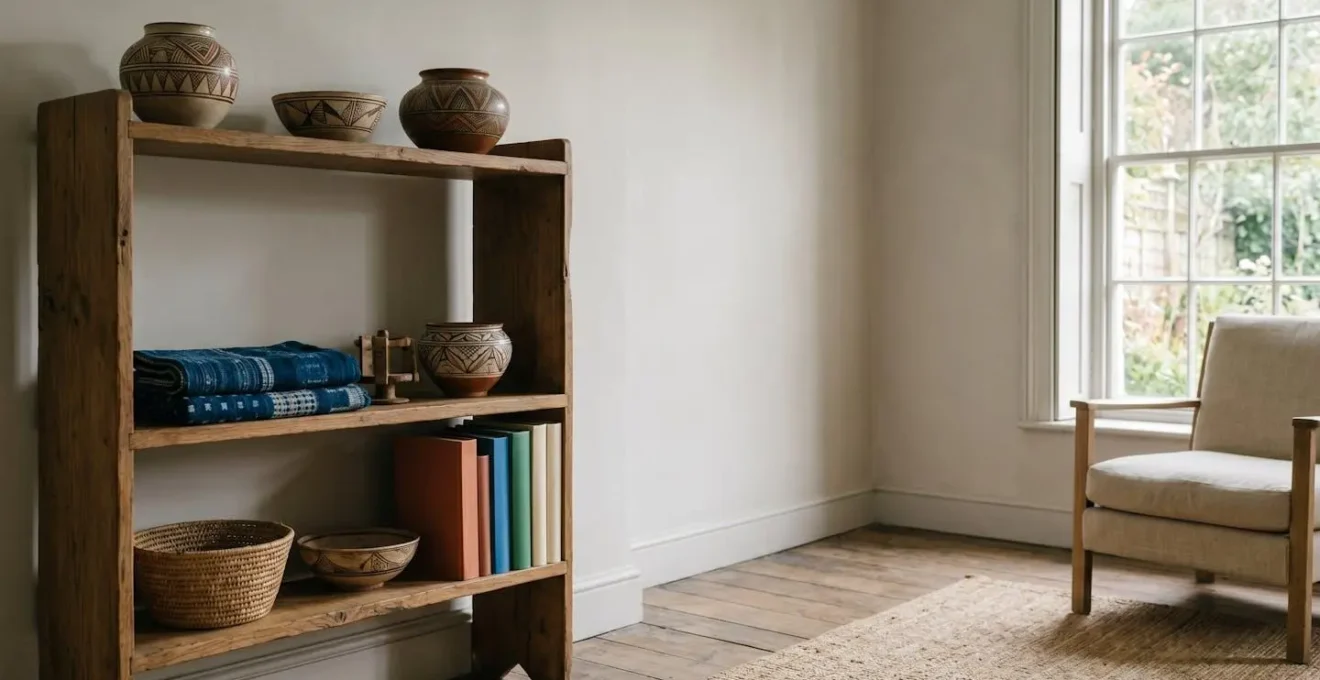
Building this environment requires a proactive approach. It goes beyond just speaking the language; it involves creating a world where that language thrives. From Saturday schools to cooking traditional meals, every activity contributes to a stronger linguistic and cultural foundation. It signals to the child that their heritage language has value and a place in their life, even when English dominates their world outside the home.
Your Action Plan: Boosting Heritage Language Vitality
- Curate Your Home Environment: Actively seek out and make available books, cartoons, music, and games in the heritage language. Make it the default for entertainment at home.
- Build a Social Network: Connect with other families who speak the language through community groups or UK-based Saturday Schools. This shows your child the language has a social function outside the family.
- Involve Extended Family: Schedule regular video calls with grandparents or relatives. This provides exposure to different speakers and strengthens cultural bonds.
- Celebrate Cultural Traditions: Involve your child in preparing for and celebrating festivals. Connect the language to tangible experiences like cooking traditional food or singing festive songs.
- Advocate at School: Frame the home language as an asset. Offer to share a story or song during International Week and talk to the school about their EAL (English as an Additional Language) policies to ensure they are supportive of home languages.
Is 7 Too Old to Start a Second Language for Fluency?
The concept of a « critical period » for language learning often creates a sense of urgency, leading parents to believe that if a child hasn’t started a second language by a certain age, the window for fluency has closed. While it’s true that early exposure has advantages, particularly for acquiring a native-like accent, the notion that it’s « too late » after age 7 is a damaging oversimplification. The brain’s capacity for language learning is far more flexible than that.
Research distinguishes between different aspects of language proficiency. For phonology—the ability to speak without a foreign accent—the window does seem to narrow significantly after childhood. As one textbook from the NCBI notes, children can learn to speak a second language without an accent until about age 7 or 8. After this, achieving native-like pronunciation becomes more challenging, though certainly not impossible.
However, for other crucial parts of language, like grammar and vocabulary, the window is much wider. A landmark study from MIT that analyzed a huge dataset of language learners delivered a more nuanced conclusion. It found that the ability to absorb grammar to a native-like level remains very strong until age 17 or 18. While those who start later may have a shorter time to reach that peak, the capacity for learning itself does not just switch off. In fact, older children and teenagers can often learn more quickly and explicitly than toddlers because they can leverage more advanced cognitive skills and learning strategies.
The takeaway for parents is encouraging: it is never too late to start. A 7-year-old, a 10-year-old, or even a teenager can absolutely achieve high levels of fluency in a second language. While they may retain an accent, their ability to master complex grammar and build a rich vocabulary is immense. The focus should be on providing consistent, meaningful exposure and motivation, rather than worrying about a missed « perfect » window.
Makaton Signing: Why It Doesn’t Delay Speech Development in Toddlers?
For some parents, particularly those with children experiencing temporary speech delays or communication frustrations, Makaton signing is introduced as a support tool. However, a common worry arises: will relying on signs discourage my child from learning to speak? This fear is based on the misconception that signing replaces speech, when in reality, it acts as a bridge to it. Makaton does not delay speech; it supports it.
Makaton is a language programme that uses signs and symbols alongside spoken language. This multimodal approach is key. Every time a sign is used, the word is said at the same time. This provides the child with two channels of input—visual and auditory—reinforcing their understanding of the word. For a toddler who understands a word but can’t yet form it with their mouth, having a sign provides an immediate way to express their needs and reduce frustration. This success in communication is hugely motivating.
Think of signs as scaffolding. They provide temporary support while the more complex structure of spoken language is being built. As a child’s ability and confidence in producing spoken words grows, they naturally begin to drop the signs. Speaking is simply a faster and more efficient way to communicate, and the brain will always gravitate towards the path of least resistance. Research on multimodal communication confirms that Makaton provides a temporary support system that is naturally discarded as the child’s spoken words become stronger.
By giving a child a way to communicate effectively before their speech is fully developed, you are not creating a crutch. You are empowering them, reducing frustration for both parent and child, and fostering the very desire to communicate that is essential for language development. It supports the cognitive and emotional foundations upon which spoken language is built.
Decoding Phonics: Why You Should Never Teach ‘uh’ at the End of Letters?
As children begin their formal schooling in the UK, parents are introduced to the world of phonics. Eager to support their child’s reading journey, many parents start practicing letter sounds at home. However, a very common and detrimental mistake is to add an extra vowel sound, or « schwa, » at the end of consonants. For example, teaching the letter ‘m’ as « muh » or ‘t’ as « tuh » instead of the pure, clipped sounds /m/ and /t/.

This may seem like a minor detail, but it can create significant confusion and hurdles for a child learning to blend sounds into words. The entire purpose of synthetic phonics is to teach a child to merge individual phonemes together. If a child is taught « cuh-a-tuh » for the letters c-a-t, they will struggle to blend those sounds to read the word « cat. » The extra « uh » sounds create a choppy, distorted version of the word that doesn’t match what they hear in spoken language. They are trying to blend three sounds when they should only be blending three pure phonemes: /k/ /æ/ /t/.
The correct approach is to use « pure sounds. » This means articulating the consonant sound as crisply and shortly as possible, without any trailing vowel. For the letter ‘s’, it is a continuous /sssss/ sound, not « suh. » For ‘p’, it is a short puff of air, /p/, not « puh. » Practicing these pure sounds at home will directly align with the teaching methods used in schools and give your child a much clearer path to successful blending and decoding.
Many online resources, including videos from phonics programmes like Jolly Phonics or Read Write Inc., demonstrate these pure sounds correctly. Taking a few minutes to watch these can make a huge difference in how effectively you can support your child’s reading development, ensuring the practice at home reinforces, rather than conflicts with, their learning at school.
Key Takeaways
- Bilingualism does not cause language delay; it enhances cognitive functions like problem-solving and focus.
- Code-switching (mixing languages) is a sign of linguistic skill and efficiency, not confusion.
- A child responding in the dominant language (e.g., English) is a normal phase. Consistent, positive exposure to the heritage language is key.
- Supporting your child’s schoolwork means understanding their method (like phonics or maths mastery), not teaching a conflicting one.
Homework Wars: How to Support Maths Mastery Without Confusing Your Child
Just as with phonics, the way maths is taught in UK schools today can be very different from how parents learned it. The « Maths Mastery » approach, for example, focuses heavily on developing a deep, long-term, and adaptable understanding of concepts, often using visual aids like part-whole models or bar modelling. When a child brings home homework that looks completely unfamiliar, a parent’s instinct might be to show them the « old way » or the « shortcut » they learned as a child. This well-intentioned act can unfortunately lead to homework wars and deep confusion.
Teaching a different method, even if it gets the right answer, can undermine the conceptual foundation the school is trying to build. The mastery approach is designed to be sequential, with each step building on the last. Introducing a conflicting algorithm can disrupt this process and leave the child caught between two different systems of logic. This can damage their confidence and create an aversion to the subject.
The most effective way to support your child is to become a curious facilitator, not an alternative teacher. Your role is to support the school’s method. Start by asking open questions: « Can you show me how your teacher explained this in class? » or « What’s the first step you’re supposed to do? » This positions the child as the expert and empowers them to articulate their understanding. If they are stuck, look at the problem together and try to understand the logic of the school’s method. Often, the school will provide resources or parent guides explaining these new techniques.
By resisting the urge to teach your own method, you are sending a powerful message: you trust their learning process and you are a team. This collaborative approach reduces pressure, avoids confusion, and helps you understand the modern mathematical thinking your child is developing. Your support becomes about reinforcing their process, not just checking their answers.
To confidently support your child’s unique linguistic and academic journey, start by applying these evidence-based strategies and reframing your perspective on their development. Celebrate their skills, support their school’s methods, and trust in the incredible capacity of their developing brain.