
The shifting legal landscape on smacking in the UK is not just about avoiding punishment; it is an opportunity to build a more effective disciplinary architecture within your family.
- Physical punishment is now fully banned for children in Scotland and Wales, while the « reasonable punishment » defence remains in England and Northern Ireland.
- Effective alternatives focus on teaching through natural consequences and repairing relationships, rather than using external controls like rewards or inconsistent rules which can increase anxiety.
Recommendation: Focus on establishing clear, consistent family rules and view discipline as a tool for teaching self-regulation, not just enforcing compliance.
For parents across the United Kingdom, the question of how to discipline a child has become increasingly complex. The divergence of laws on physical punishment between the home nations has created a landscape of legal uncertainty. Many parents, raised in an era where a smack was considered a normal part of childhood, now find themselves navigating a world where that action could be deemed a criminal offence, depending on their postcode. This legal shift forces a crucial re-evaluation of what discipline is truly for.
Common advice often defaults to simplistic alternatives like « time-outs » or the removal of privileges. While not inherently wrong, these methods often miss the fundamental purpose of discipline: to teach. They can become softer forms of punishment that fail to build a child’s internal moral compass. The conversation needs to move beyond a simple list of dos and don’ts and towards a more profound understanding of child development and family dynamics.
But what if the true key to effective discipline lies not in finding the perfect punishment, but in ceasing to punish altogether? This guide proposes a shift in perspective. Instead of reacting to misbehaviour, the goal is to proactively build a family’s « disciplinary architecture »—a system founded on principles of fairness, natural consequences, and relationship repair. It is about equipping children with their own « internal jurisprudence, » enabling them to understand the impact of their actions and make better choices in the future, not out of fear, but out of understanding.
This article will provide a clear, legally-informed framework for modern British parents. We will dissect the legal distinctions across the UK, explore the psychological impact of common disciplinary tactics, and offer robust, practical strategies for raising resilient and well-adjusted children in full compliance with the law.
To navigate this complex topic, we will examine the core principles of effective, non-punitive discipline, address the specific legal frameworks you must be aware of, and provide actionable strategies for common parenting challenges. The following sections are structured to build your understanding from foundational concepts to specific, real-world applications.
Summary: A Legal Guide to Effective Discipline Alternatives in the UK
- Coat or Cold: How Natural Consequences Teach Better Than Nagging?
- The ‘Smacking Ban’: What Counts as Reasonable Punishment in England vs Scotland?
- Do Star Charts Kill Intrinsic Motivation in the Long Run?
- The Apology Letter: How to Repair Relationships After a Sibling Fight?
- Good Cop Bad Cop: Why Inconsistent Discipline Increases Anxiety?
- Non-Molestation Orders: How to Get Emergency Protection for Your Family?
- The ‘You’re Not My Dad’ Line: How to Handle Discipline as a Step-Parent?
- Step-Parenting Rules: Managing ‘Your House vs My House’ Conflicts
Coat or Cold: How Natural Consequences Teach Better Than Nagging?
One of the most powerful tools in a non-punitive disciplinary framework is the concept of natural consequences. This approach reframes the parent’s role from that of an enforcer to that of a supportive guide who allows reality to be the teacher. Instead of a parent saying, « You didn’t wear your coat, so you can’t watch TV, » the natural consequence is direct and logical: the child feels cold. The link between choice and outcome is immediate and impersonal, which prevents the child from focusing on parental anger or perceived unfairness.
The effectiveness of this method lies in its ability to foster internal learning. When a child forgets their lunchbox and feels hungry, or leaves their toys in the rain and finds them ruined, the lesson is etched far more deeply than any lecture could achieve. It directly builds their « internal jurisprudence, » teaching them foresight and personal responsibility. It is crucial, however, to apply this principle with wisdom. A core tenet is that natural consequences should never be used if the child’s action poses a threat to their safety or health. Allowing a toddler to run into a busy road is not a teaching moment; it is a failure of parental duty of care.
The real work happens after the consequence has occurred. This is not a moment for « I told you so, » but for connection and collaborative problem-solving. Acknowledging the child’s discomfort (« I can see you’re really cold and uncomfortable ») and neutrally connecting it to their choice (« You chose not to bring a coat, and the wind is chilly today ») validates their experience while reinforcing the lesson. This debrief is what transforms a negative experience into a positive learning opportunity, strengthening both the child’s executive function and the parent-child bond.
Your Action Plan: The 4-Step Post-Consequence Debrief
- Acknowledge the feeling without ‘I told you so’: Begin by validating their emotion in the moment. For example, « I see you’re feeling uncomfortable right now. »
- Connect the consequence to the choice in neutral language: State the factual link without blame. For instance, « You chose not to bring your coat, and now you’re cold. »
- Validate their emotion and the learning: Show empathy and prompt reflection. « It’s frustrating when that happens. What do you think you might do differently next time? »
- Offer collaborative problem-solving for future situations: Work as a team to prevent a recurrence. « Let’s think together about how to remember next time. »
The ‘Smacking Ban’: What Counts as Reasonable Punishment in England vs Scotland?
The legal status of physical punishment for children is one of the most significant areas of legal divergence within the United Kingdom. Parents living in Scotland and Wales are subject to different laws than those in England and Northern Ireland, and ignorance of these differences is not a defence. In Scotland (since 2020) and Wales (since 2022), the law is unequivocal: all forms of physical punishment of a child are illegal. The defence of « reasonable punishment » (or « justifiable assault » in Scotland) has been completely removed, giving children the same legal protection from assault as adults.
In contrast, in England and Northern Ireland, the legal position remains more complex. The « reasonable punishment » defence, originating from common law and codified in Section 58 of the Children Act 2004, still exists. This allows a parent to be acquitted of common assault on their child if the punishment was « reasonable. » However, the term « reasonable » is not clearly defined and is open to interpretation by the courts. The law does specify that physical punishment is unreasonable if it leaves a mark or involves the use of an implement. This creates a precarious legal grey area for parents, where the legality of an action depends on its outcome.
This legal schism is underpinned by a growing body of evidence on the impact of physical punishment. As Dr. Anja Heilmann of University College London states, the science is definitive.
Having reviewed 20 years of research on physical punishment, we can unequivocally say that the evidence is clear: physical punishment is harmful to children’s development and wellbeing. There’s no evidence that it has any positive outcomes whatsoever.
– Dr. Anja Heilmann, Department of Epidemiology and Public Health, University College London
Regardless of the law in their specific jurisdiction, the direction of travel legally and societally is clear. The following table summarises the current legal position, which is essential knowledge for any parent in the UK.
| UK Nation | Legal Status | Defence Available | Year Implemented |
|---|---|---|---|
| Scotland | All physical punishment banned | No reasonable punishment defence | 2020 |
| Wales | All physical punishment banned | No reasonable punishment defence | 2022 |
| England | Physical punishment legal in certain circumstances | ‘Reasonable punishment’ defence remains | N/A |
| Northern Ireland | Physical punishment legal in certain circumstances | ‘Reasonable punishment’ defence remains | N/A |
Do Star Charts Kill Intrinsic Motivation in the Long Run?
In the search for alternatives to physical punishment, many parents turn to reward systems like star charts. On the surface, they seem like a positive and harmless tool: a child performs a desired behaviour (tidying their room, being polite) and receives a tangible reward (a sticker, leading to a toy). While they can produce short-term compliance, from a legal and psychological perspective, they function as a form of external control that can have unintended negative consequences. This is the principle of motivational dilution.
Intrinsic motivation is the internal drive to do something for its own sake—because it is interesting, enjoyable, or feels like the right thing to do. This is the engine of lifelong learning and pro-social behaviour. Extensive research shows that consistently applying external rewards for tasks can undermine this internal drive. The child’s focus shifts from the inherent value of the activity to the acquisition of the reward. As author Daniel Pink notes in « Drive, » if the reward disappears, so does the behaviour. A comprehensive meta-analysis further confirms that rewards undermine intrinsic motivation for a variety of tasks, even those children might otherwise find interesting.
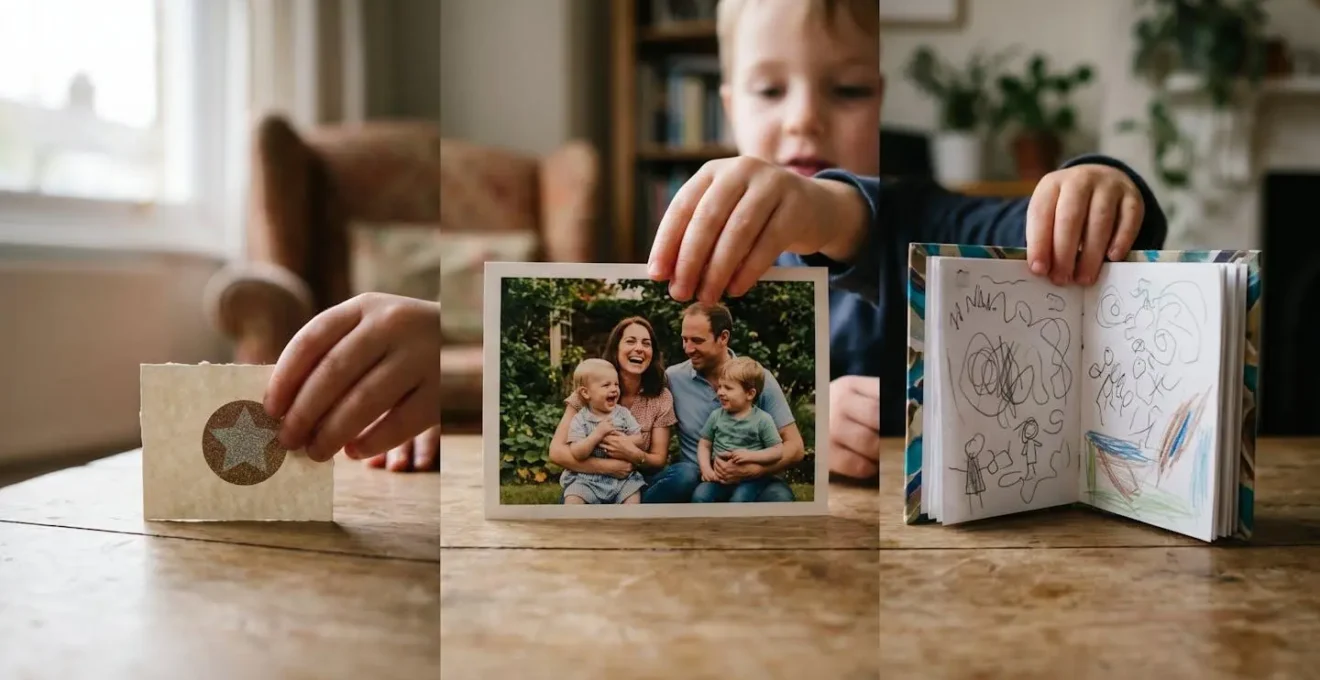
The goal of a robust disciplinary architecture is not to create children who behave well to get a sticker, but to cultivate children who choose to be helpful because they value being part of a functional family system. Instead of « if you tidy your room, you get a star, » the focus should be on « when we all help keep the house tidy, it’s a nicer place for everyone to live. » The reward becomes the natural, positive outcome of the behaviour itself: a pleasant environment and a sense of contribution. While a temporary reward system might be a useful scaffold for teaching a new skill, it should be faded out as quickly as possible in favour of verbal encouragement and focusing on the intrinsic benefits of the action.
The Apology Letter: How to Repair Relationships After a Sibling Fight?
Conflict between siblings is an inevitable and, ultimately, healthy part of family life. It provides a crucial training ground for learning negotiation, empathy, and conflict resolution. However, the parental response to these conflicts is what determines whether they become a learning experience or a source of resentment. Forcing a child to say a hollow « sorry » or to write an apology letter under duress is often counterproductive. It teaches them to perform a social script to escape punishment, rather than genuinely understanding the impact of their actions.
A more effective approach, rooted in the principles of restorative justice, is to focus on relationship repair as restitution. The goal is not to impose a penalty, but to guide children in the process of making things right. This shifts the focus from the parent’s anger to the needs of the person who was harmed. It can only happen once emotions have cooled; attempting to force a resolution in the heat of the moment is futile. Both children need their feelings acknowledged before they can move towards repair.
The « 4 R’s » framework provides a structured path for parents to follow. First, Regulate: ensure everyone is calm. Second, Relate: validate both children’s perspectives without taking sides (« You were angry when he took your toy » and « You were frustrated because you wanted a turn »). Third, Repair: guide the children to make amends in an age-appropriate way. For a toddler, this might be a hug or helping to rebuild a fallen tower. For an older child, it could be a genuine conversation about why they acted as they did and what they can do to fix the hurt. The apology becomes a sincere outcome of this process, not a forced-in-advance requirement.
Finally, Resolve: the parent helps the siblings brainstorm what they could do differently next time. This forward-looking step is what turns a single conflict into a building block for future social competence. It moves the interaction from a crime-and-punishment model to one of collaborative problem-solving, which is the cornerstone of a healthy family system.
Good Cop Bad Cop: Why Inconsistent Discipline Increases Anxiety?
For a disciplinary system to be perceived as fair and effective, it must be predictable. When two parents have wildly different approaches to rules and consequences—the classic « good cop, bad cop » dynamic—it creates an environment of uncertainty and anxiety for a child. This inconsistency undermines the authority of both parents and teaches the child to manipulate the system rather than internalise the rules. From a child’s perspective, if the response to a broken rule is sometimes a harsh punishment from one parent and sometimes a shrug from the other, the rule itself becomes meaningless.
This lack of a unified front erodes the very foundation of a healthy disciplinary architecture. The child learns that rules are not fixed principles but are dependent on who is present and what their mood is. This can lead to increased testing of boundaries, as the child constantly seeks to determine which set of rules is in effect at any given moment. In legal terms, this is akin to a system without due process; the laws are arbitrary and enforcement is unpredictable. Such an environment is inherently stressful and can contribute to feelings of insecurity and anxiety in children.
Creating consistency requires parents to have explicit conversations about their core family values and agree on a small number of clear, non-negotiable household rules. It doesn’t mean they must react identically to every situation, but they must be aligned on the fundamental boundaries and the general approach to discipline. When parents present a united front, they create a secure and predictable world for their child. The child understands the expectations and the consequences of their actions are logical and consistent, which allows them to feel safe and focus on learning and development, rather than on navigating a chaotic system.
Research consistently shows the detrimental effects of harsh and inconsistent environments on a child’s mental well-being. A wide-ranging analysis across 49 countries shows that children exposed to physical punishment are significantly less likely to be developmentally on track, a risk that is compounded by inconsistency.
Non-Molestation Orders: How to Get Emergency Protection for Your Family?
In situations where discipline has escalated into harassment, intimidation, or domestic abuse, the family court system in England and Wales provides a powerful tool for emergency protection: the Non-Molestation Order. This is a type of injunction designed to prevent a partner, ex-partner, or associated person from molesting (a term which includes threatening, intimidating, harassing, or pestering) you or your children. It is a civil order, but breach of it is a criminal offence, punishable by up to five years in prison, giving it significant legal weight.
A Non-Molestation Order can be obtained urgently, often without the other person (the respondent) being present at the initial hearing (an « ex-parte » or « without notice » application). This is designed to provide immediate protection in high-risk situations. To be successful, an applicant must provide the court with a witness statement detailing the incidents of molestation and explaining why they and/or their children are in need of protection. Evidence such as threatening text messages, emails, photographs of injuries, or police report numbers can significantly strengthen an application.
The process, while designed to be accessible, can be daunting for individuals in crisis. Fortunately, there are resources available. The National Centre for Domestic Violence (NCDV) provides free, emergency legal assistance to help victims secure these orders, often within 24-48 hours. Applying for a Non-Molestation Order is a critical legal step when behaviour crosses the line from poor parenting to abuse, ensuring the immediate safety of the family unit.
Checklist: Applying for a Non-Molestation Order
- Gather evidence: Document all incidents with dates, times, and any witnesses. Keep records of threatening messages, police reports, and photographs of any injuries or damage.
- Complete Form FL401: This is the official « Application for a Non-Molestation Order / Occupation Order ». It can be downloaded from the gov.uk website or obtained from your local family court.
- Submit to family court: File the completed form at your local family court. There is no court fee for this type of application, and you may be eligible for Legal Aid to cover solicitor’s costs.
- Attend the hearing: For urgent « without notice » applications, a judge will review your case, often within 48 hours. You will need to explain why you need immediate protection.
- Service of the order: Once the judge grants the order, it is not active until it has been formally served on the respondent. This is typically done by a court bailiff or a professional process server to ensure it is done correctly.
The ‘You’re Not My Dad’ Line: How to Handle Discipline as a Step-Parent?
For a step-parent, navigating discipline is one of the most challenging aspects of joining a blended family. The infamous line, « You’re not my dad/mum, » is a common and painful expression of a child’s struggle with loyalty, change, and authority. A step-parent who tries to enforce rules too quickly, without first establishing a foundation of trust and connection, is likely to be met with resistance. The key is to understand that a step-parent’s authority is not automatic; it must be earned over time and, ideally, delegated by the biological parent.
An effective strategy is the « Phased Enforcement Model, » which advocates for a gradual assumption of a disciplinary role. In the initial months (The Observer Phase), the step-parent’s role is simply to build rapport. They should focus exclusively on positive interactions—playing games, showing interest in the child’s hobbies, offering help with homework—while deferring all discipline to the biological parent. This non-threatening presence allows the child to adjust and begin to form a bond.
Over the next year, the step-parent can move into a Supporter Phase, where they remind the child of rules established by the biological parent (« Your mum asked for the toys to be put away ») without being the enforcer of consequences. This positions them as an ally of the family’s structure. Only after a significant period of time (often 12-18 months) can the step-parent move into a Co-Enforcer and eventually an Authority Phase, where they can confidently and independently uphold agreed-upon family rules. This phased approach respects the child’s emotional process and builds the step-parent’s legitimacy from a foundation of relationship, not a position of power.
Attempting to short-circuit this process is the most common cause of conflict. The step-parent’s role, particularly in the beginning, is to be a supportive adult, not a replacement parent or a disciplinarian.
Key Takeaways
- The UK’s legal landscape on physical punishment has diverged, with total bans in Scotland and Wales, while the « reasonable punishment » defence persists in England and Northern Ireland.
- Effective, lawful discipline is not about finding alternative punishments but about teaching self-regulation through tools like natural consequences and relationship repair.
- Consistency between caregivers and a focus on building a child’s internal motivation, rather than relying on external rewards, are cornerstones of a healthy and legally-sound disciplinary system.
Step-Parenting Rules: Managing ‘Your House vs My House’ Conflicts
Conflicts over differing rules between two households are a defining feature of life in many blended families. A child who spends time in two homes with different expectations, routines, and disciplinary styles can experience significant confusion and stress. This often manifests in challenging behaviour as they test boundaries in each environment. The key to managing this conflict is not to aim for identical rules in both homes—which is often unrealistic—but to establish a clear and legally-grounded understanding of authority and to focus on a core set of shared family values.
From a legal standpoint in the UK, it is critical to understand the concept of Parental Responsibility (PR). PR is defined in the Children Act 1989 as « all the rights, duties, powers, responsibilities and authority which by law a parent of a child has in relation to the child and his property. » A step-parent does not automatically acquire PR. Without it, their legal authority to make decisions about a child’s life, including discipline, is limited. According to official UK government guidance, PR can be formally obtained by a step-parent through a Parental Responsibility Agreement signed by all parties with PR, or through a court order. Obtaining PR provides legal clarity and strengthens the step-parent’s position when enforcing house rules.

Beyond the legal framework, the most effective tool is communication. The adults in both households should strive to agree on a few « big picture » values (e.g., respect for others, honesty, safety) that can be upheld consistently, even if specific rules about bedtime or screen time differ. The step-parent and biological parent within one household must present a united front, agreeing on their core house rules and supporting each other in their enforcement. This creates a predictable and secure base for the child, reducing their need to play one house against the other. The focus should be on what is consistent—the love and the core values—rather than on the differences.
Legal Framework: The Role of Parental Responsibility
Under UK law, a step-parent’s authority is not a given. They can obtain Parental Responsibility (PR) either through a formal agreement with the biological parents or via a Parental Responsibility Order from the family court. Once granted, PR gives a step-parent the legal right and responsibility to make key decisions regarding the child’s welfare, including education, medical care, and discipline. This formalises their role and provides a clear legal basis for setting and enforcing boundaries, which is invaluable when navigating conflicts arising from different rules between the child’s two homes.
By moving away from a mindset of punishment and towards one of building a robust, fair, and consistent disciplinary architecture, parents can meet their legal obligations while raising children who are not just compliant, but competent and considerate. The next logical step is to begin the conversation with your co-parent to audit your current approach and agree on your core family rules.