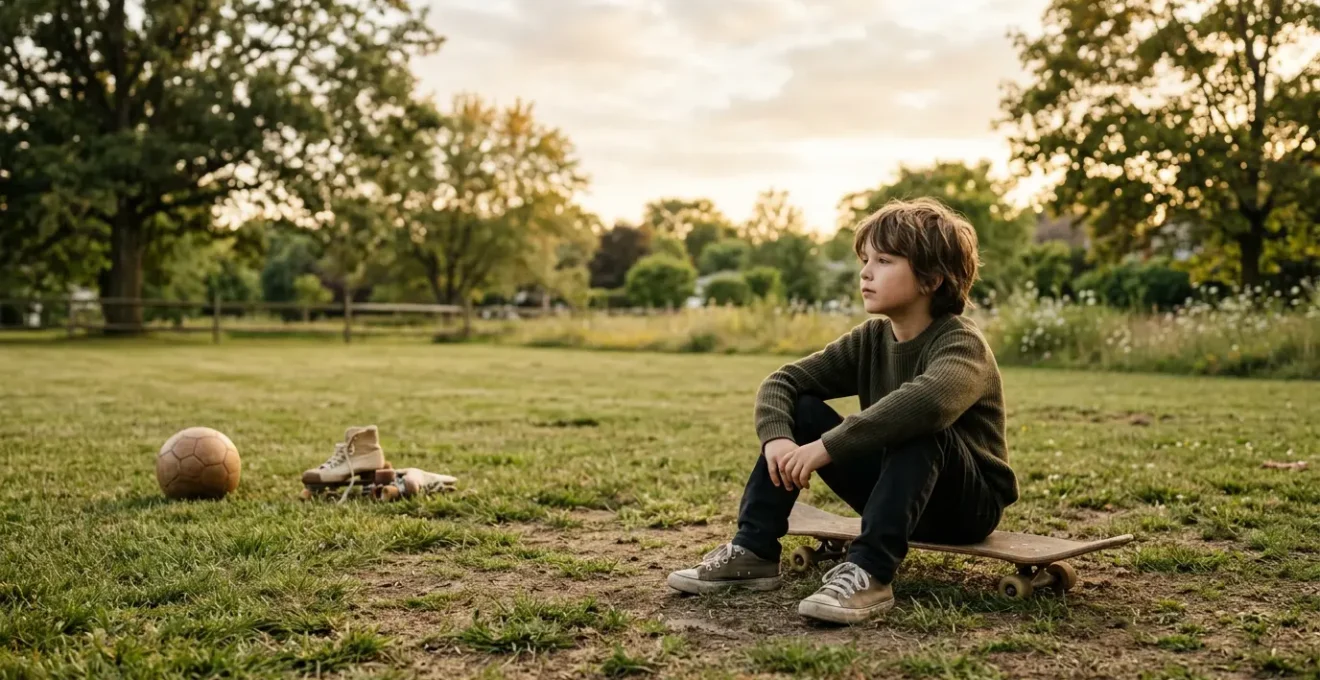
The secret to engaging an « unsporty » child isn’t forcing them into another sport; it’s decoding their unique sensory and psychological needs and finding activities that provide « stealth health. »
- Traditional team sports often fail children who need individual mastery, low social pressure, or specific sensory input.
- Activities like skateboarding, street dance, and geocaching succeed because they reframe physical effort as creativity, exploration, or problem-solving.
Recommendation: Stop searching for a sport and start observing your child’s natural play. Their path to an active life is likely hidden in what they already love to do.
That school sports day email lands in your inbox and a familiar knot tightens in your stomach. For many parents, it’s a source of pride, but for you, it’s a reminder of your child’s discomfort. The forced smiles, the lingering at the back of the group, the palpable relief when it’s all over. The common advice feels hollow: « Just find a sport they like, » or « They need to be part of a team. » But what if they’ve tried soccer, swimming, and tennis, and dislike them all? What if the very structure of organised, competitive sport is the problem?
The issue often isn’t a lack of willingness to move, but a mismatch between the child’s needs and the environment. Many children, particularly those who are neurodivergent, introverted, or simply wired differently, find the chaotic, high-pressure, one-size-fits-all world of Physical Education overwhelming. The real challenge isn’t about making them « sporty. » It’s about a radical shift in perspective. Instead of forcing them into a pre-defined box, what if we looked for activities that fit their unique shape? The solution lies in « stealth health »—activities where physical exertion is a byproduct of a more engaging goal, like creativity, exploration, or personal mastery.
This guide moves beyond the generic lists of « alternative sports. » We will deconstruct why certain activities resonate deeply with children who feel left out on the playing field. We will explore how solo pursuits can build resilience, how creative movement can build coordination without pressure, and how turning a simple walk into an adventure can be the most effective workout of all. It’s time to stop fighting the battle against PE and start a new journey towards finding your child’s unique movement language.
Contents: Beyond the Sidelines: A Guide to ‘Stealth Health’ for Kids
- Parkour and Skateboarding: Why Solo Sports Suit Neurodivergent Kids?
- Wild Swimming: Is It Safe for Kids and Where to Start?
- Judo vs Karate: Which Martial Art is Best for Discipline?
- Street Dance: How It Builds Coordination Without the Ballet Bun Pressure?
- Geocaching: How to Turn a Boring Walk into a Treasure Hunt?
- Dyspraxia Support: How Occupational Therapy Improves Handwriting and Coordination?
- Parkrun to Bike Rides: Exercise That Doesn’t Feel Like a ‘Workout’?
- The 4-Day Week Dream: Managing Family Health When Both Parents Work Full Time
Parkour and Skateboarding: Why Solo Sports Suit Neurodivergent Kids?
For a child who struggles with the social chaos of team sports, the world of parkour or skateboarding can feel like a sanctuary. These aren’t just activities; they are forms of self-expression built on individual progress. There is no team to let down, no coach yelling from the sidelines, and no confusing social cues to navigate during a fast-paced game. The only competition is with oneself: can I land this trick? Can I make this jump smoother? This creates a state of intense personal focus, often called « flow, » where the outside world melts away.
This is particularly powerful for many neurodivergent children. The repetitive, rhythmic motions of pushing on a skateboard or practicing a parkour vault provide predictable and regulating sensory input. It’s a physical outlet for nervous energy that is purposeful and controlled. Instead of fidgeting or stimming in a way that might draw negative attention, they are channelling that same need for sensory feedback into mastering a skill. This builds not just physical strength and balance, but immense self-confidence and resilience.
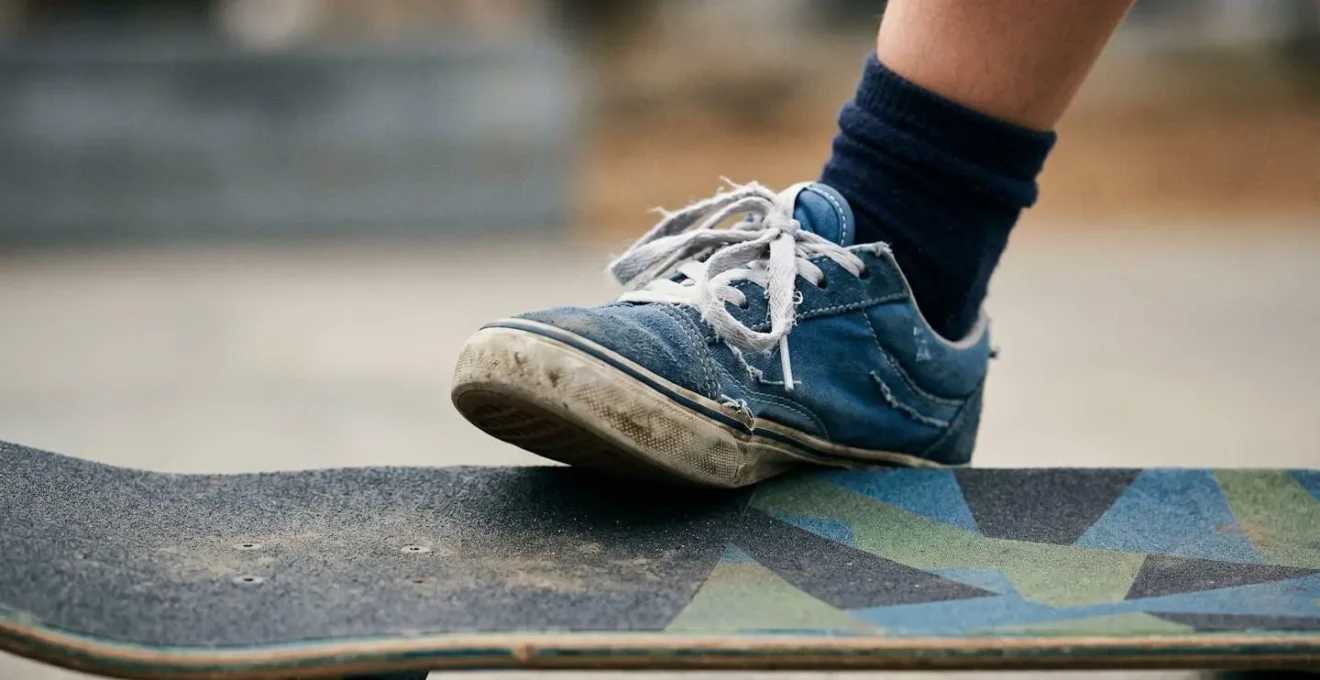
The tactile feedback from the grip tape under their feet or the solid feel of a wall under their hands is a grounding experience. As noted by experts in the field, this connection between movement and mind is profound. The Skate Club’s article on neurodiversity highlights this exact point:
On a skateboard, stimming becomes flow. Every push, turn, and roll delivers just the right kind of input, grounding the body and sharpening the mind.
– The Skate Club, Skateboarding and Neurodiversity article
Success is personal, measurable, and immediate. The journey from wobbly first steps to a smoothly executed ollie is a powerful narrative of perseverance and achievement that belongs entirely to the child.
Wild Swimming: Is It Safe for Kids and Where to Start?
The idea of wild swimming—taking a dip in a river, lake, or the sea—can feel both liberating and daunting for parents. It taps into a primal sense of adventure, a world away from the sterile, chlorinated confines of a public pool. It offers a multi-sensory experience: the shock of cold water, the feeling of silt between your toes, the sound of nature all around. This can be a magical experience for a child, connecting them to their environment in a profound way. However, the parental brain immediately jumps to a critical question: is it safe?
This concern is valid and must be the starting point. Open water is not a controlled environment, and the risks are real. In the US, for instance, 43 percent of fatal childhood drownings occurred in open water in 2016. This statistic isn’t meant to scare you away, but to empower you with caution. The key to unlocking the benefits of wild swimming is knowledge and preparation. By approaching it with a clear, step-by-step safety mindset, you can mitigate the risks and transform anxiety into a confident adventure for the whole family.
Starting small is crucial. Nobody expects you to take your child to a remote, fast-flowing river for their first dip. The journey begins with research, choosing well-known, family-friendly spots, and understanding the local conditions. Equipping children with the right gear and, most importantly, your undivided attention, turns a potential hazard into a shared challenge that builds respect for nature and a healthy dose of self-reliance.
Your Action Plan: A Progressive Introduction to Wild Swimming
- Choose Safe Locations: Research well-known spots with shallow, calm waters recommended for families. Avoid fast currents, unclear water, and areas without easy entry/exit points.
- Check Water Quality: Consult local advisories for water safety, especially after heavy rain. Visually check that water is clear and moving, not stagnant or discoloured.
- Supervision and Safety Gear: Maintain constant, focused supervision. Equip children with brightly coloured swim caps for visibility and appropriate life jackets or buoyancy aids, especially for weaker swimmers.
- Teach Environmental Awareness: Educate children about currents, depth changes, and underwater hazards. Set clear boundaries (e.g., « stay within the area where you can stand ») and teach them to leave no trace.
- Plan for the Cold: Acclimatise slowly to avoid cold water shock. Have warm layers, a hot drink, and a towel ready for immediately after the swim, as children lose body heat faster than adults.
Judo vs Karate: Which Martial Art is Best for Discipline?
When parents seek an activity to instill « discipline, » martial arts are often the first port of call. The image of a dojo filled with focused children in crisp uniforms is a powerful one. But beneath the surface, different arts cultivate discipline in very different ways. The choice between a grappling art like Judo and a striking art like Karate isn’t just about technique; it’s about matching the philosophy to your child’s personality. Both teach respect and focus, but their methods and the type of discipline they emphasize are distinct.
Judo, meaning « the gentle way, » focuses on using an opponent’s momentum against them. It is almost entirely defensive and involves throws, holds, and pins. The discipline here is one of patience and emotional regulation. A smaller child can learn to overcome a larger, stronger opponent through superior technique, not brute force. This teaches them to remain calm under pressure and to solve problems with their mind and body in unison. The constant physical contact also provides excellent proprioceptive input, which can be very grounding for some children.
Karate, on the other hand, emphasizes striking, blocking, and structured patterns known as « katas. » The discipline in Karate is one of attention to detail, memory, and self-control. Learning and perfecting a kata is a solo journey of precision and focus. It requires memorizing long sequences of movements and executing them with power and accuracy. This is less about reacting to an opponent and more about achieving internal mastery over one’s own body. For a child who thrives on structure and clear, repeatable patterns, Karate can be an ideal fit.
The best choice depends entirely on the child. A child who needs to learn to manage physical interactions and stay calm in close quarters might thrive in Judo. A child who loves patterns, needs to work on their focus, and prefers more personal space might find their calling in Karate. As Olympian Tina Takahashi notes, Judo builds patience while Karate develops attention to detail. This table breaks down the core differences:
| Aspect | Judo | Karate |
|---|---|---|
| Primary Focus | Grappling, throws, defensive techniques | Striking, blocks, full-body defense |
| Discipline Approach | Emotional regulation under pressure, patience through technique over strength | Forms (katas) develop attention to detail, memory, and self-focus |
| Physical Development | Coordination, agility, learning to fall safely | Blocks and strikes, hand-eye coordination |
| Self-Defense Style | Using opponent’s momentum, full-contact practice from day one | Distance management, striking techniques |
| Best For | Children who prefer non-aggressive approach, defensive mindset | Children interested in striking techniques and structured patterns |
Street Dance: How It Builds Coordination Without the Ballet Bun Pressure?
For many children, the word « dance » conjures images of strict ballet studios, rigid positions, and the pressure of perfect form. For a child who already feels uncoordinated, this environment can be incredibly intimidating. Street dance, in all its forms—from hip-hop to breaking to popping—flips this script entirely. It’s a genre born from improvisation, personal style, and social expression. There is no « wrong » way to move, only your way. This freedom is precisely what allows many kids to find their rhythm and, surprisingly, develop incredible coordination and physical literacy.
Unlike more formal dance styles, street dance celebrates individuality. The focus is on feeling the music and expressing an emotion or story through movement. This creative-first approach removes the fear of failure. A « mistake » might just be the start of a cool new move. This environment of psychological safety encourages kids to take risks, to try things with their bodies they never would in a more judgmental setting. They are so engaged in the creative process and the beat of the music that they don’t even realize they are undergoing a complex lesson in motor planning, balance, and spatial awareness.
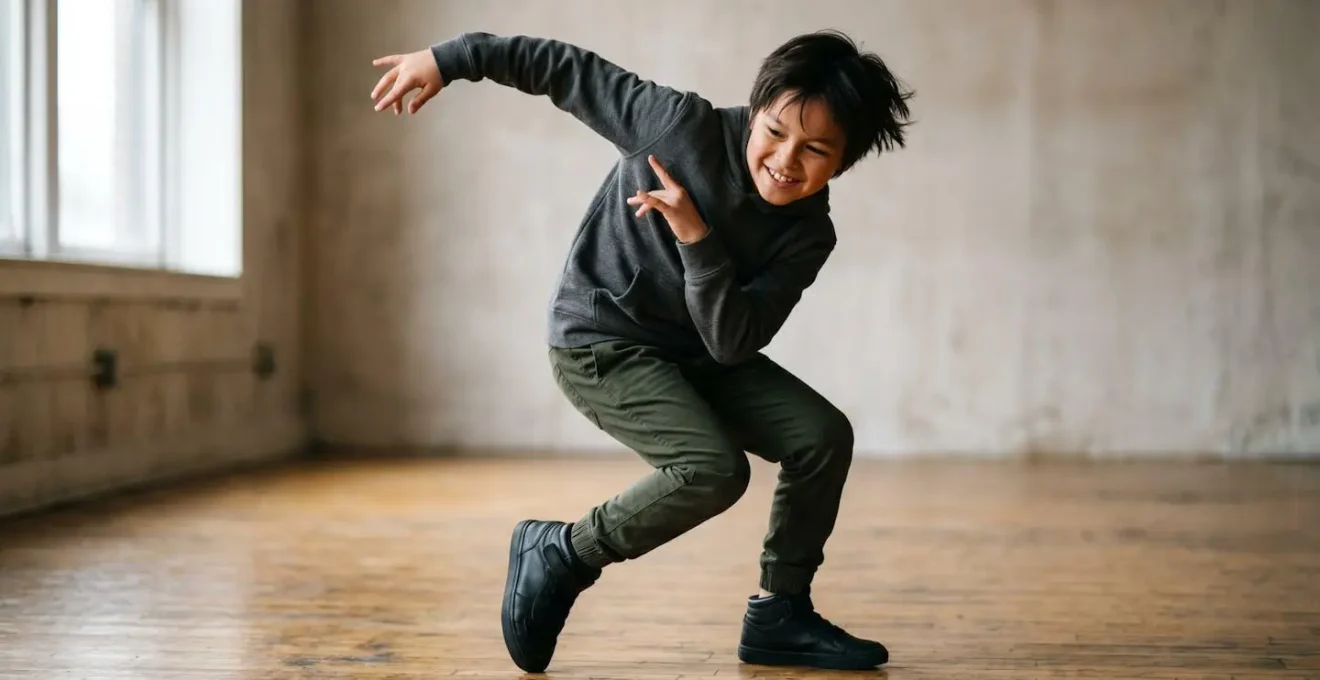
The physical benefits are not just incidental; they are significant and backed by research. The dynamic, fast-paced nature of street dance is a powerful tool for cognitive development. For instance, a study published in Frontiers in Psychology found that just 8 weeks of street-dance training promotes executive function development in preschool children. This is the brain’s control centre, responsible for focus, self-control, and memory.
Case Study: The Science of Street Dance
In a controlled study, 60 preschool children underwent street-dance training three times a week for eight weeks. The results showed significant improvements in physical qualities like agility, speed, strength, and coordination. The researchers noted that the rapid footwork, explosive movements, and rhythmic music helped exercise small joints and muscle groups that are often underused. Crucially, this variety of movement also improved the flexibility of the nervous system, essentially making the children better and faster at learning new motor skills. The dance wasn’t just training their bodies; it was training their brains to control their bodies more effectively.
Geocaching: How to Turn a Boring Walk into a Treasure Hunt?
« Let’s go for a walk » can be one of the most dreaded phrases for a child who finds walking aimless and boring. Geocaching completely transforms this experience by giving it a clear, exciting purpose. It’s a real-world treasure-hunting game using GPS-enabled devices. Participants navigate to a specific set of GPS coordinates and then attempt to find the geocache (container) hidden at that location. Suddenly, a walk in the park is no longer a walk; it’s a mission. The exercise involved is entirely incidental to the thrill of the hunt, making it the ultimate « stealth health » activity.
The beauty of geocaching is how it layers multiple skills into one activity. It’s a lesson in navigation, problem-solving, and observation. The child isn’t just walking; they are actively scanning their environment, looking for clues, and trying to think like the person who hid the cache. Will it be under a rock? Disguised as a pinecone? Hidden in the knot of a tree? This turns the brain on in a way a simple stroll never could. When the cache is finally found, there’s a moment of pure triumph, followed by the ritual of signing the logbook and perhaps trading a small trinket, connecting them to a global community of fellow adventurers.
To maximize engagement and prevent squabbles, one of the most effective strategies is to turn the family outing into a role-playing adventure. By assigning specific roles to each family member, you give everyone a sense of purpose and ownership over the mission. This also cleverly embeds learning into each role, from map-reading to literacy.
- Navigator Role: Assign one person to manage the GPS device or smartphone app. This teaches map coordinate reading and route planning—a practical lesson in geography and math.
- Scout Role: This is the ‘treasure finder’ who physically searches for the hidden cache once you’re at « ground zero. » This role develops keen observation skills and lateral thinking.
- Loremaster Role: Have someone read the logbook entries aloud and record your own family’s entry. This builds literacy skills and connects your family to the history of that specific cache.
- Treasurer Role: This person manages the tradeable items (‘swag’). They decide what to take and what to leave, learning principles of fair exchange and decision-making.
- Rotate Roles: The most important rule! Switch assignments on each new cache hunt to ensure everyone develops diverse skills and stays engaged.
Dyspraxia Support: How Occupational Therapy Improves Handwriting and Coordination?
For a child with dyspraxia or other coordination difficulties, the world can feel like a series of physical challenges. Simple tasks like tying shoelaces, using cutlery, or handwriting can be frustrating hurdles. This frustration often spills over into physical play, leading to an avoidance of sports and activities where they feel clumsy or unsuccessful. Occupational Therapy (OT) is a critical intervention that directly addresses these challenges, but its true power is realized when it’s seen not as a standalone treatment, but as a bridge to joyful, active hobbies.
An effective OT program doesn’t just focus on deficits; it builds foundational motor skills that can be directly applied to activities the child is interested in. The therapist becomes an « activity coach, » breaking down the skills needed for a desired hobby and creating exercises to build them. This reframes therapy from a chore into a training ground for fun. It connects the dots between a seemingly boring exercise and a future achievement, providing powerful intrinsic motivation.
Case Study: From Therapy Room to Hobbyist
Occupational therapy works by developing fundamental skills that translate directly to physical activities. For example, exercises that involve finger-strengthening with therapy putty build the exact same grip strength a child needs to feel secure on a rock-climbing wall. Working on a balance board in the therapist’s office directly prepares a child for the challenge of standing on a skateboard. Dance therapy, which requires coordinating all four limbs simultaneously, builds the same body awareness needed for martial arts or swimming. By positioning the therapy goals in the context of the child’s own interests, the therapist helps them see a clear path from effort to enjoyment, making them more invested in the process.
Furthermore, the best therapy doesn’t stay in the clinic. The principles of OT can be woven into the fabric of daily life, turning everyday chores and routines into opportunities to build strength and coordination. This « stealth therapy » approach makes practice consistent and natural, removing the pressure of formal exercise sessions.
- Carrying Shopping Bags: Use grocery trips to build core strength and bilateral coordination by having children help carry appropriately weighted bags.
- Stirring Thick Dough: Involve children in baking activities that require mixing heavy batters to improve arm strength and coordination.
- Climbing Stairs with Items: Turn an everyday movement into motor planning practice by having children carry objects safely up and down stairs.
- Balance Beam Walking: Use curbs, low walls, or lines on the pavement as impromptu balance beams during walks around the neighbourhood.
Parkrun to Bike Rides: Exercise That Doesn’t Feel Like a ‘Workout’?
The word « exercise » can be a major turn-off for a child who associates it with the monotonous, competitive environment of school PE. The key to getting a reluctant child moving is to remove the concept of a « workout » entirely and replace it with a more appealing driver: a destination, an adventure, or a treat. When movement is simply the means to an exciting end, resistance melts away. This strategy shifts the focus from the physical effort to the rewarding outcome, making the activity itself feel effortless and fun.
This isn’t just about tricking kids into exercising; it’s about reconnecting physical activity with its original purpose: to get us from one place to another, to explore our environment, and to engage with our community. For children, The American Academy of Pediatrics recommends that kids get 60 minutes of moderate to vigorous physical activity every day. Framing this as a destination-based adventure is a far more effective and enjoyable way to meet that goal than staring at a timer on a treadmill.
Think about it from the child’s perspective. « Let’s go for a 3-mile bike ride » sounds like a chore. « Let’s bike to the ice cream shop » sounds like an adventure. The distance is the same, but the motivation is entirely different. The bike is no longer a piece of exercise equipment; it’s a vehicle for freedom and reward. This simple reframing is incredibly powerful and can be applied to almost any activity.
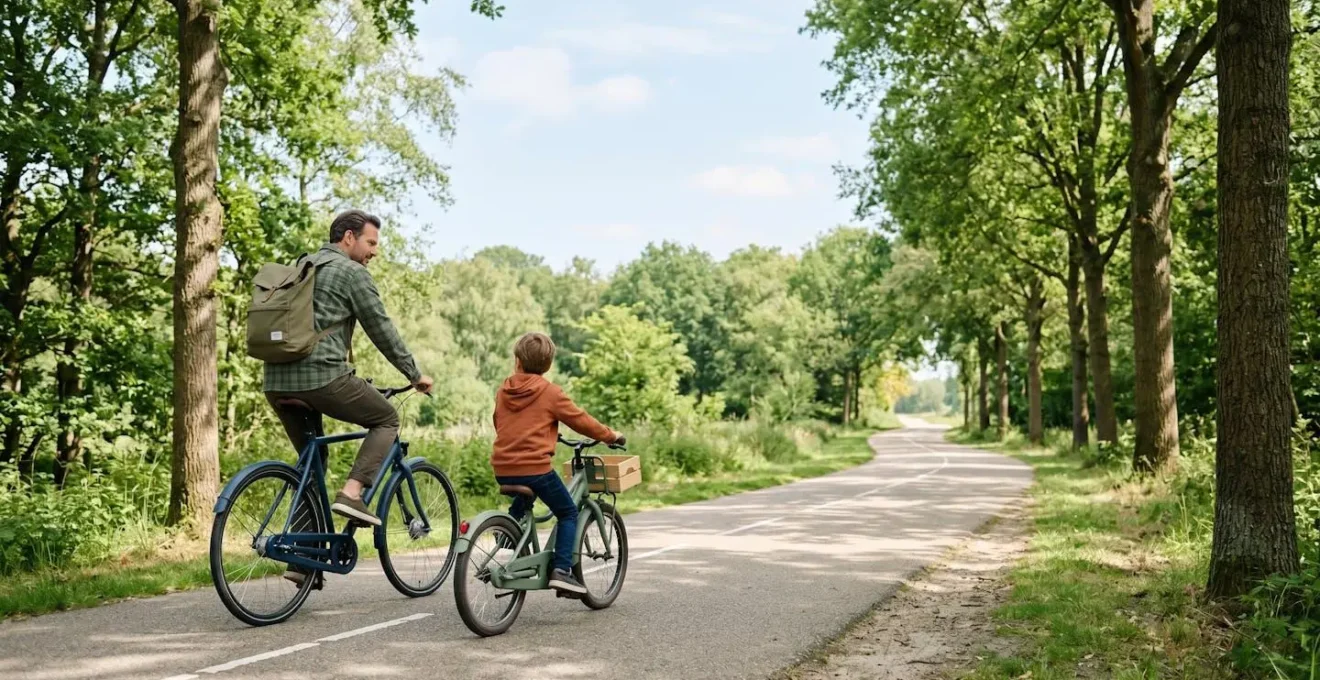
The goal is to build a list of « destination-based activities » that are genuinely appealing to your child. Here are a few ideas to get you started:
- Bike to the Library: Frame cycling as transportation to a world of stories, turning the journey into a prologue to the adventure in a book.
- Walk the Dog to a « Secret » Waterfall: Turn dog-walking into an expedition by exploring new nature trails with a specific, exciting discovery as the goal.
- Scooter to a Friend’s House: Replace short car trips with scootering for social visits, seamlessly embedding movement into their social life.
- Nature Scavenger Hunt: Create a list of things to find (five different types of leaves, three different coloured stones) where walking is simply the way you get from one discovery to the next.
Key Takeaways
- Ditch the ‘sport’ label and focus on the ‘activity’. Look for movement that values individual progress, creativity, or exploration over competition.
- Embrace « Stealth Health » by finding activities where physical effort is a happy side effect of a more engaging goal, like a treasure hunt or reaching a destination.
- Decode your child’s needs. Do they crave the deep sensory input of judo, the creative freedom of street dance, or the solo focus of skateboarding? Match the activity to their personality, not the other way around.
The 4-Day Week Dream: Managing Family Health When Both Parents Work Full Time
In the whirlwind of modern family life, where both parents are often working full-time, the idea of adding « find and facilitate a new niche hobby » to the to-do list can feel overwhelming. The dream of having more time, like a four-day work week, remains just that—a dream. The reality is a constant juggle of deadlines, school runs, and household chores. In this time-crunched environment, the key isn’t to find more time, but to use the time you have more cleverly. This means embracing « activity stacking« —the art of layering physical movement onto tasks and routines that are already part of your day.
Activity stacking requires a shift in mindset from « I need to schedule time for exercise » to « How can we make this current task more active? » It’s about finding pockets of movement in the minutes that are often lost to waiting or passive transit. This approach not only makes the family more active but also more efficient, turning mundane errands into mini-adventures and downtime into moments of playful connection. It’s the ultimate life-hack for the busy parent trying to weave a culture of health into a packed schedule.
Here are some practical ways to stack activity into your family’s routine:
- Errands on Wheels: Stack physical activity onto necessary errands by using scooters or bikes for short trips to the post office or local shop instead of driving.
- Waiting Time Challenges: Turn the ten minutes while pasta boils into a « balloon-keep-up » challenge or a spontaneous dance party in the kitchen.
- Walking Meetings: Combine the daily family check-in (« how was your day? ») with a post-dinner walk around the block. Discussing the day while moving can often lead to more open conversations.
- Active Cleanup: Gamify tidying up by racing to put toys away, doing lunges between rooms, or making it a timed challenge against a favorite song.
- Parking Lot Distance: Intentionally park at the far end of the supermarket or shopping centre car park to add a few hundred extra steps without needing dedicated « walking time. »
Case Study: The ‘Active but Not Sporty’ Family
One parent with five active children found that traditional team sports like T-ball and soccer simply didn’t resonate, despite their kids being naturally energetic. Instead of forcing the issue, the parent explored alternatives and discovered their children’s true passions. Martial arts became a family affair, a local farm’s nature program satisfied their love for the outdoors, and theatre classes provided an outlet for their dramatic energy. The crucial insight was realizing that « not being into sports » doesn’t mean a child is inactive. It simply means their ideal form of movement-based activity hasn’t been discovered yet. It’s about finding the right fit that aligns with the child’s unique personality.
Ultimately, the journey to help your child find a love for movement is an act of observation and translation. It’s about watching them, listening to them, and seeing the world from their perspective. Your child is not « unsporty, » « lazy, » or « uncoordinated. » They are simply speaking a different physical language. Your role is not to be a coach who pushes for victory, but a guide who provides the map, points out interesting paths, and celebrates the joy of the journey itself. Start today by observing what truly makes them light up—the answer to an active, happy life is likely already there, waiting to be discovered.