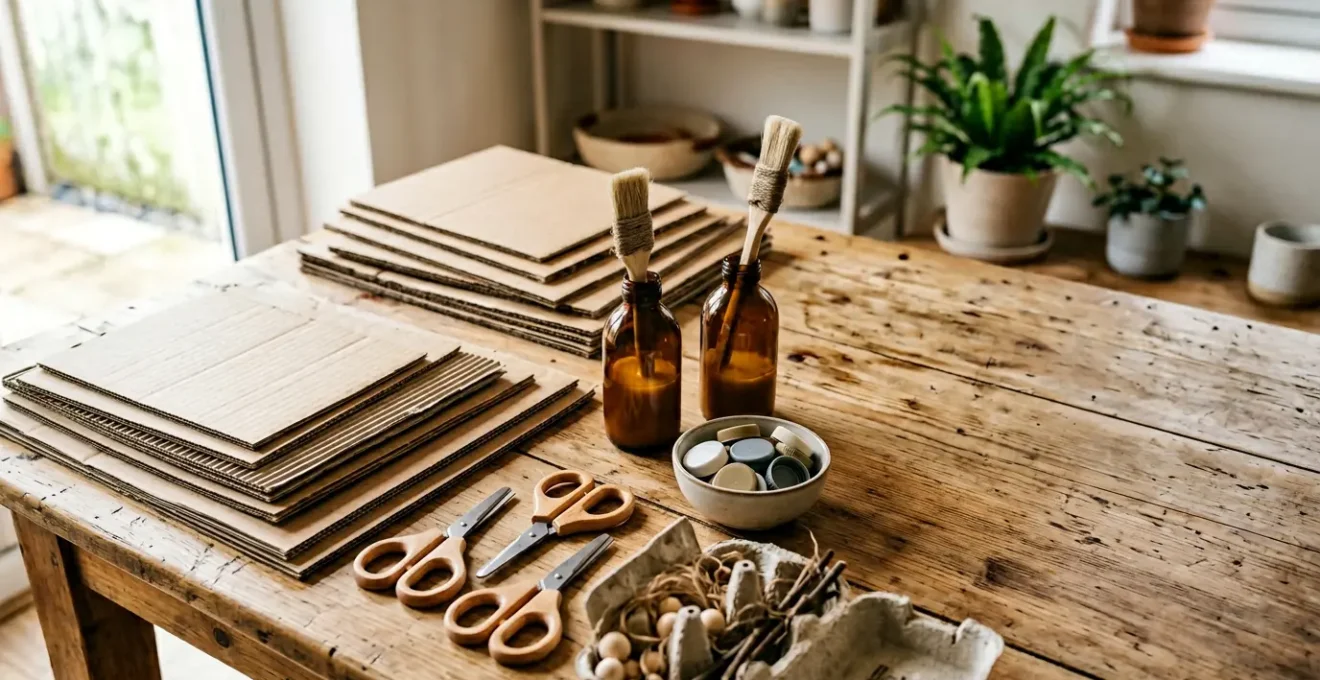
Contrary to marketing pressure, you don’t need expensive, single-use kits to raise a creative child; in fact, they often hinder true artistic development.
- Budget constraints can be reframed as a powerful lesson in resourcefulness, teaching problem-solving and material science with everyday items.
- Focusing on the « process » of creating (the mess, the exploration) over the « product » (the final painting) builds resilience and a love for art.
Recommendation: Embrace « junk modelling » and ephemeral art not as a compromise, but as a deliberate, superior educational strategy to teach your child that creativity comes from their mind, not a box.
As a parent, you face a constant barrage of colourful boxes promising to unlock your child’s inner Picasso. Glittering « creativity kits, » elaborate modelling sets, and a never-ending stream of plastic tools all whisper the same message: you must buy more to give your child the best start. This pressure can be overwhelming, especially when you’re on a budget and wary of accumulating more plastic junk. It leaves you wondering if a box of cereal and some PVA glue can ever compete with a £20 « slime-making station. »
The common advice is to use recycled materials, but this often feels like a consolation prize. What if we reframe the entire conversation? The truth is, relying on household « junk » and found objects isn’t a second-best option. It is a more potent, more effective way to teach the foundational skills of art. True creativity isn’t about following instructions on a box; it’s about problem-solving, understanding materials, and generating ideas from scratch. It’s the art of resourcefulness.
This guide will walk you through why a frugal approach is pedagogically superior. We won’t just list cheap ideas; we will explore the « why » behind them. You will learn how to turn a plastic bottle into a lesson in material science, why praising the mess is more important than praising the final painting, and how to manage the mountain of creations without guilt. We will shift the focus from what you lack to the incredible opportunities you can create with what you already have, empowering both you and your child.
This article explores the core principles of fostering creativity on a budget, providing practical solutions for everything from gluing plastics to introducing messy play to a reluctant child. The following sections break down these key strategies.
Summary: A Practical Guide to Fostering Art Skills with Everyday Items
- Junk Modelling: What Glue Actually Sticks Plastic Bottles Together?
- Process vs Product: Why You Should Praise the Mess, Not Just the Painting?
- Tablet Art: Best Free Drawing Apps That Mimic Real Painting?
- The Art Bin: How to Store 300 Drawings Without Throwing Them Away?
- Ephemeral Art: Making Mandalas from Leaves and Stones?
- Messy Play for Haters: How to Introduce Textures to a Tactile Defensive Child?
- Yellow Sticker Shopping: When is the Best Time to Bag a Bargain?
- Healthy Family Meals for Under £1 per Head: Is It Actually Possible?
Junk Modelling: What Glue Actually Sticks Plastic Bottles Together?
The first hurdle of « junk modelling » is a practical one: making things actually stick. When a child’s meticulously crafted rocket ship falls apart because the glue won’t bond to a plastic bottle, frustration mounts and the creative session ends in tears. This isn’t just a technical problem; it’s a foundational lesson in material science. Instead of just searching for a single « magic » glue, you are teaching your child that different materials have different properties and require different solutions.
For porous materials like paper and cardboard, standard child-safe PVA glue (white school glue) is perfect. It soaks into the fibres and creates a strong bond as it dries. However, smooth, non-porous plastics like PET bottles are a different challenge. A hot glue gun offers a strong, quick bond but requires strict adult supervision due to the high heat. For older children or projects needing a permanent fix, superglue is an option, but again, this is for adult use only. The key is to match the adhesive to the job.
However, the most important lesson in resourcefulness is that glue isn’t always the answer. Mechanical fastenings teach a different kind of engineering. Can parts be joined with tape? Can you cut slots and tabs to create an interlocking structure? Can cable ties or string be used to lash pieces together? This shifts the thinking from « what can I stick on? » to « how can I join this? »
Case Study: The Rocket Jet Pack Challenge
A community craft facilitator faced the challenge of helping 40 children build rocket jet packs from cardboard and painted plastic bottles, needing a bond that set in under two minutes. After discovering hot glue was too slow and created a bottleneck, they pivoted. The solution came from mechanical fastening: they successfully used cable ties reinforced with duct tape. This demonstrates how a non-adhesive, mechanical solution often outperforms glue for speed and child-friendly application, turning a material problem into a design success.
Process vs Product: Why You Should Praise the Mess, Not Just the Painting?
When a child proudly presents you with a finished painting, our first instinct is to say, « That’s a beautiful house! » This is product-focused praise. While well-intentioned, it subtly tells the child that the value lies only in the final, recognisable outcome. Process art flips this script. It champions the act of creation itself—the mixing of colours, the feeling of the paint, the smearing, splashing, and exploring. The value is in the *doing*, not the finished piece.
This distinction is crucial for development. As TigerKubz Early Childhood Education explains, process art is about experimentation, while product art is about refining skills for a specific task. In their analysis of the difference between process and product art, they note:
Process art allows children to experiment with movements and materials freely, while product art refines these skills through precise tasks.
– TigerKubz Early Childhood Education, Difference Between Process Art Vs. Product Art 2026
When we praise the process, we say things like, « I love how you swirled the blue and yellow together! » or « You worked so hard on that section. » This builds intrinsic motivation, resilience, and a willingness to experiment without fear of failure. A child focused on process isn’t afraid to « ruin » their painting, because the goal is exploration, not perfection.
This approach transforms a messy art session from a potential source of stress into a rich sensory experience. The goal isn’t a fridge-worthy masterpiece; it’s a happy, engaged child learning about cause and effect, developing fine motor skills, and building the confidence to try new things. The mess is not a side effect; it is the evidence of learning.
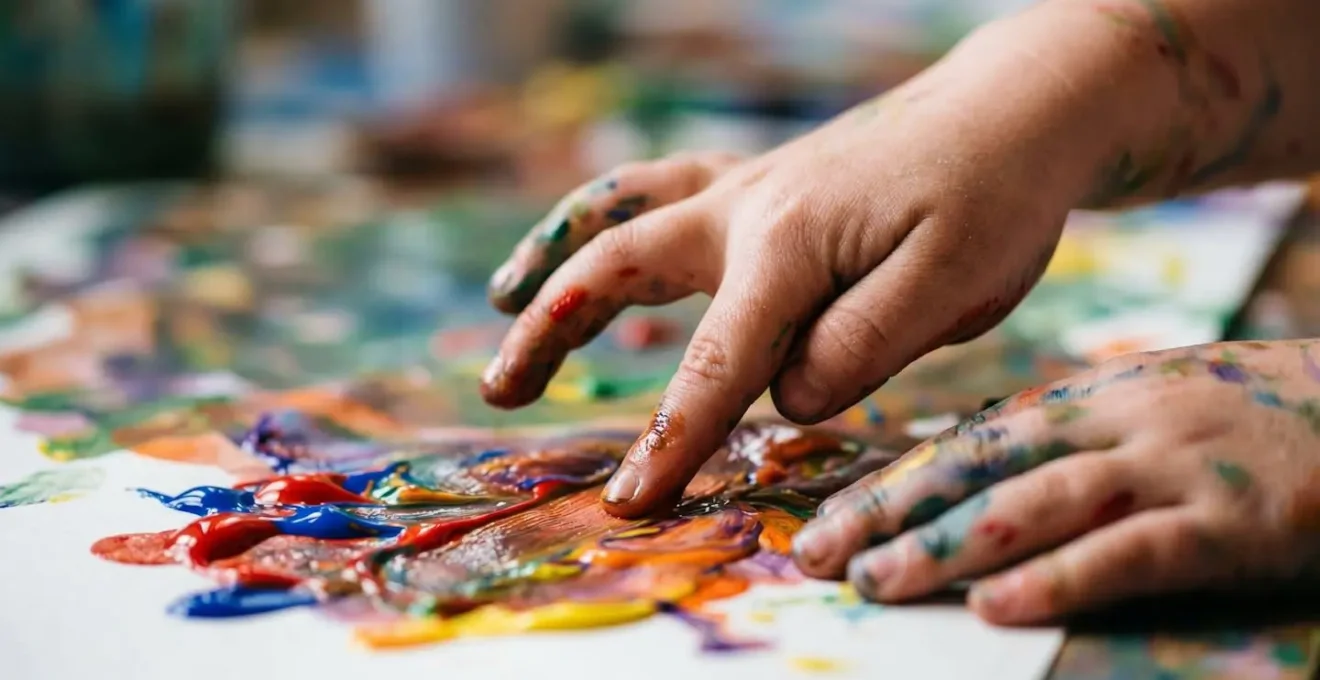
As you can see, the joy and learning are happening in the tactile interaction with the material. This focus on sensory exploration is what builds a positive, lasting relationship with art, far more than the pressure to create a perfect picture.
Tablet Art: Best Free Drawing Apps That Mimic Real Painting?
Resourcefulness in the 21st century isn’t limited to cardboard and glue sticks. For parents on a budget, a tablet or an old smartphone can be one of the most powerful, cost-effective, and mess-free art tools available. While some may worry that digital art isn’t « real art, » it offers unique advantages and teaches different but equally valuable skills. The key is finding free apps that go beyond simple doodling and mimic the satisfying experience of using physical media.
Many apps are designed to simulate the specific behaviour of real-world tools. Some excel at replicating the translucent, bleeding effect of watercolours, while others can create the thick, textured impasto of oil paints. These digital tools allow for infinite experimentation with colour and composition without a single drop of wasted paint. Furthermore, as DigiKidz Educational Technology Review highlights, digital art opens up entirely new creative avenues: infinite colours, layer-based composition, and the magical « undo » button, which encourages risk-taking.
Choosing the right app depends on your child’s age and what you want to achieve. Some are perfect for toddlers exploring cause and effect with bright colours, while others offer sophisticated brush engines for older children wanting to learn more advanced techniques. The following table compares some of the best free options based on how well they simulate realistic art media.
This comparison, based on a comprehensive analysis from the Educational App Store, can help you select the right tool for your young artist.
| App Name | Best For Mimicking | Age Range | Key Realistic Feature | Platforms |
|---|---|---|---|---|
| Glaze | Oil painting with texture | 8+ | No undo button; realistic color mixing and layer-by-layer technique | iOS, Android |
| Tayasui Sketches | Watercolor transparency | 6+ | Wide range of virtual brushes simulating natural media behavior | iOS, Android |
| Kids Doodle | Crayon and marker effects | 3-7 | 20 brush types including neon, fireworks, rainbow, crayon | iOS, Android |
| Tux Paint | General drawing with fun effects | 3-12 | Easy interface with realistic sound effects and tactile feedback | Windows, Mac, Linux |
The Art Bin: How to Store 300 Drawings Without Throwing Them Away?
A creative child produces a staggering volume of work. Soon, every surface is covered, and the guilt begins to set in. How can you possibly throw away these precious creations? The answer isn’t to become a hoarder or to secretly discard their art. The solution is to teach your child a curatorial mindset. Just as a museum curator selects the most significant pieces for a collection, you and your child can learn to curate their body of work together. This reframes decluttering from a negative act of disposal into a positive act of celebration and selection.
This process empowers your child, giving them ownership over their own artistic legacy. It teaches them to reflect on their work, identify what makes a piece special to them, and let go of the rest. This is a valuable life skill that extends far beyond art. It’s about learning to value quality over quantity and making intentional choices.
One parent beautifully describes this as creating an « Art Retirement Ceremony. » As she explains in a testimonial about involving children in curating their own work:
We sift through bins together at the beginning and end of every school year, oohing and ahhing at how cute they were in preschool. What seems unbearably precious at first can fade in time.
– Abundant Life With Less
This approach transforms a chore into a cherished ritual. For the pieces you decide not to keep physically, take a high-quality photograph. A digital archive takes up no space and can be turned into a photo book, a screensaver, or a special gift for grandparents.
Your Action Plan: The Five-Step Artwork Curation System
- Create Sorting Piles: Use Post-It notes to label three areas: ‘Keep’, ‘Photo’, and ‘Recycle’. This makes the process clear and organised.
- Involve Your Child: Ask them directly, « Do you want to keep this piece of art? » Respect their decision to build trust and ownership.
- Photograph for Posterity: Take clear photos of the artwork you want to remember but don’t have space to store physically.
- Establish a Storage System: Store the ‘Keep’ pile in a designated, labelled container. A 66-quart clear bin per child is often recommended.
- Review Annually: Make it a yearly ritual to review the bin together, removing pieces that have « lost their luster » to make room for new favourites.
Ephemeral Art: Making Mandalas from Leaves and Stones?
Perhaps the most profound solution to the problem of « too much art » is to embrace creations that were never meant to last. This is the world of ephemeral art—art that is temporary by design. Making mandalas from fallen leaves, building sculptures from beach pebbles, or drawing pictures in the sand are not just fun activities; they are a deep lesson in mindfulness and the beauty of the present moment.
This practice directly counters the consumerist pressure to create permanent objects. It teaches a child that the value and joy of art are concentrated in the act of making. As the blog Abundant Life With Less wisely puts it:
The magic of making something is in the making not the saving. There are very few pieces I’ll truly care about when they are older. I keep those, and let the rest go.
– Abundant Life With Less, Decluttering Kids’ Artwork: How to Display, Store and Trash It
When a child creates something they know will be washed away by the tide or blown away by the wind, the focus shifts entirely to the process. There is no pressure for perfection, only the freedom of pure creation.
This isn’t just « playing with leaves »; it’s a recognized artistic tradition. By introducing your child to the work of Land Artists, you validate their play as « real art. »
Case Study: Inspiration from the Land Art Movement
Educational programs often introduce children to the work of professional artists like Andy Goldsworthy, who is famous for his stunning temporary sculptures made from natural materials like ice, leaves, and stones. When children learn that their leaf mandala is part of a respected artistic movement, it elevates the activity. It’s no longer just simple play but an engagement with a professional art form. This connection validates their work, reduces perfectionism, and builds a profound connection to the natural world and mindfulness practices.
Messy Play for Haters: How to Introduce Textures to a Tactile Defensive Child?
For some children, the idea of messy play is not exciting; it’s overwhelming. A child with tactile defensiveness or sensory sensitivities may recoil from the feeling of finger paint or the stickiness of dough. Forcing them into a full-blown messy activity can create negative associations with art that last for years. The key is a gradual, child-led introduction where they are always in complete control.
This principle is sometimes called the « Chain of Control. » It means the child dictates the pace, the tools, and the level of engagement. Your role as the art teacher is not to push, but to provide a safe and inviting « sensory ladder » for them to climb at their own speed. You are a guide, not a director. Use language that focuses on exploration rather than enjoyment, such as, « Let’s see what this material does, » instead of « Isn’t this fun? » This removes the pressure to feel a certain way.
Start with materials that are dry and predictable, and always provide tools to act as a barrier between their skin and the substance. A paintbrush in sand is less intimidating than a hand in slime. The goal is to build trust and slowly expand their comfort zone. The following progression can help structure this gentle introduction:
- Level 1 – Dry and Predictable: Begin with textures that are consistent and non-threatening. A tray of dry rice, lentils, or smooth sand is a great starting point. Provide scoops, brushes, and funnels.
- Level 2 – Semi-Solid and Controlled: Progress to materials like playdough or cloud dough (flour and oil). Keep it contained in a tray and always offer tools like rollers and sticks for indirect contact.
- Level 3 – Wet Exploration: Only introduce wet materials like paint or slime when the child shows curiosity. Always provide a way out, like a nearby bowl of water and a towel, so they know they can get clean instantly.
Yellow Sticker Shopping: When is the Best Time to Bag a Bargain?
The art of resourcefulness extends beyond the craft table and into every aspect of a frugal lifestyle. Mastering the rhythms of your local supermarket’s reduction schedule is a prime example. « Yellow sticker » shopping is not just about luck; it’s a strategic activity that teaches observation, timing, and planning—all skills that are vital for a creative mindset. Knowing when to go can make the difference between finding a few sad-looking carrots and scoring a haul that fuels your family for days.
While timings can vary slightly between stores, general patterns have emerged. Understanding the logic behind these reductions gives you a significant advantage. Food safety protocols and the need to clear shelf space for the next wave of products dictate the schedule. For example, fresh in-store bakery items often see their first reductions mid-morning to make way for the lunchtime rush. Items with a very short shelf life, like pre-packaged sandwiches and salads, are typically marked down in the early afternoon.
The biggest bargains, however, are usually found in the evening. Chilled items like meat, dairy, and ready meals require refrigeration and are therefore reduced more aggressively as the closing time approaches to avoid being wasted. According to insights on supermarket strategies, strategic shoppers know that chilled items are often reduced 1-2 hours before the store closes due to these strict food safety rules. Learning this rhythm turns a simple shopping trip into a rewarding treasure hunt, reinforcing the core lesson that careful planning yields great results.
Key takeaways
- Resourcefulness as a Skill: Teaching children to create with what they have is a more valuable lesson than providing them with expensive, pre-packaged art kits.
- Process Over Product: Focus on the joy and learning in the act of creation, not just the final outcome, to build resilience and a love for art.
- The Power of Ephemeral Art: Embrace temporary creations (like nature mandalas) to teach mindfulness and remove the pressure of making something permanent.
Healthy Family Meals for Under £1 per Head: Is It Actually Possible?
The question of feeding a family on a tight budget seems far removed from fostering art skills, but it’s here that the philosophy of resourcefulness comes full circle. The mindset required to turn a bag of yellow-sticker vegetables into a healthy meal is the exact same mindset required to turn a cardboard box into a castle. It’s about seeing potential where others see limitations. And in the most creative households, these two activities merge into one.
Achieving healthy meals for under £1 a head is indeed possible, but it requires planning, a rejection of food snobbery, and a willingness to cook from scratch. It relies on staples like lentils, pasta, and seasonal vegetables. It means embracing the « creative haul » from a successful yellow-sticker shop. But the most inspiring step is when the line between « food » and « art supplies » begins to blur.
This dual-purpose approach is the ultimate expression of a resourceful home, proving that creativity is not a scheduled activity but a way of life. It’s a powerful, tangible lesson for a child: value is not inherent in an object but is created by your imagination.
Case Study: The Creative Haul Concept
Budget-conscious families have discovered that yellow-sticker shopping can stock both the pantry and the art bin simultaneously. This dual-purpose approach turns potential food waste into a creative opportunity. Wilted vegetables with interesting shapes become stamping tools for painting. Stale bread, when soaked and mashed, can be transformed into a type of dough for sculpting. Near-expired flour and salt are the perfect ingredients for salt dough ornaments. This innovative mindset demonstrates that resourcefulness itself is a teachable skill, turning a challenge into both nourishment and art.
By adopting this resourceful mindset, you are giving your child a gift far more valuable than any art kit. You are teaching them that the most powerful creative tool they will ever own is their own imaginative, adaptable, and brilliant mind.