In summary:
- The « summer slide » is real, but fighting it with workbooks and drills turns summer into a chore.
- The secret is « pedagogical stealth »: weaving learning into fun, everyday activities so kids don’t even notice.
- This guide provides teacher-tested strategies to turn grocery shopping into a math lesson and a walk into a science mission.
- Focus on sparking curiosity and building skills through play, not pressure, to keep minds sharp all summer long.
The final school bell rings, and a collective sigh of relief echoes through the hallways. For kids, it’s the start of freedom. For many parents, however, it’s the beginning of a low-level anxiety known as the « summer slide »—the well-documented tendency for students to lose academic skills over the long break. The common advice is to fight back with a regimen of workbooks, flashcards, and scheduled reading time. But let’s be honest: this approach often turns parents into reluctant drill sergeants and summer vacation into a series of low-grade battles.
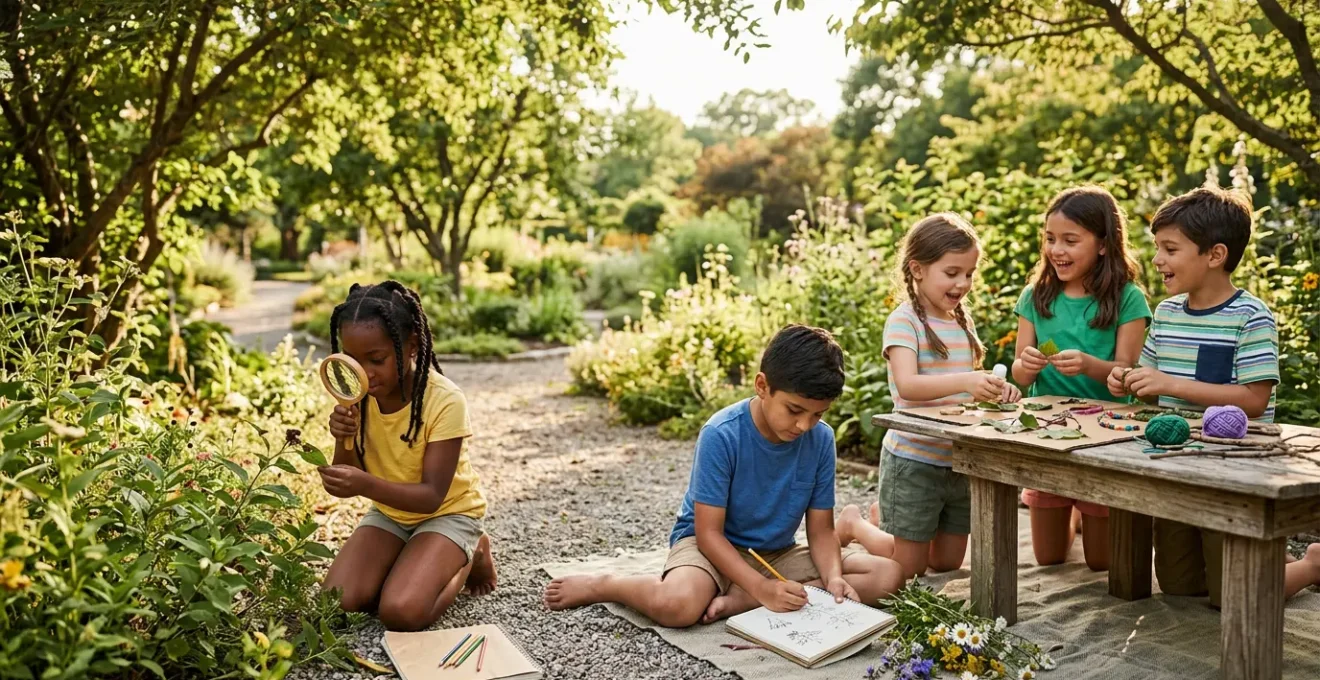
As a former teacher, I can tell you there’s a much better way. What if the secret wasn’t to add more ‘school’ to your summer, but to become a master of pedagogical stealth? It’s about creating an « invisible curriculum » by cleverly embedding learning mechanics into the fabric of everyday life. This isn’t about tricking your kids; it’s about reframing activities to reveal the learning that’s already there. It’s the difference between forcing them to do a math worksheet and challenging them to figure out the best deal per ounce on their favorite cereal at the store.
This guide moves beyond the generic advice. We will explore eight core strategies that transform routine summer fun into powerful, engaging learning opportunities. From turning a library trip into an adventure and a cooking session into a science experiment, you’ll learn how to keep your child’s mind active and curious without a single worksheet. It’s about nurturing the process of discovery and making learning an incidental, joyful part of their summer, not a scheduled burden.
This article provides a roadmap to a smarter, more enjoyable summer. Inside, you will find a series of practical, clever strategies designed by a teacher to help you combat the summer slide effectively and effortlessly.
Summary: A Teacher’s Roadmap to a Smarter Summer
- The Library Challenge: How to Complete the Summer Reading Challenge?
- Citizen Science: Counting Butterflies to Teach Data Handling?
- Supermarket Maths: Teaching Decimals and Budgeting While Shopping?
- Postcards and Diaries: Sneaky Ways to Keep Handwriting Up to Speed?
- Free Museums: Which Exhibits Actually Engage Key Stage 2 Kids?
- Is 7 Too Old to Start a Second Language for Fluency?
- Window Sill Gardening: Growing Food from Scraps?
- Kitchen Science: Teaching STEM Concepts with Baking Soda and Vinegar
The Library Challenge: How to Complete the Summer Reading Challenge?
The annual Summer Reading Challenge is a fantastic initiative, but simply tracking the number of books read misses the point. The goal isn’t just volume; it’s about building confidence and a genuine love for stories. The real win is when a child starts choosing books with excitement, not obligation. In fact, The Reading Agency’s data confirms that 70% of children who participated in 2024 reported feeling more confident reading. The teacher’s trick is to gamify the process and broaden the definition of what « counts » as reading.
Instead of a simple list, transform the challenge into a grand adventure. This is where pedagogical stealth shines. You’re not just telling them to read; you’re inviting them to play a game where reading is the main mechanic. This shifts the motivation from external (pleasing a parent) to internal (completing the game). It encourages variety, critical thinking, and a connection between the page and the real world, turning passive readers into active participants.
The key is to layer on creative objectives that go beyond « finish the book. » By doing so, you’re secretly teaching genre awareness, critical analysis, and the joy of sharing opinions. The focus moves from the « what » (reading a book) to the « how » (experiencing a story). This small shift is what prevents burnout and keeps them engaged all summer long.
Your Action Plan: Supercharge the Reading Challenge
- Create a ‘Book Bingo’ card with diverse categories like ‘A book with a blue cover,’ ‘A non-fiction book about animals,’ or ‘A book your parent loved as a kid’ to encourage reading variety.
- Design a ‘Reading Passport’ system where each book from a different genre or author earns a stamp, turning reading into a journey of discovery.
- Link reading to real-world activities—after reading a book about pirates, build a small raft; after a book about baking, make cookies together.
- Teach children to write one-sentence reviews for each book to develop critical thinking beyond just tracking numbers.
By framing the challenge this way, you’re not just preventing the summer slide; you’re building a lifelong reader.
Citizen Science: Counting Butterflies to Teach Data Handling?
A walk in the park can be more than just exercise; it can be a field research mission. This is the essence of citizen science—engaging the public in collecting real scientific data. An activity like counting butterflies isn’t just a way to pass the time; it’s a brilliant, hands-on lesson in observation, classification, and, most importantly, data handling. Children learn to follow a protocol, record their findings accurately, and see how their small contribution fits into a much bigger picture.

This isn’t just a cute, make-believe task. As shown by the success of Butterfly Conservation’s Big Butterfly Count, this is a form of contextual learning with real-world impact. Their project proves that families can contribute valid scientific data while learning essential STEM skills. This case study demonstrates how mass-participation citizen science can achieve meaningful scientific output, producing population trends that align with rigorous monitoring schemes. When a child knows their count will be used by actual scientists, the task gains a profound sense of purpose.
Case Study: The Big Butterfly Count
Butterfly Conservation’s Big Butterfly Count shows how engaging the public works. With over 296,793 participants since 2010, the project produces reliable butterfly population trends. This proves that children and families can contribute valid scientific data, all while learning about data collection and analysis firsthand.
The beauty of this approach is its scalability. It can be as simple as a 15-minute count in your back garden or a more involved project tracking bird species over several weeks. The core lesson remains the same: you are teaching the scientific method in its most authentic form—observation, recording, and contribution. It’s an unforgettable way to show that science isn’t just something that happens in a lab.
This transforms a simple outdoor activity into an empowering experience, fostering a sense of responsibility and scientific curiosity.
Supermarket Maths: Teaching Decimals and Budgeting While Shopping?
The grocery store is one of the best and most underutilized math classrooms in the world. Forget abstract worksheets about apples and oranges; here, the math is real, immediate, and has a tangible outcome. Why is this so important? Because research shows that children as young as 5 years old start developing persistent habits with money. The weekly shop is a perfect, low-stakes environment to instill the foundations of financial literacy.
The teacher’s strategy is to turn your child into the « Chief Financial Officer » of the shopping trip. Give them a small, specific budget and a mission. For example: « We have £5 to spend on fruit for the week. Your job is to get us the best possible variety without going over. » Suddenly, they aren’t just tagging along; they are problem-solving. This is contextual learning at its finest. The concepts of decimals, weight, and budgeting are no longer abstract school subjects but tools to achieve a goal.
Here are a few « stealth » missions you can assign:
- The Unit Price Detective: Challenge them to find the best value between two different sizes of the same product. Is the bigger box always cheaper per 100g? This is a masterclass in division and critical thinking.
- The Estimation Champion: Have them keep a running total of the items in the basket, rounding to the nearest pound. How close can they get to the final bill? This hones mental arithmetic skills.
- The Change Calculator: If you pay with cash, have them calculate the change you should receive before the cashier does. This reinforces subtraction with decimals.
By giving them agency and a real problem to solve, you are teaching them that math is a powerful tool for making decisions in the real world, not just for passing tests.
This simple shift in perspective transforms a weekly chore into a powerful, recurring lesson in practical mathematics.
Postcards and Diaries: Sneaky Ways to Keep Handwriting Up to Speed?
“Just practice your handwriting” is a phrase that can make any child groan. The resistance comes because the task often lacks purpose. A teacher’s best trick is to give writing a real-world job to do. Writing a postcard to a grandparent or keeping a private summer diary isn’t « handwriting practice »; it’s communicating, sharing, and recording memories. This sense of purpose is the secret ingredient that makes the practice stick.
The need for this is more critical than you might think. The « summer slide » hits literacy skills hard. Research from educators highlights that children in grades three through five lose approximately 20% of their gains made in reading over the break. While this stat focuses on reading, writing is deeply intertwined. Maintaining fine motor skills and the practice of forming letters and sentences helps anchor those literacy skills and prevents this significant backslide.
The key is to make the act of writing a low-pressure, high-reward activity. A diary is a private space for their thoughts, free from red ink and correction. A postcard has a built-in audience and a clear, satisfying conclusion when it’s dropped in the postbox. You can also try creating a « Family Newspaper » for the week, where each person contributes a small article, a drawing, or a comic strip about their adventures. This collaborative project makes writing a fun, shared activity rather than a solitary chore.
These activities work because they focus on communication, not perfection. The goal is to keep the muscles moving and the connection between thought and written word fluid. You are preserving muscle memory and reinforcing the idea that writing is a powerful tool for connection, not just an academic exercise to be graded.
This approach keeps handwriting sharp while simultaneously strengthening family bonds and creating cherished keepsakes of their summer.
Free Museums: Which Exhibits Actually Engage Key Stage 2 Kids?
Taking a child to a museum can be a roll of the dice. You might get a wide-eyed, curious explorer, or you might get a bored, listless child dragging their feet after ten minutes. The difference often lies not in the museum itself, but in the strategy you employ. The common mistake is to treat it like a tour, marching from one exhibit to the next and reading placards. A teacher knows the secret is to transform the visit into an interactive game focused on process over product.
Instead of asking « What is that? » (a question with one right answer), ask « How do you think they made this? » or « What problem was this trying to solve? ». These open-ended questions invite speculation, imagination, and critical thinking. You’re not testing their knowledge; you’re sparking their curiosity. This shift turns them from passive observers into active detectives, trying to piece together the story behind the objects.
Here are some proven engagement strategies to put in your back pocket:
- Design a Mini-Exhibit: Before the visit, have your child design a mini-exhibit on paper about something they love (e.g., dinosaurs, space). At the museum, have them analyze a real exhibit. Ask: « How did they tell their story? What would you do differently in your own exhibit? »
- Run a Conceptual Scavenger Hunt: Ditch the « find this specific object » list. Instead, create prompts like, « Find three examples of camouflage, » « Find a tool that changed how people live, » or « Find something that looks happy. » This teaches abstract thinking and pattern recognition.
- Establish the « Three Things » Ritual: On the way home, make it a tradition for everyone to share their three favorite things from the visit and, crucially, *why*. This simple ritual reinforces memory recall and helps them articulate their opinions and experiences.
The goal is to arm them with a new way of seeing. By focusing on the ‘how’ and ‘why,’ you give them the tools to engage with any exhibit, whether it’s ancient pottery or modern art. You’re teaching them to look for stories, not just labels.
This approach guarantees they’ll leave with more than just tired feet; they’ll leave with a mind buzzing with new ideas and questions.
Is 7 Too Old to Start a Second Language for Fluency?
This is a question that many ambitious parents ask, often with a touch of anxiety. Have we missed the « critical window » for effortless, native-like fluency? The short answer is a reassuring « no. » While younger children may pick up pronunciation with uncanny ease, a 7-year-old brings significant advantages to the table: a longer attention span, a better understanding of grammatical concepts in their own language, and a more developed ability to learn intentionally.
However, the approach must be radically different. The goal for a summer of language learning at this age should not be fluency. That’s an intimidating, long-term goal that can lead to frustration. The summer objective is to spark interest, build positive associations, and foster cultural curiosity. As the general educational consensus on the topic suggests, the method is key.
The answer is ‘No, but the method for a 7-year-old should be play, not study.’ The summer objective isn’t mastery, but sparking interest and cultural curiosity.
– Educational consensus on childhood language acquisition, Summer Learning Activities Research
This is where the « invisible curriculum » comes into play. Weave the new language into your daily life. Label items around the house in Spanish. Learn to count to ten in French during car rides. Watch their favorite animated movie in German with English subtitles. Use a free app like Duolingo for 10 minutes a day, framing it as a fun game with points and streaks. The focus is on playful, low-pressure exposure. The goal is for them to think, « This is fun! » not « This is another lesson. »
You’re not trying to create a bilingual prodigy in eight weeks. You’re planting a seed. You’re showing them that other languages exist and that learning them can be a joyful act of discovery. This positive foundation is far more valuable than drilling verb conjugations.
By the end of the summer, they may not be fluent, but they will have a passport full of new sounds, words, and a curiosity that could last a lifetime.
Window Sill Gardening: Growing Food from Scraps?
A sunny windowsill can become a fascinating biology lab. The concept of regrowing food from scraps—the base of a celery stalk, the top of a carrot, or a green onion root—is a powerful and tangible lesson in botany, patience, and the life cycle. It’s one thing to read about photosynthesis in a book; it’s another to witness a seemingly dead vegetable scrap sprout new, green life right before your eyes.
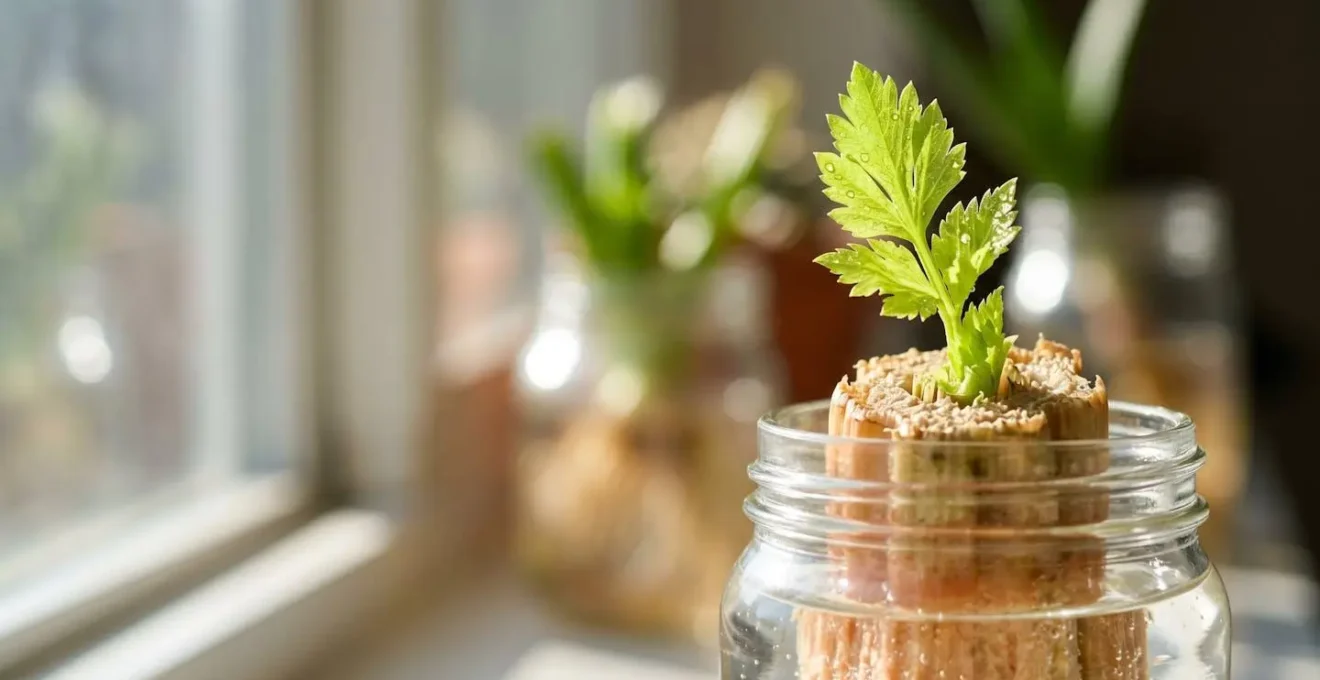
This is more than just a neat trick; it’s an opportunity to teach the scientific method in a hands-on way. To elevate this from a simple activity to a true learning experience, introduce the « Life Cycle Logbook. » Have your child draw or photograph the plant’s progress each day and measure its growth. This simple act of data tracking teaches observation skills and reinforces the concept of change over time.
Hands-On Science: The Life Cycle Logbook
By having children maintain a ‘Life Cycle Logbook’ where they document plant progress daily, parents can teach patience, data tracking, and botany fundamentals. You can even introduce the concept of a controlled experiment by growing the same type of scrap in different conditions—for example, one on a sunny windowsill and one in a dark cupboard. This allows children to form a hypothesis, observe the results, and draw conclusions, teaching the scientific method in a tangible, memorable way.
This project is the perfect antidote to the instant gratification culture. A plant doesn’t grow in a day. The daily check-in teaches a quiet lesson in patience and nurturing. It also provides a wonderful, living illustration of where our food comes from, creating a deeper connection to the natural world and the food on their plate. It’s a slow, steady, and incredibly rewarding science experiment that unfolds over the entire summer.
Best of all, at the end of the experiment, you might just have some fresh herbs or greens to add to your dinner.
Key Takeaways
- The most effective summer learning is « invisible, » woven into activities kids already enjoy.
- Shift the focus from « getting the right answer » to understanding the « how » and « why » to build critical thinking.
- Give tasks a real-world purpose, whether it’s budgeting at the store or writing a postcard, to create intrinsic motivation.
Kitchen Science: Teaching STEM Concepts with Baking Soda and Vinegar
The kitchen is the ultimate home laboratory. It’s a place of delicious smells, fascinating transformations, and endless opportunities for incidental learning. Every recipe is a scientific experiment in disguise, full of lessons in chemistry, physics, and math. For a child, helping to bake a cake isn’t a lesson; it’s fun. But for the clever parent, it’s a perfect chance to explore core STEM concepts in a memorable, multi-sensory way.
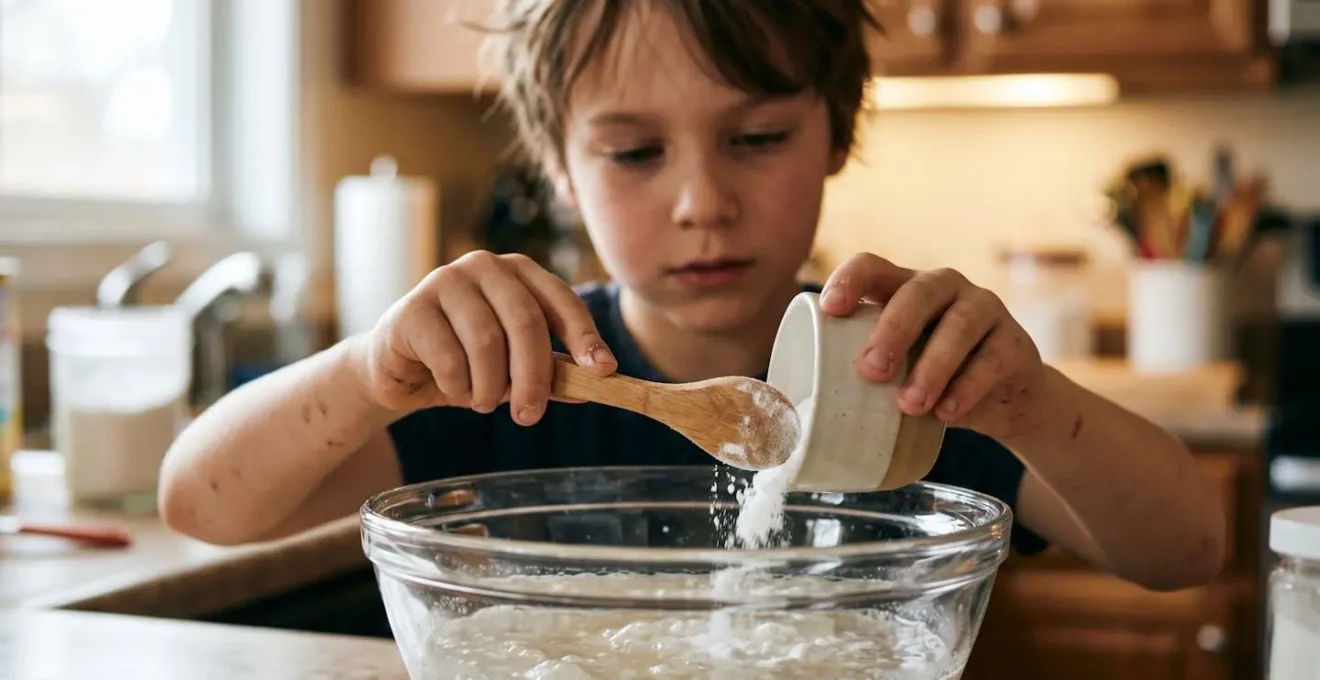
The classic baking soda and vinegar volcano is just the beginning. The real learning happens when you connect the spectacular « fizz » to the fluffy texture of a pancake. Explain that baking soda is a base and vinegar (or buttermilk) is an acid. When they mix, they create carbon dioxide gas—the same stuff that makes soda bubbly. Those bubbles get trapped in the batter, making it light and airy. You’ve just taught a chemistry lesson without a single textbook.
To really embrace your inner science teacher, try these strategies:
- The Recipe Detective: Make a simple recipe, like pancakes, twice. The first time, follow it exactly. The second time, « forget » a key ingredient like the baking powder. Have your child act as the detective, observing the differences and explaining what they think happened. This is experimental design in its tastiest form.
- Explore States of Matter: Use cooking to show physics in action. Melting butter or chocolate is a perfect demonstration of a solid turning into a liquid. Boiling water shows a liquid turning into a gas (steam).
- Present « Kitchen Mysteries »: Frame challenges as problems to solve. For example, « Our salad dressing keeps separating. What in our kitchen can act as an emulsifier to hold the oil and vinegar together? » (Hint: a little mustard or egg yolk).
This approach teaches children to see their world with a scientist’s eyes—to ask questions, to observe, to predict, and to understand cause and effect. It’s a powerful way to show that science is not a remote subject but a dynamic force at work all around us, even in a bowl of cake batter.
So this summer, don’t just plan activities; design an invisible curriculum. Your kids will have the time of their lives, and you’ll have the quiet satisfaction of knowing you’re their best, and most clever, teacher.