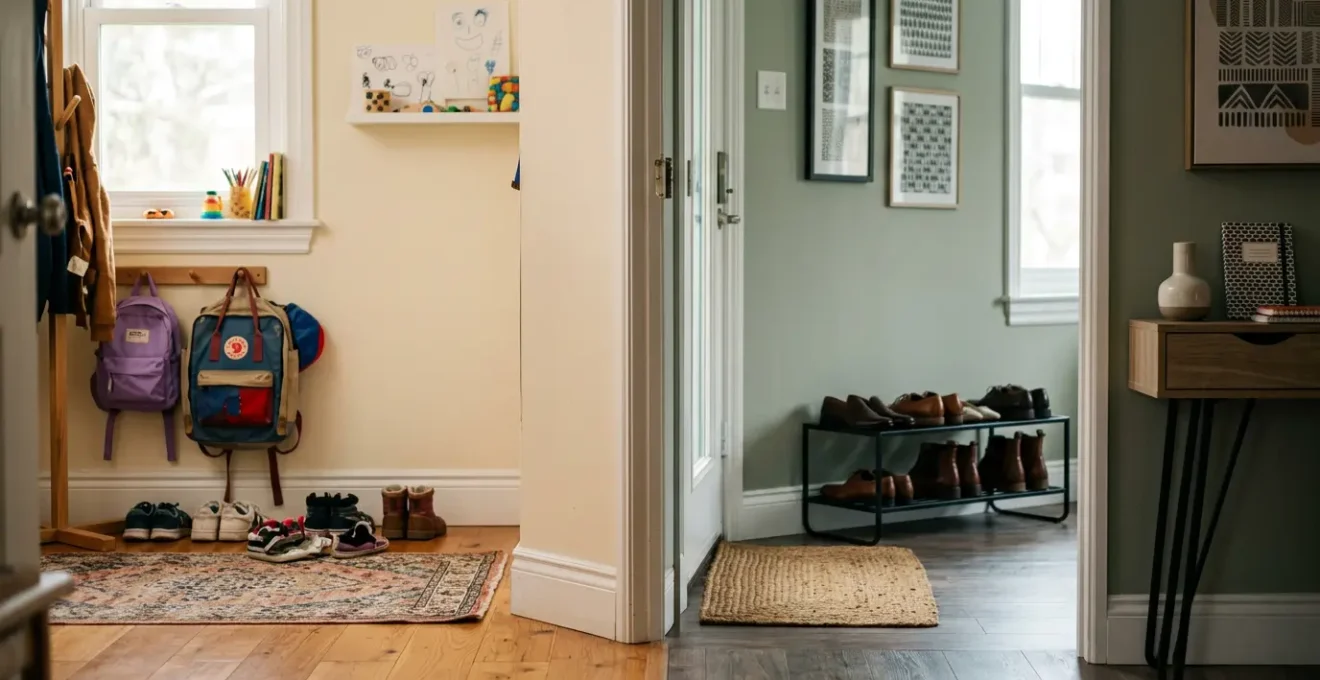
In summary:
- Stop striving for a single, ‘fair’ set of rules for everyone. It’s an impossible and conflict-driving standard.
- Instead, design clear ‘operational systems’ for each major conflict zone: discipline, space, money, and time.
- Teach children to ‘code-switch’ between households. This is a vital life skill, not a sign of parental failure.
- Prioritize the couple’s relationship with scheduled, structured meetings to proactively manage the family, not just react to crises.
The words hang in the air, a mix of defiance and pain: « You’re not my real dad. » For a step-parent, it’s one of the most challenging moments, a flashpoint in the ongoing struggle to navigate the complex dynamics of a blended family. You’re trying to create a stable, loving home, but you’re constantly tripping over invisible lines drawn between « your kids » and « my kids, » your house and their other house. The common advice is to « be consistent » and « present a united front, » but this often feels like applying a band-aid to a deep wound.
Many well-intentioned step-parents fall into the trap of trying to merge two families into one seamless unit with a single, unified rulebook. This approach, while logical on the surface, often backfires by invalidating the children’s past experiences and creating resentment. It ignores the fundamental reality that blended families are not created from scratch; they are grafted together, complete with histories, loyalties, and established ways of being. This process is delicate, and research indicates that stepfamily integration can take up to 6 years, a timeline that requires patience and strategy, not just force of will.
But what if the key wasn’t enforcing uniformity, but embracing structured difference? The true path to harmony lies not in erasing the ‘your house vs. my house’ divide, but in managing it with clear, respectful, and well-designed systems. This guide moves beyond the platitudes to offer a realistic coaching framework. We will explore how to build operational systems for discipline, space, finances, and traditions that reduce conflict by creating predictability and respecting everyone’s place within the new family structure.
This article will provide practical frameworks for the most common blended family conflicts. By understanding these systems, you can move from a state of constant reaction to one of proactive, intentional leadership within your home. The following sections break down each challenge and offer a clear path forward.
Summary: A Practical Guide to Blended Family Rule-Making
- The ‘You’re Not My Dad’ Line: How to Handle Discipline as a Step-Parent?
- Room Sharing: How to Allocate Bedrooms Fairly When Step-Siblings Visit?
- Paying for Step-Kids: Who Pays for School Trips and Pocket Money?
- Christmas Logistics: How to Merge Traditions Without Upsetting Everyone?
- Parallel Parenting: How to Maintain Rules When the Ex Has None?
- Relationship Strain: How to Navigate Parenting Disagreements Without Splitting Up?
- The Mental Load: How to Divide Household Management Without Arguing?
- Overcoming Parental Burnout: Strategies for UK Working Parents Without a Village
The ‘You’re Not My Dad’ Line: How to Handle Discipline as a Step-Parent?
When a stepchild says, « You’re not my parent, » the correct response is not to argue, but to agree. The most effective approach for a step-parent is to move away from the role of ‘disciplinarian’ and into the role of a warm, supportive authority who upholds the systems established by the biological parent. Your authority isn’t automatic; it’s built over time through relationship capital. Before you can correct, you must connect. This means investing in one-on-one time, showing interest in their world, and building a foundation of trust that is separate from your role as your partner’s spouse.
Initially, a step-parent should operate on what can be called ‘borrowed power.’ You are not the source of the rules, but you are a manager of the household rules that your partner, the biological parent, has set. When a rule is broken, your script should be validating yet firm. Acknowledge their feeling first: « You’re right, I’m not your dad, and I’m not trying to be. But the rule in this house, which your dad and I both agree on, is that homework gets done before video games. » This de-personalizes the conflict. It’s not you versus the child; it’s both of you operating within a pre-agreed family system. The biological parent should handle major consequences, while the step-parent reinforces the established daily structure.
It’s also crucial to understand the developmental need behind the defiance. A younger child testing boundaries is different from a teenager asserting their identity. Adjust your response to the underlying cause, not just the surface behavior. After any incident, the parental team must debrief in private. This is where you refine your joint strategy, support each other, and ensure you remain a united front without ever undermining each other in front of the children. This isn’t about winning a battle; it’s about building a long-term, respectful relationship.
Room Sharing: How to Allocate Bedrooms Fairly When Step-Siblings Visit?
The battle for space, especially bedrooms, is rarely about the physical square footage. It’s about territory, identity, and a sense of belonging. When a child who lives in the home full-time is asked to share their room, they can feel invaded. When a visiting step-sibling arrives, they can feel like an unwelcome guest. The solution is not to simply demand they share, but to create a system that transforms the room from « your space » into « our shared territory. » This requires moving beyond the « guest » mentality and establishing permanence for the visiting child.
A highly effective strategy is the ‘Guest Plus’ model. This involves creating permanent, personalized fixtures in the shared room for the visiting stepchild. This isn’t just about clearing a corner; it’s about intentional integration.
Case Study: The ‘Guest Plus’ Model for Visiting Stepchildren
Instead of treating the visiting child as a temporary guest, successful blended families create permanent, personalized fixtures in the shared room: a dedicated labeled drawer, a storage box with their name, their own bedding set kept at the house, and a section of wall or corkboard for personal items. This transforms the psychological experience from ‘invading your space’ to ‘our shared territory,’ reducing territorial conflict and helping visiting children feel they belong rather than intrude. One family reported that after implementing labeled storage and a ‘station setup ritual’ at the start of each visit, sibling conflicts over space dropped significantly within the first month.
This approach is supported by creating a ‘station setup ritual’ at the beginning of each visit. This small, predictable routine helps the children transition into the shared space together. It becomes a collaborative activity rather than a source of conflict. The goal is to give every child a tangible sense of place and ownership, no matter how many nights a week they sleep there.

As you can see, the focus is on collaboration and mutual respect for space. The resident child maintains their primary space, but the visiting child has a secure, personal, and permanent foothold in the home. This simple system signals to both children that they are equally valued members of the household, effectively dismantling the psychological barriers that lead to resentment and arguments over territory.
Paying for Step-Kids: Who Pays for School Trips and Pocket Money?
Money is one of the most significant sources of tension in blended families. The step-parent can feel like an ATM, while the biological parent can feel defensive about their children’s needs. Unspoken expectations and a lack of a clear system are the primary drivers of conflict. In fact, recent data reveals that 25% of stepparents report financial disagreements as a major source of stress. To avoid resentment, you must move from vague assumptions to a transparent financial framework that everyone understands.
The most successful model is often a ‘Three-Pot System.’ This method clarifies financial responsibilities and protects the couple’s relationship from money-related arguments. It’s not about being stingy; it’s about being clear. The system works as follows:
- Pot 1: ‘Your Pot’ (Biological Parent): This covers expenses directly related to the biological children, such as child support payments, specific extras only for them (like a niche hobby), and personal discretionary spending.
- Pot 2: ‘My Pot’ (Step-Parent): This covers the step-parent’s personal expenses, individual savings, and any *optional* contributions to stepchildren, such as gifts or special treats, which are given without obligation.
- Pot 3: ‘Our Pot’ (Shared Household): This is a joint account funded by both partners (often proportionally to income) that covers all shared household expenses. This includes costs for *all* children living under the roof, like groceries, utilities, housing, and agreed-upon family activities.
This system separates pre-existing obligations from shared family life and individual finances. To support this, it is vital to create a Family Financial Charter. This is not a legal document, but a written agreement outlining how large, unforeseen expenses (like braces, a first car, or college contributions) will be handled. Having these conversations during times of calm prevents crisis-driven decision-making. Finally, schedule quarterly money check-ins to discuss not just the numbers, but the feelings around contributions. This prevents the ‘I pay, so I have a say’ dynamic and ensures both partners feel respected and heard.
Christmas Logistics: How to Merge Traditions Without Upsetting Everyone?
Holidays in a blended family are often layered with a sense of grief for ‘how things used to be.’ Forcing new, combined traditions can feel like a betrayal of the past for both children and adults. The goal isn’t to create a perfect, Hallmark-card holiday, but to navigate the emotional landscape with intention and empathy. A ‘Tradition Triage Method’ can help you decide what to keep, what to merge, and what to let go of to make space for the new family’s identity.
The process begins with classifying old traditions from both original families. Sit down as a couple first, then involve the children in an age-appropriate way.
- Keepers: These are the sacred, non-negotiable traditions that each original family unit wants to preserve. They might be modified (e.g., a special Christmas Eve dinner is still held, but on a different night), but their essence is protected.
- Mergers: These are traditions that can be combined. Maybe both families had a tradition of baking cookies; now you can merge recipes and do it together.
- Retirees: These are traditions that are lovingly released. Acknowledging that letting them go is sad is a crucial step. It gives everyone permission to grieve what’s lost before embracing what’s new.
The key is to identify the emotional need behind each tradition. Was it about coziness, excitement, connection, or generosity? Once you understand the feeling, you can co-create new blended traditions that fulfill that same emotional need, even if the activity itself is different. Give everyone, especially older children, a voice in brainstorming these new rituals. This co-creation fosters a sense of ownership. Start small, implementing just one or two new blended traditions the first year. See what works and what doesn’t, and be prepared to adjust yearly. This is an evolution, not a one-time setup. Most importantly, start by acknowledging the grief. A simple statement like, « I know this is different, and it’s okay to miss how we used to do things, » can validate complex feelings and open the door to creating new, happy memories together.
Parallel Parenting: How to Maintain Rules When the Ex Has None?
One of the greatest frustrations for a parent in a blended family is the lack of consistency between their household and the other parent’s. You have a structured home with clear rules, while the other home is a free-for-all. Trying to control the other household is a futile and exhausting battle. The solution lies in shifting your mindset from co-parenting (collaborating) to parallel parenting (managing your own domain independently) and teaching your children a crucial life skill: code-switching.
Children are remarkably adaptable. They already ‘code-switch’ between the rules at school, at home, and at their friends’ houses. Developmental research confirms that even very young children can understand and adapt to different expectations in different environments. Instead of framing the inconsistency as a problem, frame it as a reality of life. The conversation sounds like this: « Yes, at your mom’s house, you can have your phone at the dinner table. In our house, we put phones away to connect with each other. It’s just two different ways of doing things. » This removes the judgment and the fight. It’s not about which way is ‘right’; it’s about which rule applies ‘here’.
This approach involves creating a predictable and calm ‘re-entry’ routine when the children return to your home. This helps them decompress and transition back into your household’s structure.
Case Study: Teaching Children ‘Code-Switching’ Between Households
One family successfully reframed inconsistency as a life skill. Instead of fighting to control the other household’s lack of rules, they taught their children ‘code-switching’—understanding that different environments have different expectations. The parent explained: ‘At Grandma’s you can jump on the couch; here we sit on furniture. At your other house bedtime is flexible; here it’s 8:30pm.’ By age 9, their child could articulate the different rules without resentment, saying ‘That’s just how it is at Dad’s place, and this is how it is here.’ This approach reduced the child’s stress and the parent’s frustration over lack of control.

By focusing only on what you can control—the rules and atmosphere within your own four walls—you release an enormous mental burden. You are not responsible for the other home. Your responsibility is to provide a safe, consistent, and loving environment when the children are with you. Teaching them to navigate these differences empowers them and protects your own sanity.
Relationship Strain: How to Navigate Parenting Disagreements Without Splitting Up?
The unique pressures of a blended family can put immense strain on a couple’s relationship. Disagreements over parenting are not just disagreements; they can feel like attacks on your children or your values. This is why studies show that marital satisfaction in stepfamilies drops by 20% within the first 3 years. The romantic relationship, which is the very foundation of the blended family, often gets neglected in the daily chaos. To protect your partnership, you must build ‘couple infrastructure’—a scheduled, proactive system for managing the family as a team.
The most effective tool for this is the ‘Step-Family Summit.’ This is a recurring, non-negotiable weekly meeting, just for the two of you, away from the children. It should last 30-45 minutes and have a set agenda. This isn’t just another chore; it’s the most important investment you can make in your family’s stability. A typical agenda looks like this:
- Wins of the Week: Start by sharing what went well. This builds positive momentum and reminds you that you are a team.
- Challenges Review: Discuss conflicts that arose, but focus on problem-solving, not blame. Ask, « What strategy can we try next time? » instead of, « Why did you do that? »
- Logistics Preview: Proactively coordinate upcoming schedules, school events, needed communications with ex-partners, and expenses.
- Couple Check-In: End the meeting by asking, « How are we doing? » This separates your relationship from the family logistics and ensures your own connection is nurtured.
During your daily lives, implement a ‘Pause Button’ rule. This is a safe word or non-verbal signal that either partner can use during a heated argument, especially in front of the kids. It means, « We stop this now. We will discuss it at our Summit. » This protects the relationship from escalating conflict and models healthy disagreement for the children. The Summit transforms you from two individuals reacting to crises into a unified leadership team planning for success.
The Mental Load: How to Divide Household Management Without Arguing?
In any family, the mental load—the invisible work of planning, organizing, and managing—is significant. In a blended family, it multiplies. You’re not just tracking one school calendar, but two. You’re not just managing emotions, but the complex transitions between households and the birthdays of extended step-relatives. This extra load often falls disproportionately on one partner, leading to resentment and burnout. The key to a fair division is not to split every task 50/50, but to assign total ownership of entire domains.
The ‘CEO of a Domain’ model is a powerful system for this. It involves mapping out all the work—especially the invisible work—and then assigning one partner to be the ‘CEO’ of each area. For example, one partner becomes ‘CEO of Food’ (meal planning, grocery shopping, cooking decisions) and the other becomes ‘CEO of Kid Logistics’ (school forms, doctor appointments, coordinating extracurriculars). The CEO has full authority and responsibility for their domain. This eliminates nagging, duplicated effort, and the constant question of « Whose job is this? »
Action Plan: How to Audit and Divide the Mental Load
- Map the Invisible Work: Create a master list of all blended-family-specific tasks: coordinating schedules with exes, tracking multiple school calendars, managing emotional transitions, and remembering extended family events.
- Assign Domain Ownership: Designate one partner as the clear ‘CEO’ for each major area (e.g., Finances, Food, Child Logistics). This person has final say and full responsibility for that domain.
- Establish the Stepparent’s Right to Opt-Out: Formally agree on which specific mental loads the stepparent will not carry, especially those involving direct communication with a high-conflict ex-partner.
- Schedule Weekly Domain Reports: During your ‘Step-Family Summit,’ each CEO provides a brief status update on their domain, flagging any items that require a joint decision.
- Plan for Quarterly Renegotiation: Every three months, schedule a review to assess if the current division of labor is balanced and sustainable, and reallocate domains if necessary.
A critical component of this model is establishing the step-parent’s right to opt-out. It is healthy and necessary for a step-parent to *not* take on certain mental loads, particularly the emotional labor of managing communications with a high-conflict ex-partner. The biological parent must retain ownership of the logistics and emotional fallout from their past relationship. This boundary protects the step-parent’s energy and the couple’s relationship. The weekly ‘Step-Family Summit’ then becomes the venue where each CEO reports on their domain, ensuring transparency without micromanagement.
Key takeaways
- Connection Before Correction: Your authority as a step-parent is earned through positive relationship-building, not automatically granted. Invest in connection before attempting discipline.
- Systems Over Arguments: Replace constant negotiation and conflict with pre-agreed, clear operational systems for money, space, and household rules. Predictability reduces friction.
- Self-Preservation is Infrastructure: Treating your own (and your partner’s) rest and recovery as a non-negotiable part of your family’s support structure is the key to avoiding burnout.
Overcoming Parental Burnout: Strategies for UK Working Parents Without a Village
Parental burnout is a serious risk in any family, but for blended families, the risk is amplified. You’re dealing with the standard pressures of parenting on top of the unique emotional labor of grafting a family together, navigating complex ex-partner dynamics, and often managing the financial strain of supporting multiple households. It’s no surprise that research indicates that remarriages involving children end in divorce at a rate of 42% within 10 years. Without a strong support ‘village,’ the path to burnout is short. The solution is a radical commitment to self-preservation, reframing it not as a luxury, but as essential family infrastructure.
This begins by identifying your specific ‘Burnout Multipliers’—the unique stressors in your step-family situation. Acknowledge them without judgment. Is it the high-conflict communication with an ex? The financial pressure? The feeling of being constantly ‘on’ without the cushion of shared history? Naming these multipliers is the first step toward mitigating them. The next is to actively build a ‘Chosen Village.’ This doesn’t happen by accident. It can mean starting a pod with another local blended family for shared childcare, outsourcing low-value tasks (like using a meal kit service or hiring a cleaner for two hours a month), and intentionally cultivating one or two friends who truly understand your situation.
This is a moment for a tactical pause and self-care. It’s about recognizing that your capacity to parent well is directly tied to your own well-being.

Most importantly, you must schedule non-negotiable recovery slots into the family calendar. This means individual ‘recharge time’ for each parent every week, and protected couple time bi-weekly, treated as immovable appointments. When burnout peaks, give yourself and your partner permission to implement a ‘Minimum Viable Parenting’ week. This means survival mode is okay: frozen meals are fine, screen time limits can be loosened, and the house doesn’t have to be perfect. Sustainability is always better than a short-lived, stressful perfection.
By shifting from a goal of forced unity to one of structured, respectful management, you can lower the emotional temperature in your home. The first step is to choose one system from this guide—perhaps the weekly ‘Step-Family Summit’—and commit to implementing it for one month. Progress, not perfection, is the path to a more peaceful and resilient blended family.