In summary:
- Eating well on a tight budget isn’t about magic; it’s about adopting smart, repeatable systems in the kitchen.
- Key strategies involve embracing frozen produce, batch cooking components (not just full meals), and mastering the art of transforming leftovers.
- Substituting meat with pulses like lentils can slash costs and boost nutrition, especially with techniques to build savoury flavour.
- Teaching children about food costs and budgeting turns a household chore into a vital life lesson.
The feeling is all too familiar. You get to the supermarket checkout, brace yourself, and watch the total climb to a figure that feels both shocking and unavoidable. With the cost of living crisis squeezing household budgets tighter than ever, the promise of feeding a family healthy, satisfying meals for under £1 a head can sound like a fantasy, a clickbait headline with no basis in reality.
Most advice falls into predictable traps: « just plan your meals » or « cook from scratch. » While well-intentioned, this ignores the real-world constraints of time, energy, and fussy eaters. We’re told to use beans and lentils, but not how to make them taste as good as the bolognese the kids actually love. We’re told to avoid waste, but not given a practical system for using up that single, sad-looking carrot and half a pepper in the bottom of the fridge.
But what if the key wasn’t about radical deprivation or finding hours you don’t have? What if the solution lay in a series of small, ingenious shifts in how we shop, cook, and even think about ingredients? This guide moves beyond the platitudes. It’s a realistic, no-nonsense look at the actual systems and science-backed hacks that make the £1-per-head challenge not just possible, but sustainable. We’ll explore why the freezer is your greatest ally, how to make a little bit of time on a Sunday save you hours during the week, and how to turn the weekly shop from a source of stress into a strategic game you can win.
This article provides a clear roadmap, breaking down the challenge into manageable strategies. From ingredient choices to cooking methods and even how to involve the whole family in budgeting, you’ll find the practical steps needed to take back control of your food bills without sacrificing nutrition.
Summary: Your guide to making healthy £1 family meals a reality
- Frozen veg: why it often contains more vitamins than ‘fresh’ supermarket produce?
- Batch cooking for beginners: how to fill a freezer without spending all Sunday?
- Lentils vs mince: how to disguise pulses in bolognese to save money?
- The ‘use-it-up’ tray: turning fridge leftovers into a nutrient-dense frittata
- Yellow sticker shopping: when is the best time to bag a bargain?
- Ham sandwiches: the hidden salt trap in the most popular packed lunch?
- GoHenry or cash: how to teach budgeting in a cashless society?
- School dinners or packed lunch: which provides better nutrition for under £3?
Frozen veg: why it often contains more vitamins than ‘fresh’ supermarket produce?
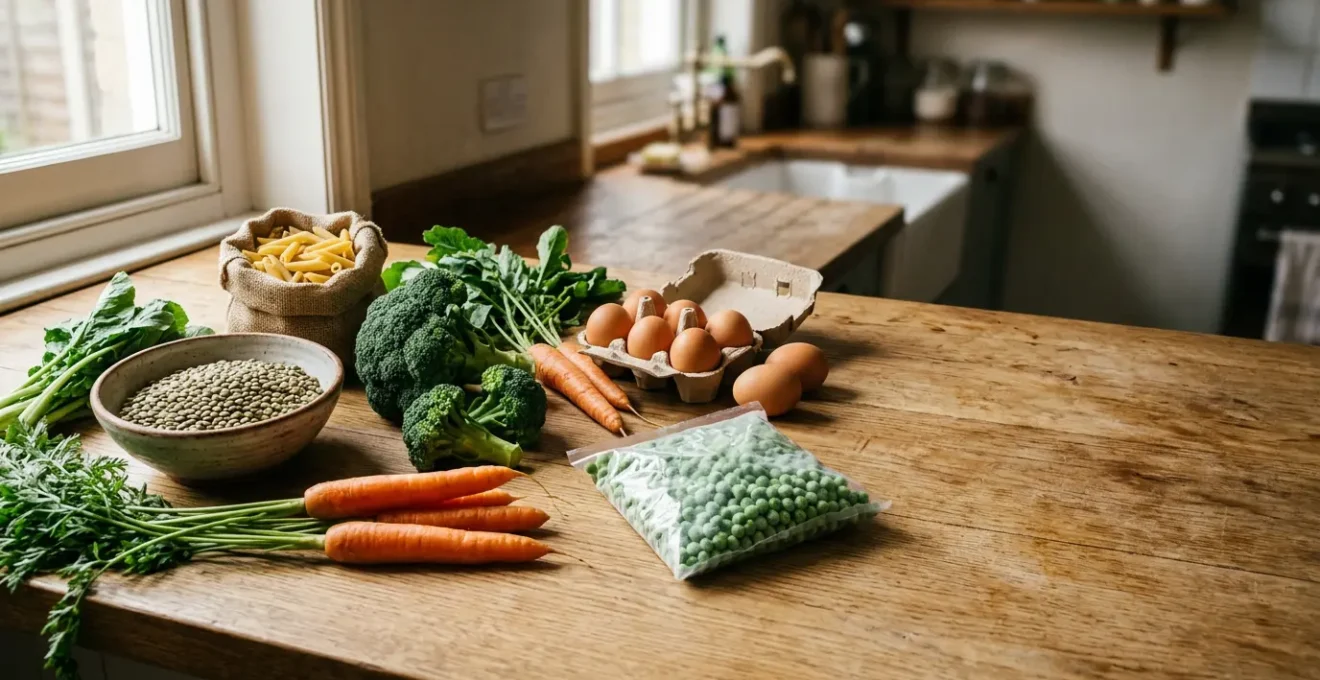
The first myth to bust in budget cooking is that « fresh is always best. » While a carrot pulled straight from the soil is a nutritional powerhouse, the reality of most supermarket ‘fresh’ produce is very different. That broccoli or bag of spinach may have travelled hundreds of miles and sat in storage for days, even weeks, before it reaches the shelf. During this time, light, heat, and oxygen degrade its delicate vitamins, particularly vitamin C and B vitamins.
This is where the humble frozen vegetable becomes a nutritional hero. Produce destined for the freezer is typically picked at its peak ripeness and flash-frozen within hours. This process locks in nutrients at their highest point, effectively pressing a « pause » button on vitamin loss. The result? That bag of frozen peas can often contain more nutritional value than its ‘fresh’ counterpart that’s been languishing in your fridge for five days.
A landmark study from the University of Georgia confirms this. When researchers compared the vitamin content of fresh and frozen produce on the day of purchase and after five days of refrigeration, they found no significant difference in most cases. Crucially, where differences did exist, frozen produce outperformed the fresh-stored versions more often than the other way around. This makes frozen vegetables a cornerstone of budget-friendly, healthy eating. They are cheaper, available year-round, and produce zero waste—you just use what you need. Embracing the freezer aisle isn’t a compromise; it’s a strategic nutritional and financial win.
Batch cooking for beginners: how to fill a freezer without spending all Sunday?
The term « batch cooking » can conjure up intimidating images of a full Sunday spent over steaming pots, ending in exhaustion and a mountain of washing up. But the secret to making it work is to abandon the « all or nothing » approach. The goal isn’t to cook 21 separate meals for the week ahead; it’s to practice ‘time arbitrage’ by investing a small amount of effort now for a big payoff later. For beginners, the key is to start small and focus on components, not necessarily complete meals.
Instead of trying to do everything at once, choose one of these manageable approaches that fits your lifestyle. This makes the process less overwhelming and ensures you’re creating building blocks for quick, easy meals throughout the week, answering the common question of whether batch cooking is truly worth the time.
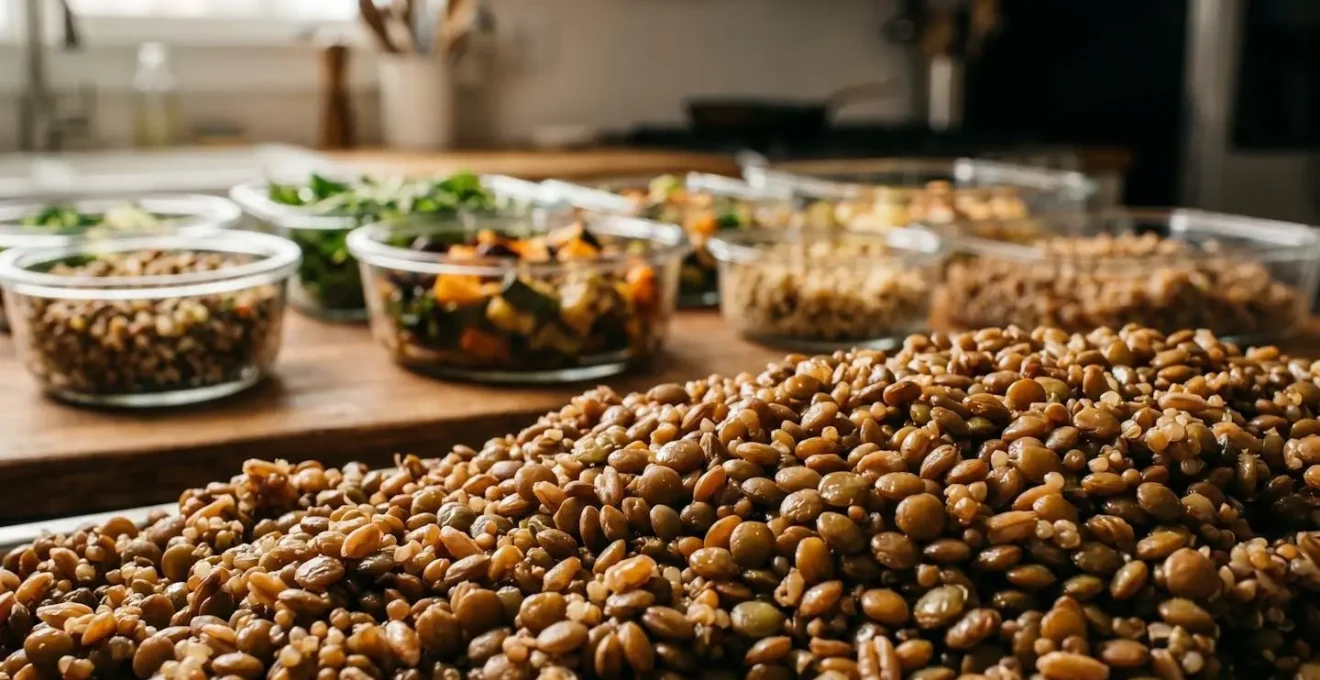
The most effective method for families is often the Component Cook Strategy. This involves prepping individual ingredients that can be combined in different ways. For example:
- Proteins: Cook a batch of chicken breasts to shred, hard-boil half a dozen eggs, or brown a large pack of mince or lentils.
- Grains: Cook a large pot of rice and another of quinoa or pasta. Once cool, store them in the fridge.
- Vegetables: Roast a large tray of mixed vegetables (peppers, onions, courgettes) and chop a selection of raw veg for salads or snacks.
With these components ready, assembling a healthy dinner—like a chicken and roast veg quinoa bowl, or a quick pasta with lentil bolognese—takes less than 10 minutes. It transforms cooking from a daily chore into a simple assembly job.
Lentils vs mince: how to disguise pulses in bolognese to save money?
One of the fastest ways to bring down the cost of family favourites like shepherd’s pie, chilli, or bolognese is to tackle the most expensive ingredient: minced meat. Pulses, particularly brown or green lentils, are the perfect budget-friendly substitute. They are not only significantly cheaper but also packed with fibre, iron, and are far better for the environment. The main hurdle? Getting them past a family accustomed to the rich, savoury taste of meat.
The secret is not a direct one-for-one swap, but a bit of ‘ingredient alchemy’. You can start by doing a 50/50 split, mixing half mince and half cooked lentils. This halves the meat cost while introducing the texture and nutrition of pulses almost undetectably. Over time, you can increase the ratio. However, to truly make a lentil-based dish sing and replicate that meaty depth, you need to rebuild the ‘umami’—the fifth taste responsible for savoury, satisfying flavours. This is where your budget umami toolkit comes in.
Before making a full switch, it’s powerful to see the numbers side-by-side. Lentils offer incredible nutritional value and cost savings, though they are lower in protein than beef. This table, based on data comparing common protein sources, highlights the trade-offs.
| Comparison Factor | Cooked Lentils (per 100g) | Ground Beef 80/20 (per 100g) |
|---|---|---|
| Protein | 9g | 25.4g |
| Calories | 116 | 270 |
| Cost (approximate UK) | £0.34 per 100g (dry) | £0.58 per 100g |
| Fiber | High (7.9g) | 0g |
| Iron | 3.3mg | 2.2mg |
| Environmental Impact | 1.79kg CO2 equivalent | 10x higher than lentils |
To bridge the flavour gap, you don’t need expensive ingredients. A few cheap, long-lasting store-cupboard staples can add a profound savoury depth that tricks the palate into thinking ‘meat’:
- Mushrooms: Finely chopping a few cheap button or chestnut mushrooms and frying them with your onions adds a deep, earthy flavour and meaty texture.
- Tomato Purée: A generous squeeze of concentrated tomato purée, fried for a minute before adding liquids, provides an intense umami kick.
- Soy Sauce or Marmite: A mere teaspoon of dark soy sauce or half a teaspoon of Marmite dissolved in the sauce will provide an incredible depth of flavour without making the dish taste « Asian » or « yeasty ».
The ‘use-it-up’ tray: turning fridge leftovers into a nutrient-dense frittata
Food waste is one of the biggest hidden costs in any family’s budget. It’s the forgotten bunch of spring onions, the half-used jar of pasta sauce, the lonely-looking sausage. These small items add up, and throwing them away is like putting money directly into the bin. In fact, the scale of the problem is staggering; according to a 2024 report, UK households are responsible for a huge portion of the country’s food waste, with data showing that 6 million tonnes comes from households out of a total of 10.2 million tonnes per year. The solution isn’t just to « waste less » but to have a concrete system for using what you have.
Enter the ‘Use-It-Up’ System. This isn’t a specific recipe, but a mindset. Designate one meal a week—say, Friday lunch or dinner—as the « use-it-up » meal. You can also dedicate a specific tray or container in the fridge for items that need using soon. This visual cue prompts action. The most versatile and nutrient-dense way to transform a random assortment of leftovers is the frittata. It’s a culinary blank canvas that can accommodate almost anything.
A frittata is essentially a crustless quiche. All it requires is a base of 6-8 beaten eggs, a splash of milk or cream if you have it, and a little cheese on top. Into this, you can throw any combination of leftovers: cooked potatoes, wilted spinach, leftover roasted vegetables, the last slice of ham, a spoonful of cooked peas or corn. Poured into an oven-safe pan and baked for 20 minutes, it becomes a complete, protein-packed meal for a family of four for well under £2. It’s the ultimate tool for turning potential waste into a delicious, nutrient-dense meal. This simple matrix can be applied to almost any surplus ingredients you have.
- Leftover veg + eggs + base = Frittata: Beat eggs, add any cooked or raw chopped vegetables, pour into an oven-safe pan, and bake at 180°C for 20 minutes.
- Leftover veg + grains + protein = Bowl: Layer cooked rice or quinoa with any protein (shredded chicken, boiled egg, chickpeas) and vegetables, then drizzle with sauce.
- Leftover veg + stock + protein = Soup: Sauté an onion, add vegetables and stock, simmer with leftover meat or beans, then blend if desired.
- Leftover veg + tortilla + cheese = Quesadilla: Stuff a tortilla with cheese and cooked vegetables, fold, and fry in a dry pan until crispy.
Yellow sticker shopping: when is the best time to bag a bargain?
The allure of the yellow sticker is powerful. That bright flash of yellow promises a bargain, a chance to get premium products for a fraction of the price. However, « reduced » doesn’t automatically mean « good value. » Without a clear strategy, yellow sticker shopping can lead to more food waste and impulse buys that don’t actually fit into your meal plan. The key is to be strategic, not just opportunistic. While the exact time for the best reductions varies by supermarket (though it’s often early evening, around 7-8pm), the *when* is less important than the *what* and *why*.
The most important rule of yellow sticker shopping is: don’t buy it just because it’s cheap. A reduced-price artisan loaf that goes mouldy is more expensive than the full-price loaf you would have actually eaten. To avoid this trap, you need a mental flowchart to guide your decisions in the heat of the bargain-hunting moment. This turns a potentially chaotic dash around the store into a calculated and effective cost-saving exercise.
Before you put any yellow-stickered item in your basket, you need a quick and honest internal audit. It’s not a bargain if it costs you more in the long run, either through waste or by displacing a cheaper, more practical alternative you would have bought otherwise. A disciplined approach is what separates savvy shoppers from those who just end up with a fridge full of random, soon-to-be-binned « bargains ».
Your yellow sticker decision checklist: a 3-step audit
- Is this item already on my meal plan for this week? If YES → Buy it and save money. If NO → Move to the next question.
- Can I freeze this item successfully tonight when I get home? If YES → Buy it only if you’ll genuinely use it within 3 months. If NO → Move to the next question.
- Can I use this item in tonight’s dinner or tomorrow’s meal? If YES → Buy it only if it replaces something you’d otherwise buy. If NO → Do not buy it.
Ham sandwiches: the hidden salt trap in the most popular packed lunch?
The humble ham sandwich is the undisputed king of the British packed lunch. It’s quick, easy, and generally a crowd-pleaser. We often think of it as a reasonably cheap and cheerful option, but it conceals a significant nutritional pitfall: salt. Processed meats like ham are a major source of sodium in our diets, and just a couple of slices can contribute a shocking amount to a child’s daily limit.
For children aged 4-10, the recommended daily maximum for sodium is 1,500mg. As the scorecard below shows, a standard two-slice serving of processed ham in a sandwich can provide over half of this limit before you even account for the bread, butter, and any other snacks in their lunchbox. This is a classic example of a ‘hidden’ cost – not to your wallet, but to your family’s long-term health. High sodium intake in childhood can contribute to high blood pressure and a preference for salty foods later in life.
The good news is that there are many alternative sandwich fillings that are not only cheaper but drastically lower in salt. By making a simple swap, you can take huge strides in improving the nutritional quality of your child’s lunchbox without any extra effort or significant cost. This table, based on analysis of typical lunchbox components, illustrates the stark differences.
| Protein Option (50g serving) | Sodium Content | % of Child’s Daily Limit | Approximate Cost |
|---|---|---|---|
| Processed Ham (2 slices) | 550-800mg | 37-53% | £0.40 |
| Home-Cooked Chicken Breast | 30-50mg | 2-3% | £0.35 |
| Hard-Boiled Egg (1 large) | 70mg | 5% | £0.20 |
| Hummus (small pot) | 150-200mg | 10-13% | £0.30 |
| Cheese (cheddar, 30g) | 180mg | 12% | £0.25 |
| Daily sodium limit for children aged 4-10: 1,500mg. Based on UK supermarket prices 2024. | |||
Swapping out processed ham for home-cooked chicken (you can batch-cook and freeze slices), a mashed hard-boiled egg, or a generous spread of hummus can slash the sodium content by over 90%. It’s a small change that makes a huge nutritional impact, demonstrating that the cheapest option isn’t always the best value for your family’s well-being.
GoHenry or cash: how to teach budgeting in a cashless society?
Bringing the cost of food down to £1 a head is as much about financial literacy as it is about cooking skills. In a world of contactless payments and services like GoHenry, the physical concept of money can become abstract for children. This makes it harder for them to grasp the real-world value of the food you’re buying. Teaching them how to budget isn’t just a chore; it’s a fundamental life skill that will serve them for the rest of their lives. The weekly food shop is the perfect real-world classroom.
The key is to make it age-appropriate. You wouldn’t ask a six-year-old to plan a week’s meals, but you can absolutely involve them in the process. By giving children small, manageable responsibilities that grow with them, you demystify the process of shopping and budgeting. This turns them from passive passengers in the trolley into active, engaged participants who understand the choices and trade-offs involved in filling the fridge.
The « Food Finance Ladder » is a simple framework for building these skills over time. It breaks down complex financial concepts into tangible, age-appropriate tasks:
- Ages 5-7 (Price Awareness Stage): In the supermarket, ask them to find the price of the bananas or the bread. Play guessing games before you scan an item. This teaches them to simply recognise that everything has a cost.
- Ages 8-11 (Budget Responsibility Stage): Give them a small, fixed budget (£5) and make them responsible for choosing the family’s fruit for the week. They’ll have to weigh items, compare costs, and make decisions to stay within their limit.
- Ages 12-15 (Meal Planning Stage): Challenge them to plan and budget for their own packed lunches for a week with a set amount of money. They’ll need to write a shopping list, compare prices, and stick to it. This teaches planning and accountability.
The ultimate test is the £5 Family Meal Challenge. Task them with planning a single meal for the whole family on a strict £5 budget. They can research recipes, write the list, and lead the shopping trip. This experience of seeing a plan through from concept to execution is an incredibly powerful lesson in the value of money and the ingenuity required for budget cooking.
Key takeaways
- System over willpower: Success in budget cooking comes from repeatable systems for shopping, cooking, and using leftovers, not just good intentions.
- The freezer is your best friend: Embrace frozen vegetables for better nutrition and less waste, and use batch-cooked components to save time.
- Flavour is not expensive: Cheap store-cupboard ingredients like mushrooms, tomato purée, and Marmite can make budget-friendly pulses taste rich and savoury.
- Waste is a choice: A designated ‘use-it-up’ meal transforms potential food waste into a delicious, free meal.
School dinners or packed lunch: which provides better nutrition for under £3?
For many families, the daily decision between a school dinner and a packed lunch is a major one, balancing cost, time, and nutrition. With the average school dinner costing around £2.50, the question is whether you can provide a more nutritious meal for the same price or less. There’s no single right answer, as the « best » choice depends entirely on your family’s priorities and circumstances.
School dinners have a significant advantage: they are legally required to meet the School Food Standards, which regulate levels of energy, protein, fat, sugar, and salt. This provides a nutritional safety net and often exposes children to a wider variety of foods than they might eat at home. However, they offer little control for children with allergies or specific dietary needs, and there’s always the risk of waste if a child simply dislikes what’s on the menu.
A packed lunch offers complete control over ingredients, portions, and cost. It allows you to cater to your child’s preferences, reducing waste, and with savvy shopping, it can often be made for less than the price of a school dinner. The downside is the daily time investment and the responsibility of ensuring it’s nutritionally balanced. As this comparative analysis shows, the decision involves multiple factors.
| Factor | School Dinner (£2.50/day) | Packed Lunch (£2.50/day budget) |
|---|---|---|
| Average Cost Per Week | £12.50 (5 days) | £10-12.50 (bulk buying advantage) |
| Time Investment (Parent) | 0 minutes daily | 10-15 minutes daily prep |
| Portion Control | Standardized, age-appropriate | Parent controls portions |
| Nutritional Standards | Must meet School Food Standards (regulated) | Varies – parent dependent |
| Exposure to New Foods | High – menu variety, peer influence | Low – typically familiar favorites |
| Dietary Control (allergies/preferences) | Limited customization | Complete control |
| Food Waste Risk | Moderate (if child dislikes meal) | Lower (parent knows preferences) |
Perhaps the smartest approach is not to choose one or the other, but to adopt the Hybrid Hero Strategy. This involves using a mix of both options. For instance, have school dinners three days a week and packed lunches on the other two. This reduces the parent’s prep burden while still saving money and maintaining control. You can review the school menu at the start of the week and plan packed lunches that fill any nutritional gaps—for example, packing a protein-rich lunch on the day after « pizza day ». This blended approach often provides the best of both worlds: convenience, cost-savings, and balanced nutrition.
Ultimately, achieving the goal of healthy family meals for under £1 a head is not about finding one magic recipe, but about building a collection of these smart, sustainable systems. By changing how you view ingredients, time, and money, you can transform a source of financial stress into a feeling of empowerment and control. Start by trying just one of these strategies this week and see the difference it can make.