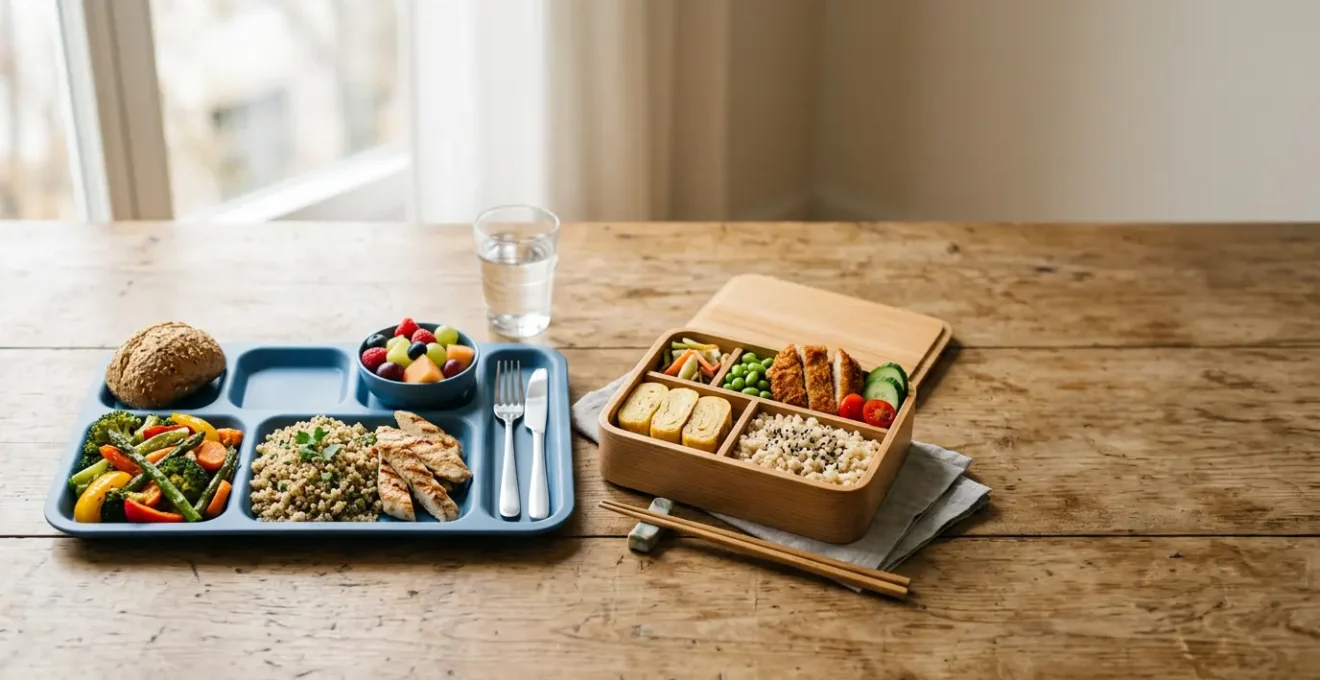
The belief that a packed lunch is always the healthier, cheaper choice for your child is a costly myth.
- School meals are governed by strict nutritional standards that control hidden sugars and salts, which are unregulated in home-prepared lunches.
- Common packed lunch staples, like a simple ham sandwich, can contain over half a child’s maximum recommended daily salt intake in just a few slices.
Recommendation: Evaluate the true nutritional cost, not just the price tag, by understanding the hidden factors in both options before making your decision.
Every school morning, parents across the country face the same dilemma: pack a lunch or pay for a school dinner? The decision often boils down to a perceived trade-off between cost and health. The common wisdom suggests that a lovingly prepared packed lunch is both cheaper and more nutritious than « canteen food. » We picture wholesome sandwiches, fresh fruit, and a yogurt, confident we’ve made the superior choice for our child and our wallet, especially when trying to keep costs under £3 per day.
But from my perspective as a catering manager, responsible for feeding hundreds of children daily, this view misses the bigger picture. The real battle between school dinners and packed lunches isn’t fought on the surface of a menu. It’s a conflict waged over nutritional blind spots, unseen economic pressures, and subtle behavioural cues that determine what your child actually eats, how they behave in class, and the true value you get for your money. While parents focus on the visible ingredients, we in the industry are managing the hidden salt, sugar, and nutrient logistics that make all the difference.
The assumption that « homemade » automatically means « healthier » is a dangerous one. What if the real key to your child’s nutrition wasn’t the love you pack into their lunchbox, but the science and standards we build into our school menus? This article will deconstruct both options from the inside, revealing the operational realities and hidden data that should inform your daily choice. We’ll explore why school cake isn’t the enemy you think it is, uncover the shocking truth about the nation’s favourite sandwich, and analyse how factors beyond food itself impact your child’s well-being at school.
To help you navigate this complex decision, we will break down the key factors you need to consider. This guide moves beyond simple cost-per-meal comparisons to give you a 360-degree view of the school food environment.
Summary: The Real Cost and Nutritional Value of School Lunches
- School Food Standards: Why Is There Still Cake in School Dinners?
- Ham Sandwiches: The Hidden Salt Trap in the Most Popular Packed Lunch?
- Water Bottles in Class: Why Do Some Teachers Ban Them Despite Health Advice?
- The ‘Crisp Packet’ Economy: How Trading Food Affects Your Child’s Diet?
- Magic Breakfast: How Eating at School Improves Morning Behaviour?
- Frozen Veg: Why It Often Contains More Vitamins Than ‘Fresh’ Supermarket Produce?
- Distance Measurement: Does Living Closer Guarantee a Place?
- Healthy Family Meals for Under £1 per Head: Is It Actually Possible?
School Food Standards: Why Is There Still Cake in School Dinners?
The sight of cake or a sweet dessert on a school menu often triggers alarm for parents striving for a healthy diet. It seems to contradict the very idea of nutritious school food. However, from a catering management standpoint, these items are not oversights; they are part of a carefully balanced and regulated system. The current School Food Standards are designed to be realistic, acknowledging that completely eliminating treats can be counterproductive. Instead, the focus is on strict control and nutritional enhancement. The goal isn’t total restriction, which can lead to children seeking out sugary snacks elsewhere, but moderated inclusion.
For example, the latest updates to these standards are even more rigorous. As Health Minister Sharon Hodgson noted, « Children are consuming twice the recommended amount of free sugar and offering more nutritious meals at school is a great way of ensuring they eat healthier food. » To address this, upcoming regulations will limit desserts significantly. A key proposal for 2026 is that there can be only one portion of sweetened baked products weekly, and that portion must contain at least 50% fruit or vegetables by content. This means that the « cake » served is often a vehicle for nutrients—like a courgette brownie or an apple crumble—offering a controlled sweet experience rather than empty calories. This is a level of nutritional engineering that is nearly impossible to replicate consistently in a daily packed lunch, where a chocolate bar or biscuit has no such requirements.
Ham Sandwiches: The Hidden Salt Trap in the Most Popular Packed Lunch?
The ham sandwich is the undisputed king of the packed lunch box. It’s quick, easy, and generally considered a safe, protein-filled option. However, this lunchtime staple is one of the most significant nutritional blind spots for parents. The real danger isn’t the bread or the butter; it’s the staggering amount of hidden salt packed into processed meats. While you’re carefully avoiding adding salt to home-cooked meals, a few slices of deli ham can single-handedly derail your child’s daily nutritional balance. This is an unregulated risk that school canteens are legally bound to manage.
The numbers are genuinely shocking. As a catering manager, we are mandated to keep sodium levels to a strict minimum. A packed lunch has no such oversight. A 2022 survey from Action on Salt provided a stark warning: just three slices of a popular brand like M&S British Wiltshire Roast Ham can contain 1.73g of salt, which is 58% of a 4-6 year old’s maximum daily limit. This is from a single sandwich filling before you even account for the bread, any cheese, crisps, or other snacks in the lunchbox. The glistening, moist texture that makes processed ham appealing is often a result of water and salt injection, a process that is invisible to the naked eye but has a major impact on health.
This visual detail underscores a critical point: what looks like a simple slice of meat is a highly engineered product. In contrast, school kitchens are pushed towards using unprocessed meats or carefully sourced low-sodium alternatives to stay within legal limits. That simple, « healthy » ham sandwich could easily be the biggest source of salt in your child’s entire day.
Water Bottles in Class: Why Do Some Teachers Ban Them Despite Health Advice?
Hydration is fundamental to concentration and learning. Health experts universally recommend that children have constant access to water throughout the school day. On paper, allowing water bottles in the classroom seems like a non-negotiable policy for promoting student well-being. From a nutritional and health perspective, the science is clear: even mild dehydration can have a significant negative impact on a child’s ability to learn. So why do some teachers still enforce a « no water bottle » rule on their desks?
The answer lies in the conflict between ideal health policy and classroom reality. A teacher managing 30 children is constantly balancing educational goals with practical disruption management. Water bottles, while beneficial, are a frequent source of distraction: they get knocked over, creating spills that damage work and create hazards; they become toys for fidgeting; and requests to refill them can interrupt the flow of a lesson. This isn’t a disregard for health, but a pragmatic choice to maintain a focused learning environment. Research confirms the high stakes, as a peer-reviewed study found being dehydrated by just 2% impairs performance in tasks that require attention and memory. This is precisely what teachers are trying to foster.
This dilemma highlights a key theme in the school food debate. A controlled environment like a school canteen can ensure children are properly hydrated during a dedicated lunch break, providing water fountains and jugs on tables. This structured approach avoids the classroom management issues while still meeting the child’s physiological needs. A packed lunch, on the other hand, relies entirely on the child remembering to drink and a policy that allows it, showing again how environmental factors can override the best intentions.
The ‘Crisp Packet’ Economy: How Trading Food Affects Your Child’s Diet?
One of the most compelling arguments for a packed lunch is control. A parent can meticulously plan a balanced meal, ensuring it contains all the right components. However, this control is often an illusion that evaporates the moment the lunchbox is opened in the dining hall. What you pack is not always what your child eats, thanks to the powerful and unregulated social dynamic I call the ‘Lunchbox Swap’ Effect. This informal marketplace, where sandwiches are traded for biscuits and fruit is exchanged for crisps, can completely undermine a carefully constructed meal.
This isn’t just anecdotal; it’s a phenomenon we see on the ground every day. When schools try to implement healthier standards, the reaction from children can be a switch to packed lunches specifically to regain access to familiar, less healthy options. As one school caterer observed during a pilot study on new food standards, « Some children reportedly didn’t like losing familiar options… Many switched to packed lunches, and these often contained crisps or a chocolate bar. » This creates a scenario where the child with the « unhealthy » lunch sets the currency for the entire table. Your healthy carrot sticks may be bartered away for a more desirable, high-sugar, high-salt snack from a friend’s lunchbox.
School dinners offer a crucial advantage here: they create a level playing field. When every child is served the same balanced meal, the economy of food trading is largely eliminated. There is no incentive to swap a piece of chicken for another piece of chicken. This ensures that the nutritional content planned in the kitchen is the nutritional content that is actually consumed by the child. The packed lunch, for all its perceived control, is vulnerable to a powerful playground economy that prioritises trends and treats over nutrition.
Magic Breakfast: How Eating at School Improves Morning Behaviour?
The conversation about school meals often centres on lunch, but what a child eats before the first bell rings is just as critical. The concept of behavioural nutrition—the direct link between food intake and a child’s ability to learn and behave—is powerfully demonstrated by school breakfast programmes. For a growing number of children who may arrive at school hungry, a structured meal provided on-site isn’t just sustenance; it’s the foundation for a successful day of learning. It levels the playing field before lessons even begin.
Providing breakfast at school removes a significant barrier to education. A hungry child is a distracted child. They may be irritable, lethargic, or unable to focus, which can be misinterpreted as poor behaviour. Providing a simple, nutritious meal like toast, cereal, or fruit immediately addresses this. The evidence is compelling; research from a school breakfast program study showed that offering a free meal in the classroom not only increased consumption but also directly led to reduced behaviour violations and improved academic performance. This is a clear, measurable return on investment that goes far beyond simple nutrition.
When a child is calm, fed, and ready to learn, the entire classroom benefits. This is a service that the packed lunch model simply cannot provide. School meal programmes, including breakfast clubs like Magic Breakfast, are part of a holistic approach to student well-being that understands that you can’t teach a hungry child. It ensures every student starts the day with an equal opportunity to succeed.
Frozen Veg: Why It Often Contains More Vitamins Than ‘Fresh’ Supermarket Produce?
In the debate between school dinners and packed lunches, the word « fresh » is often seen as the ultimate hallmark of quality, while « frozen » is unfairly associated with being a cheap, inferior alternative. This is a common misconception. From a large-scale catering perspective, where both budget and nutrition are paramount, frozen vegetables are a strategic and often superior choice. The key lies in understanding nutrient logistics: the journey food takes from farm to fork and how that journey affects its vitamin content.
So-called « fresh » produce in a supermarket can be deceptively old. It might have been harvested days or even weeks before, spending time in transit and storage where light and air degrade its vital nutrients, particularly sensitive ones like Vitamin C and B vitamins. In contrast, frozen vegetables are typically picked at their peak ripeness and flash-frozen within hours. This process locks in their nutrients, effectively pressing « pause » on the degradation process. As registered nutritionist Rhiannon Lambert explains, « Frozen vegetables are not only often nutritionally superior but also reduce food waste (use only what you need) and are cheaper per gram, making them a win for health, budget, and the environment. »
For a school canteen operating on a tight budget, this makes frozen produce an invaluable asset. It allows us to serve highly nutritious meals consistently throughout the year, without being subject to seasonal price fluctuations or the nutrient loss inherent in a long supply chain. The « fresh » carrot in a packed lunch may have fewer vitamins than the frozen one served in a school dinner. It’s a counter-intuitive fact that challenges our deep-seated beliefs about food quality.
Distance Measurement: Does Living Closer Guarantee a Place?
For many parents, the single biggest stressor related to school isn’t what their child will eat, but whether they can even get in. The complex and often opaque world of school admissions, with its reliance on catchment areas and distance measurement, consumes a vast amount of parental energy. We worry about living on the right side of a road, the accuracy of « as the crow flies » calculations, and whether our address guarantees a place at the desired school. This focus on the logistics of getting *to* school is entirely understandable.
However, it often eclipses an equally important logistical challenge: the nutritional journey your child takes *at* school. While you are preoccupied with admissions criteria, it is easy to overlook the criteria that govern your child’s health and well-being once they are through the gates. The debate over school dinners versus packed lunches is, in essence, a debate about nutritional catchment. Are you placing your child in an environment where their diet is governed by evidence-based standards, or one where it is subject to hidden salts, playground trading, and the illusion of parental control?
The anxiety over school placement is real and valid. But once that place is secured, the focus must shift. A guaranteed spot at a top-rated school is of little value if the child’s diet is hindering their ability to learn and thrive within its walls. The principles of a good education and good nutrition are inextricably linked. As we’ve seen, factors like a balanced meal, proper hydration, and even a good breakfast have a direct and measurable impact on academic performance and behaviour.
Key takeaways
- School food standards are designed for balance, not just restriction, often using treats as vehicles for hidden nutrients like fruit and vegetables.
- Packed lunches frequently contain nutritional traps, with common staples like processed ham contributing a massive, unregulated amount of a child’s daily salt limit.
- Factors beyond the meal itself, such as a structured breakfast and managed hydration, have a direct and proven impact on a child’s behaviour and ability to learn.
Healthy Family Meals for Under £1 per Head: Is It Actually Possible?
The ultimate pressure point in the school lunch debate is cost. With household budgets stretched, the goal of providing a healthy meal for under £1, let alone the average school meal price of around £2.50, can feel like an impossible task. This financial pressure is a key reason many parents default to packed lunches, assuming it’s the more economical choice. Yet, achieving true nutritional value on a tight budget is a science in itself, one that school canteens are built to optimise through bulk purchasing and strategic ingredient choices.
The need for budget-conscious nutrition is urgent. Current nutritional data shows that only 19% of children aged 5-15 get their recommended five-a-day, and a staggering 95% exceed free sugar limits. Low-cost packed lunches often exacerbate this problem, relying on cheap, processed, and high-sugar fillers. However, it is possible to build genuinely healthy and affordable meals by focusing on nutrient-dense, low-cost ingredients. This is the core principle of canteen economics. By championing ingredients like lentils, pulses, and frozen vegetables, we can deliver high-quality nutrition at a scale and price point that is very difficult for an individual family to match for a single lunch.
Making this work at home requires adopting some of the same strategies we use in our kitchens: batch cooking, smart use of leftovers, and prioritising cheap but powerful protein sources. The goal is to make every penny count nutritionally, moving away from expensive, processed items towards whole ingredients.
Action Plan: Achieving Nutrient-Dense Family Meals on a Budget
- Champion lentils, chickpeas, and pulses: Embrace these ultra-cheap, high-protein sources. School menus are increasingly required to feature them at least once a week.
- Utilize frozen vegetables: They preserve nutrients better than « fresh » produce that has sat in supply chains for days and are significantly cheaper.
- Choose wholegrain varieties: Make the switch for rice and pasta. At least 50% of grains on school menus are now required to be wholewheat or fibre-enriched.
- Batch cook core components: Spend time on a weekend preparing grains, shredded chicken, or roasted vegetables for quick assembly into varied, sub-£1 lunches all week.
- Repurpose family dinner leftovers: A large chilli, pasta bake, or stew designed for an evening meal can become a free, healthy packed lunch the next day, eliminating waste and cost.
The next logical step is to review your school’s current menu not just for what your child likes, but for the nutritional rigour, balance, and value it represents. It may be the most cost-effective and healthiest option available.