
Coercive control is not a relationship problem; it is a pattern of psychological abuse that fundamentally rewires a child’s developing nervous system for survival, with lasting consequences.
- The constant stress of a controlled environment forces a child’s brain into a state of hypervigilance, disrupting critical functions like sleep and emotional regulation.
- Protecting a child requires building layers of « structural safety » through legal tools like Non-Molestation Orders and proactive partnerships with their school.
Recommendation: Shift your focus from managing conflict to strategically dismantling the abuser’s control and creating a consistent, safe environment where your child’s nervous system can finally rest and heal.
As a parent, you have an intuition, a deep-seated feeling when something is wrong in your home. It may not be loud or violent. It might be the unnerving silence after a disagreement, the constant tension of walking on eggshells, or the way your child seems to flinch at a raised voice. You’re told to « communicate better » or « set boundaries, » but this advice feels hollow because it fails to name the suffocating dynamic you’re living in: coercive control. This isn’t about isolated arguments; it’s a calculated, pervasive pattern of domination designed to isolate, intimidate, and strip you and your children of your autonomy and sense of self.
The most devastating impact of this abuse is often the most hidden. It’s the invisible toll it takes on a child. While society is conditioned to look for physical bruises, the deepest wounds of coercive control are etched into a child’s developing mind and nervous system. This abuse hijacks their sense of safety, forcing them into a state of constant, exhausting hypervigilance. They become tiny sentinels, always on alert for the next shift in mood, the next subtle threat. Their « misbehaviour, » anxiety, or withdrawal are not acts of defiance; they are survival responses.
This article moves beyond the platitudes. It is designed to validate what your intuition is telling you and arm you with the knowledge and strategies of a trauma specialist. We will first uncover the hidden mechanics of how coercive control damages a child’s psychological foundation. Then, we will provide a clear, practical roadmap for building a fortress of « structural safety » using legal tools and school alliances. Finally, we will explore how to have the difficult but crucial conversations that help your child heal, ensuring their future is defined by safety and resilience, not fear.
This guide is structured to walk you through understanding the threat and implementing a plan of protection. Each section addresses a critical component of safeguarding your child from the insidious effects of psychological abuse.
Table of Contents: Your Roadmap to Protecting Your Child from Coercive Control
- The ‘Sleeping’ Child: Why Kids Hear Everything Even When You Think They Are Asleep?
- Non-Molestation Orders: How to Get Emergency Protection for Your Family?
- Handing Over: How to Manage Child Contact with an Abusive Ex-Partner?
- Operation Encompass: Why Police Will Tell the School About Domestic Incidents?
- Explaining Daddy’s Absence: How to Talk to Kids About Safety Without Demonising?
- Signs of PND in Dads: Why Men Are Often Missed by Health Visitors?
- The Mental Load: How to Divide Household Management Without Arguing?
- Overcoming Parental Burnout: Strategies for UK Working Parents Without a Village
The ‘Sleeping’ Child: Why Kids Hear Everything Even When You Think They Are Asleep?
You wait until you think the children are asleep. You lower your voices to a tense whisper. Yet, the next morning, your child is irritable, withdrawn, or unusually anxious. This is not a coincidence. A child living in a coercively controlled environment does not truly rest; their brain becomes a sentinel on perpetual guard duty. This state of hypervigilance is a core trauma response, where the nervous system remains primed for danger even during sleep. The brain is not filtering for volume but for threat, and it interprets the tone, tension, and cadence of conflict as a clear and present danger.

This « sentinel brain » phenomenon has profound physiological consequences. Research consistently shows that conflict and trauma are toxic to sleep. Studies demonstrate that young people from high-conflict homes wake more often and sleep fewer hours, with these disturbances persisting into adulthood. Furthermore, data from the National Survey of Children’s Health reveals that among children exposed to any adverse childhood experience (ACE), 40.3% had insufficient sleep duration. This lack of restorative sleep impairs everything from emotional regulation and concentration at school to immune function. Your child isn’t just « overhearing » an argument; their body is living in a continuous state of emergency that robs them of the deep rest necessary for healthy development.
Non-Molestation Orders: How to Get Emergency Protection for Your Family?
When you hear « domestic abuse, » you might think of physical violence. However, the UK legal system explicitly recognizes that abuse can be psychological, emotional, and controlling. A Non-Molestation Order is a powerful civil injunction designed to protect you and your children from this very type of harm. It can prohibit an abuser from using or threatening violence, intimidating, harassing, or pestering you. This is not just a piece of paper; it is a critical tool for creating structural safety, making any breach a criminal offence.
Obtaining one is a more common and accessible process than many believe. It is a vital first step in drawing a legal line in the sand. Data from UK courts shows this is a widely used protective measure; in the quarter from July to September 2024, courts made 9,049 domestic violence orders, with 94% of these being non-molestation orders. To secure one, you must provide evidence of molestation. This does not require proof of physical injury. It is about demonstrating a pattern of behaviour that causes alarm, distress, or harassment. Your detailed witness statement forms the core of your application, painting a clear picture of the control and its impact on you and your children.
Your Evidence-Gathering Checklist for a Non-Molestation Order
- Document Incidents: Keep a detailed log. For each event, record the date, time, location, what was said or done, your emotional response, and who else was present. Specificity is crucial.
- Collect Communications: Save and screenshot everything. This includes harassing or threatening text messages, emails, voicemails, or social media messages that demonstrate the pattern of control.
- Involve Authorities: If you have ever reported an incident to the police, obtain the police report numbers or records. These official documents lend significant weight to your application.
- Seek Medical Corroboration: If the abuse has caused physical or psychological harm (e.g., panic attacks, anxiety), a doctor’s note or medical record documenting this is powerful evidence.
- Gather Witness Statements: Statements from neighbours, friends, family, or colleagues who have witnessed the behaviour or its effects on you can corroborate your claims and provide a third-party perspective.
Handing Over: How to Manage Child Contact with an Abusive Ex-Partner?
For a parent using coercive control, child contact is not about parenting; it is a prime opportunity to continue the abuse. The handover moment is often a flashpoint for intimidation, interrogation, and psychological manipulation, which your child witnesses and absorbs. As the National Council of Juvenile and Family Court Judges notes, « A parent who uses tactics of coercive control may find litigation to be an effective means of controlling the other parent. Contact with the at-risk parent is critical to effectuating control strategies. » Your goal, therefore, is not to co-parent but to create a system of ‘low-to-no contact’ that starves the abuser of these opportunities.
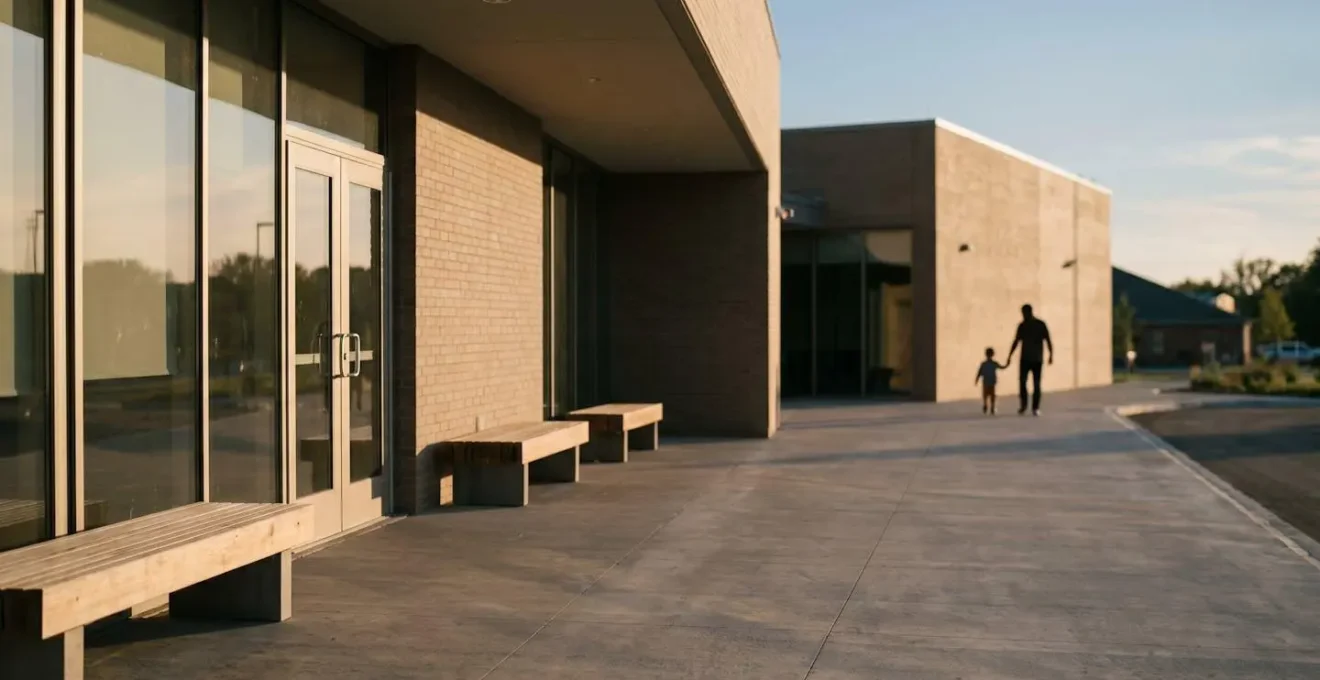
This involves building firm, non-negotiable boundaries around the logistics of contact. The key is to neutralize the environment and minimize interaction. Strategies include using a contact centre, arranging for handovers at the school or a public place like a police station lobby, or having a trusted neutral third party facilitate the exchange. All communication should be moved to a monitored platform (like a court-approved app) and be strictly limited to essential child-related logistics. This is not about being difficult; it is a safety strategy to protect yourself and your child from further psychological harm. By removing the audience and the opportunity, you dismantle one of the abuser’s primary tools of control.
Operation Encompass: Why Police Will Tell the School About Domestic Incidents?
One of the most significant advances in protecting children from domestic abuse in the UK is a simple yet powerful initiative: Operation Encompass. This system creates a direct line of communication between the police and schools. Following a domestic abuse incident where children are present, the police will notify a designated ‘key adult’ at the child’s school before the start of the next school day. This isn’t about punishment or gossip; it is a vital safeguarding measure that provides context for a child’s behaviour.
The legal underpinning for this is profound. The UK Government’s statutory guidance on Operation Encompass is rooted in the Domestic Abuse Act 2021, which officially recognised « children as victims of domestic abuse in their own right if they see, hear or experience the effects of domestic abuse. » This shifts the perspective entirely. A child who arrives at school tired, unfocused, or acting out is no longer seen as a ‘naughty’ child, but as a child who may have been up all night listening to conflict—a child experiencing trauma.
Case Study: The Operation Encompass Safety Net
In areas where Operation Encompass is active, the framework ensures immediate, trauma-informed support. When a ‘key adult’ at school receives a notification, they are able to discreetly check in on the child, offer a quiet space if needed, postpone a test, or simply provide a bit of extra patience and understanding. This proactive support creates an essential safety net. As Women’s Aid highlights, it enables schools to interpret behavioural changes as potential trauma responses rather than disciplinary issues, preventing the child from being re-traumatized by a system that doesn’t understand what they are going through at home.
Explaining Daddy’s Absence: How to Talk to Kids About Safety Without Demonising?
One of the most gut-wrenching challenges for a protective parent is explaining a change in family structure or the absence of the other parent. There is a deep-seated fear of saying the wrong thing, of damaging the child’s relationship with their other parent, or of placing them in the middle. The key is to shift your goal from explaining the adult conflict to creating an age-appropriate narrative focused on safety and validation. Your child does not need to know the details of the abuse, but they absolutely need to know that they are safe and that the situation is not their fault.

The language you use should be simple, consistent, and truthful without being blaming. For a young child, this might sound like, « Mommy and Daddy are living in different houses now so we can all be safe and there is no more shouting. We both love you very much. » For an older child, it might be, « The way Daddy was behaving was not safe or okay. I have taken steps to make sure our home is a calm and safe place for you. » The National Domestic Violence Hotline stresses the importance of separating the child from blame (‘what is happening is not your fault’) and maintaining routines to provide stability. This approach protects the child’s right to love both parents while firmly establishing the non-negotiable need for physical and emotional safety. It builds a coherent story that reduces their self-blame and anxiety, which is critical for long-term emotional health and secure attachment.
Signs of PND in Dads: Why Men Are Often Missed by Health Visitors?
While the title of this section points to Postnatal Depression in fathers, in the context of coercive control, the symptoms often observed in the non-abusive parent—male or female—are frequently misdiagnosed or missed entirely. The chronic stress, hypervigilance, and emotional exhaustion of living in a controlled environment can manifest as depression, anxiety, irritability, or withdrawal. These are not just « new parent struggles »; they are the clinical symptoms of prolonged exposure to trauma. Health visitors, focused on the mother and baby, may not have the training to identify the subtle signs of coercive control as the root cause of a father’s (or mother’s) distress.
Coercive control is not a minor marital issue; it is a significant public health crisis with severe mental health consequences. A systematic review on the topic found that coercive control is not only highly prevalent, occurring in up to 58% of intimate partner violence (IPV) relationships, but it is also a « particularly insidious form of IPV that likely has more severe mental health implications than situational psychological IPV. » The constant undermining, isolation, and gaslighting create a state of learned helplessness and profound psychological distress that can mirror or exacerbate conditions like PND. For men, societal expectations to be « strong » can further mask these symptoms, leading them to suffer in silence, their pain unseen by a system not looking for it.
The Mental Load: How to Divide Household Management Without Arguing?
In a healthy partnership, the « mental load »—the invisible work of managing a household—is a challenge to be negotiated. In a coercively controlled relationship, it is a weapon. The common advice of chore charts, shared calendars, and weekly meetings is not only ineffective but can be used to inflict further abuse. This is because the abuser’s goal is not partnership; it is chaos and dependency. They will « forget » to pick up the child, « misunderstand » the grocery list, or perform a task so poorly that you are forced to re-do it. This is not incompetence; it is weaponized incompetence.
This tactic is a deliberate strategy to reinforce the victim’s role as the sole responsible party, overwhelming them to the point of exhaustion and then blaming them for the resulting chaos. As research from Western University’s Learning Network explains, the abuser deliberately sabotages systems to prove the victim’s « incompetence » and solidify their own power. This has a devastating modeling effect on children. They witness a dynamic where one parent is perpetually overwhelmed and exhausted, while the other is excused from responsibility. As the GBV Learning Network points out, this « normalizes dysfunctional power dynamics and gender roles, which they may replicate in their future relationships. » They learn that partnership is about power, not collaboration, and that one person’s exhaustion is the price of another’s comfort.
Key Takeaways
- Coercive control is not just arguing; it’s a pattern of abuse that rewires a child’s brain for hypervigilance, directly impacting their sleep, behaviour, and emotional development.
- Protecting your child requires building ‘Structural Safety’ through legal tools like Non-Molestation Orders and proactive school partnerships like Operation Encompass, creating a multi-layered shield.
- Healing involves creating age-appropriate narratives that prioritize safety and validate your child’s experience without demonizing a parent, which is crucial for preventing long-term attachment issues.
Overcoming Parental Burnout: Strategies for UK Working Parents Without a Village
Parental burnout is a state of profound physical and emotional exhaustion. For a parent navigating coercive control, this burnout is not simply from the pressures of work and childcare. It is an exhaustion born from the relentless, 24/7 job of managing a threat environment. It is the fatigue of constant hypervigilance, the emotional labour of placating an abuser, the cognitive load of documenting abuse, and the deep loneliness of being isolated from your « village » of support. This is a unique and debilitating form of burnout that standard self-care advice fails to address.
The harm of this environment is often invisible to outsiders, making it even more isolating. As the GBV Learning Network at Western University states, « Direct and indirect experiences of coercive control are harmful to the well-being of children, but these harms may go unrecognized when they differ from conventional ideas about what violence looks like. » This lack of recognition extends to the protective parent. Your exhaustion is real, valid, and a direct symptom of the abuse you are enduring. Overcoming it requires a radical shift in perspective: from ‘self-care’ to ‘self-preservation’. It means focusing your limited energy on the high-impact actions that create safety, like legal protection and building external support networks, rather than on trying to fix or manage the abuser.
Overcoming the effects of coercive control is a journey, not a single event. The first and most crucial step is recognizing the pattern and understanding its deep-seated impact on your child’s nervous system. By implementing these strategies, you are not just managing a difficult situation; you are actively rebuilding a foundation of safety and trust for your child’s future, giving them the greatest gift of all: a chance to heal and thrive.