The feeling is familiar to many parents: a wave of dread that washes over you while scrolling through news of melting ice caps, or a pang of guilt when you see the mountain of plastic waste your household produces in a week. This is eco-anxiety, and it’s not a sign of a disorder, but a rational response to a very real crisis. For families, this weight is often doubled by the fear for our children’s future. The common advice— »do your part » or « just be positive »—can feel hollow and dismissive, often amplifying the sense of isolation and helplessness.
Many well-intentioned guides suggest either retreating into mindfulness and disconnecting from the news, or they list generic eco-actions that feel like a drop in the ocean. The problem is that these approaches treat the feeling (anxiety) and the problem (climate change) as separate issues. They miss the fundamental psychological truth: a sense of powerlessness is the root of anxiety. Therefore, the most potent antidote isn’t distraction or blind action, but the deliberate cultivation of agency—the feeling of control and competence that comes from taking meaningful, visible action.
But what if the key wasn’t to do *more*, but to do *smarter*? What if certain sustainable habits could be strategically chosen not just for their environmental benefit, but for their proven psychological power to reduce anxiety and build family resilience? This article moves beyond generic tips to offer a psychologist’s framework for turning despair into empowerment. We will explore how specific, tangible actions in gardening, finance, fashion, and even boredom can create positive feedback loops that restore hope and strengthen your family’s connection, proving that sustainable living can be a source of joy, not just another burden.
This guide provides a roadmap to navigate these complex emotions constructively. We will explore practical, evidence-based strategies that empower your family to act in ways that feel both meaningful and manageable, building a foundation of hope from the ground up.
Contents: A Practical Guide to Sustainable Family Well-being
- Agency over Fear: Why Planting a Garden Helps Mental Health?
- Cloth Nappies vs Disposables: Is the Upfront Cost Worth the Long-Term Saving?
- Vinted Kids: How to Make Second-Hand Clothes Cool for Teenagers?
- The Smart Meter Game: Teaching Kids to Save Energy for Pocket Money?
- Meat-Free Mondays: How to Handle Complaints from Carnivore Kids?
- Parkrun to Bike Rides: Exercise That Doesn’t Feel Like a ‘Workout’?
- Dopamine Detox: Why Boredom Is Essential for Your Child’s Mental Health?
- Reclaiming Family Time: How to Implement a ‘Phone-Free Sunday’ Without Mutiny
Agency over Fear: Why Planting a Garden Helps Mental Health?
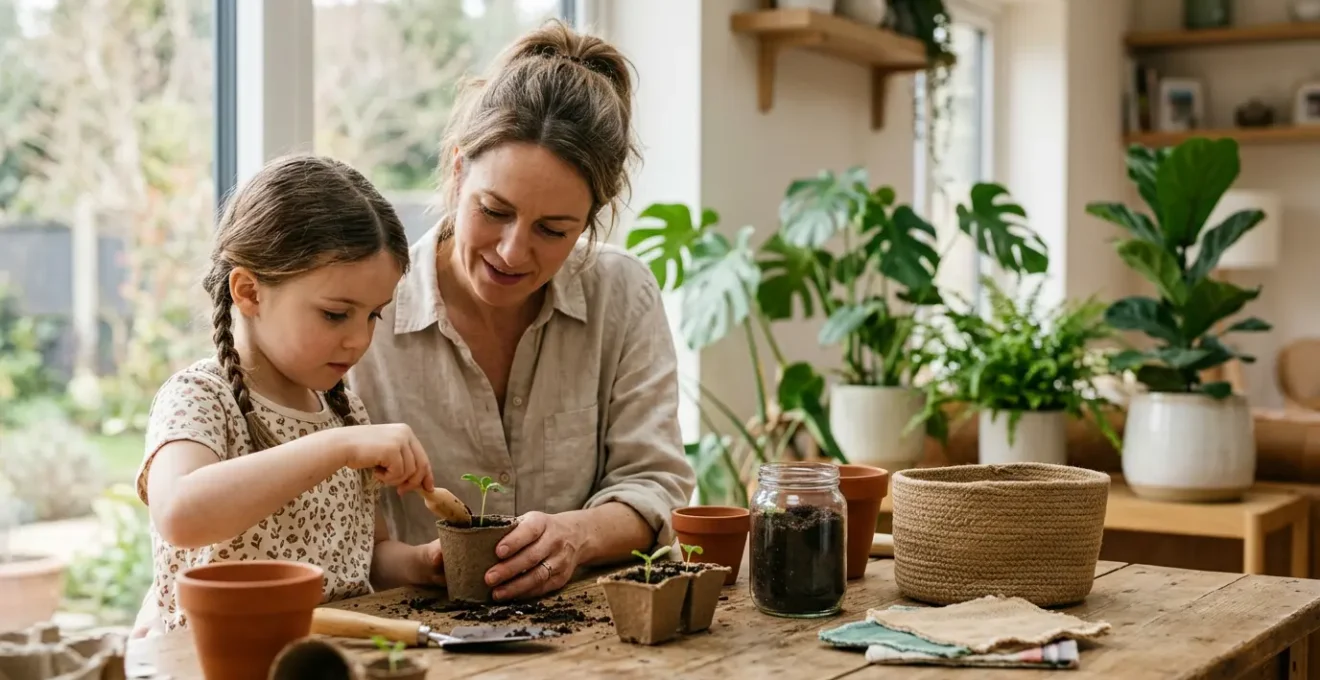
Eco-anxiety thrives on abstraction and a sense of powerlessness against a massive, intangible threat. Gardening is a powerful, direct antidote because it grounds us in the tangible. It replaces the feeling of helplessness with a sense of agency. When you put a seed in the ground, you initiate a process. You are no longer a passive observer of environmental decay; you are an active participant in growth and regeneration. This hands-on connection to the life cycle provides a powerful psychological buffer against despair.

The benefits are not just philosophical. The simple act of working with soil has a measurable impact on our mental state. It’s a form of « green exercise » that combines physical activity, nature exposure, and mindfulness. The focus required to tend to plants quiets the anxious mind, while the physical contact with the earth can be deeply calming. A recent 2024 umbrella review and meta-analysis confirmed that gardening interventions significantly reduce symptoms of depression and anxiety while increasing life satisfaction.
For a family, a small garden or even a few potted plants on a balcony becomes a living classroom. It creates a visible, positive feedback loop. Children see their efforts directly result in a blooming flower or a ripe tomato. This isn’t an abstract lesson about climate change; it’s a concrete experience of their ability to nurture and create. It teaches patience, responsibility, and the profound truth that small, consistent actions can lead to tangible, life-sustaining results—the very essence of building eco-competence.
Cloth Nappies vs Disposables: Is the Upfront Cost Worth the Long-Term Saving?
The choice between cloth and disposable nappies is often one of the first major sustainability dilemmas new parents face. Disposables represent convenience, but also a relentless stream of waste and expense that can fuel eco-guilt. Cloth nappies offer a path to significantly reduce household waste, but the initial investment and perceived workload can be daunting, adding another layer of stress. The key to making this switch work is to reframe it not as an all-or-nothing sacrifice, but as a strategic financial and environmental decision that builds long-term agency.
The financial argument is compelling. While the upfront cost of building a cloth nappy stash can seem high, the long-term savings are substantial, effectively freeing up family resources that would otherwise be spent on disposables week after week. This transforms a recurring expense into a one-time investment with a clear return, giving families a tangible sense of control over their budget and their environmental impact. An analysis of diapering costs clearly illustrates this long-term financial benefit.
| Diaper Type | Initial Investment | Cost per Year | Total Cost (Birth to Potty Training) | Reusability for Second Child |
|---|---|---|---|---|
| Disposable Diapers | $0 | $960–$1,200 | $2,500–$3,500 | Full cost repeats |
| Cloth Diapers | $300–$1,000 | Additional laundry costs: $200–$500 | $800–$1,500 (including washing) | Minimal cost (laundry only) |
| Savings with Cloth | Higher upfront | Lower ongoing | $1,000–$2,000 saved | $2,000+ saved for second child |
To avoid burnout, the goal is not perfection but practicality. Adopting a hybrid system can make the process feel empowering rather than overwhelming. Using cloth at home and disposables for travel or daycare is a perfectly valid strategy that still dramatically cuts down on waste and costs. Involving the whole family in the process—even older children helping to fold clean nappies—distributes the workload and fosters a shared sense of mission.
Your action plan: A hybrid cloth diapering system to prevent burnout
- Use cloth diapers at home during your daytime routine when laundry infrastructure is accessible and time permits.
- Switch to disposables for travel, overnight stays, or daycare where cloth may not be accepted or practical.
- Designate specific family members for different tasks: one person rinses, another loads the washing machine, and older children help fold to distribute the workload.
- Purchase second-hand cloth diapers and properly sanitize them to reduce the initial financial barrier.
- Start with a small stash of 12-15 cloth diapers to test the system before fully committing, avoiding overwhelming upfront costs.
Vinted Kids: How to Make Second-Hand Clothes Cool for Teenagers?
Convincing a teenager to embrace sustainability can feel like an uphill battle, especially when it comes to fashion. The pressure to fit in and follow fast-fashion trends is immense. However, the narrative around second-hand clothing has fundamentally shifted. For many in Gen Z, thrifting is no longer about settling for less; it’s about curating a unique identity. The key to making it « cool » is to stop framing it as an environmental chore and start framing it as a quest for individuality and social currency.
The data supports this cultural shift. The idea that teenagers only want new things is outdated. In fact, a significant portion of younger shoppers are actively seeking out pre-loved items as their first choice. According to ThredUp and GlobalData’s 2025 Resale Report, 48% of younger shoppers look at the secondhand market first when buying clothes. This isn’t just about saving money; it’s about rejecting mass-produced styles and embracing something with a story. By encouraging your teen to use platforms like Vinted or Depop, you are aligning with their existing desires for self-expression, not forcing a value system upon them.
The « cool » factor comes from the thrill of the hunt and the creativity of the find. This is where the concept of « thrift-flipping »—finding and customizing second-hand pieces—becomes a powerful tool for engagement. It taps into creativity, resourcefulness, and the desire to have something no one else does.
Case Study: Gen Z’s Hunt for Unique Style
WGSN Barometer research reveals a core motivation for this generation: 40% of Gen Z consumers purchase pre-loved clothing specifically because they cannot find the desired styles in traditional retail. This shows second-hand shopping is not a compromise but a primary strategy for achieving a unique look. The trend has become a cultural identity marker, with teenagers using platforms like TikTok to showcase their « thrift flips »—documenting the process of finding, customizing, and styling vintage items. This has transformed sustainable consumption from a private virtue into engaging social currency among peers, demonstrating that style and sustainability are now intertwined.
The Smart Meter Game: Teaching Kids to Save Energy for Pocket Money?
« Turn off the lights! » is a timeless parental refrain, but it often feels like a nagging chore that lacks a tangible connection to a larger goal. For children, energy consumption is invisible and abstract. A smart meter, however, can transform this invisible concept into a visible, interactive game. By gamifying energy savings, you’re not just reducing your bill; you’re creating a powerful feedback loop that builds your family’s sense of collective agency and eco-competence.
The principle is simple: what gets measured gets managed. A smart meter’s real-time display shows the direct impact of switching off a device. This immediate visual feedback is far more effective than a monthly bill. Frame it as a family challenge: can we keep the usage meter in the « green zone » during peak hours? Can we beat last week’s record? By linking these achievements to a small reward, like extra pocket money or choosing the weekend movie, you create positive reinforcement that makes saving energy feel exciting rather than restrictive.
This isn’t just a theoretical household trick; gamification has been proven effective on a larger scale. It taps into our intrinsic motivations for competition, achievement, and reward, turning a mundane task into a compelling challenge.
Case Study: The Northern Powergrid Gamification Trial
In 2019, UK utility Northern Powergrid ran a trial where over 2,000 households competed for cash prizes by reducing energy use during peak times. Families turned off non-essential appliances and tracked their savings via a mobile game that converted energy reductions into points. The results were significant: participants achieved an average 11% reduction in consumption, with some households cutting usage by as much as 4.9kWh. The gamified approach, with prizes up to £350, effectively motivated families to actively manage their electricity use, demonstrating that turning energy conservation into a game yields tangible, measurable results.
Meat-Free Mondays: How to Handle Complaints from Carnivore Kids?
Introducing more plant-based meals is a high-impact way to reduce a family’s carbon footprint, but it’s also a common source of dinnertime conflict. The complaint, « But where’s the meat? » can quickly derail even the best intentions. The secret to success lies not in forcing a new diet, but in using smart psychological strategies that focus on familiarity, ownership, and identity. The goal is to make Meat-Free Mondays feel like an exciting addition, not a disappointing subtraction.
Resistance to new foods is natural. Instead of introducing unfamiliar ingredients like tofu or tempeh straight away, start with what your children already love. Use « gateway » or « Trojan Horse » meals—familiar formats where the protein is simply swapped. Think tacos with black beans instead of beef, or spaghetti with a rich lentil bolognese. The format is comforting and recognizable, which dramatically lowers the barrier to entry. The focus is on the delicious meal, not the missing ingredient.
Furthermore, resistance crumbles in the face of ownership. Involve your children directly in the process. Let them choose the vegetarian recipe for the week, perhaps from a cuisine they’re curious about. Take them grocery shopping for the ingredients. When they have a hand in creating the meal, they have a stake in its success. This shifts their role from passive critic to active co-creator. This strategy of empowerment is far more effective than simply presenting a finished dish and hoping for the best. Here are some ways to introduce plant-based meals successfully:
- Start with familiar formats that children already love (tacos, burgers, pasta, pizza) and simply substitute the protein with plant-based alternatives like black beans, lentil bolognese, or mushroom patties.
- Designate Meat-Free Monday as « Kids’ World Cuisine Night, » where children choose a vegetarian recipe from a country they’re curious about (Mexican bean burritos, Italian pasta primavera) and help lead the cooking.
- Connect the choice to their existing identity: if they are athletic, share examples of successful vegetarian athletes; if they love animals, emphasize the connection to animal welfare. Frame it as an alignment with who they are.
- Involve children in meal planning and grocery shopping for their chosen recipe to create ownership and reduce resistance through active participation.
Parkrun to Bike Rides: Exercise That Doesn’t Feel Like a ‘Workout’?
For many families, « exercise » sounds like a chore—another task to be checked off a list. This mindset can add to, rather than alleviate, feelings of stress and obligation. The key to building a sustainable, active lifestyle that also combats eco-anxiety is to shift the focus from « working out » to « purposeful movement. » This means choosing activities where the physical effort is a byproduct of a fun, connecting, or environmentally positive goal.
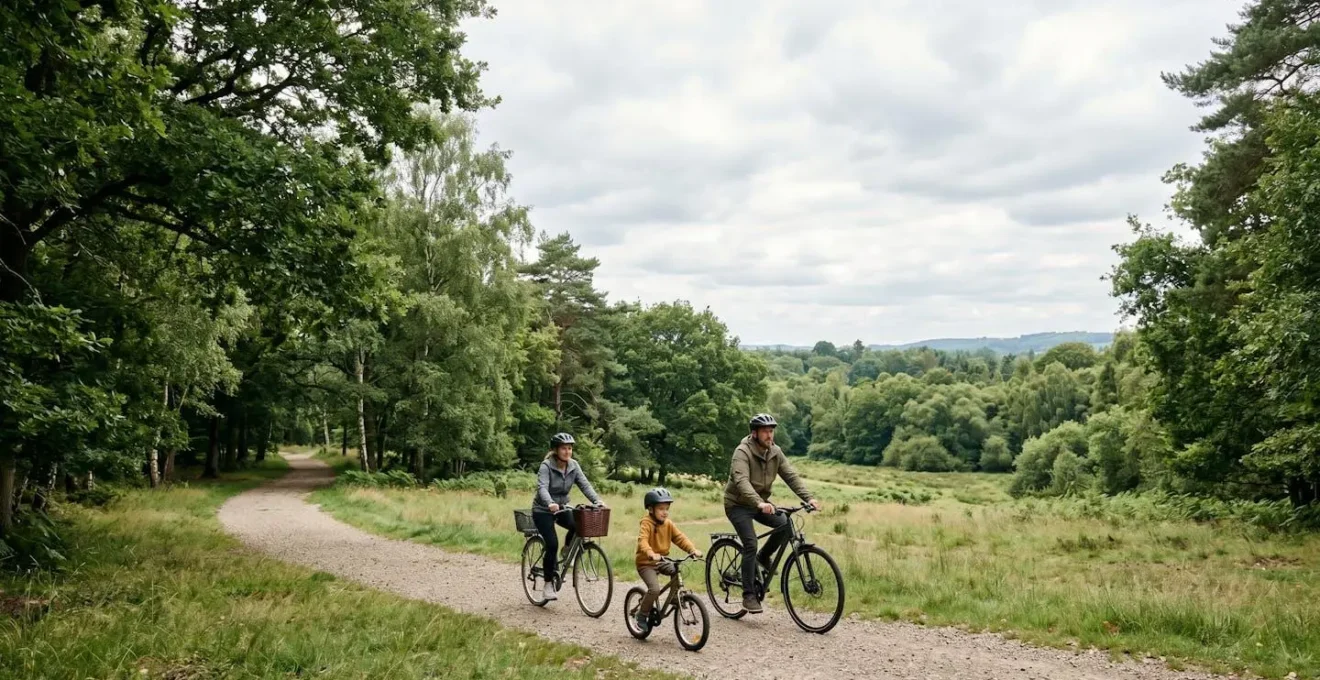
Instead of driving to the gym, what if the journey itself became the activity? Biking to the library, walking to a friend’s house, or taking a scooter to the local park are all forms of human-powered transport that reduce your carbon footprint. Framing these journeys as « adventures » or tracking the « human-powered miles » on a map at home can turn a mundane trip into a shared family achievement. The exercise happens naturally, without the pressure of performance.
Another powerful strategy is to directly link movement with environmental action. The Swedish trend of « plogging »—jogging while picking up litter—is a perfect example. It provides a clear, immediate, and visible impact, cleaning up your local community while getting your heart rate up. This creates a powerful positive feedback loop: you feel good from the exercise, you feel good from improving your environment, and you tackle the feeling of helplessness head-on. Here are some ideas for purposeful family movement:
- Practice ‘Plogging’ as a family: combine jogging or walking with picking up litter in your neighborhood, linking physical activity directly to a visible environmental impact.
- Bike or walk to regular destinations (library, park, friend’s house) instead of driving, framing it as ‘human-powered miles’ and tracking cumulative distance on a map at home.
- Try ‘Forest Bathing’ (Shinrin-yoku): engage in slow, mindful walking in natural areas, focusing on sensory experiences (sounds, textures, smells) rather than distance or speed, which is proven to reduce anxiety.
- Set collective family milestones: celebrate achievements like, « We’ve biked the equivalent distance to the next city! » to make low-carbon choices feel like shared adventures.
Dopamine Detox: Why Boredom Is Essential for Your Child’s Mental Health?
In our hyper-stimulated world, boredom is often seen as a problem to be solved, usually with a screen. Yet, constant digital entertainment short-circuits our brain’s reward system and prevents the development of a crucial life skill: the ability to self-generate interest and creativity. A « dopamine detox, » or intentional time away from screens, is not just beneficial for mental health; it’s also a powerful, if overlooked, climate action. Every hour of streaming and gaming has an environmental cost.
As research on IoT and digital environmental footprints shows, the constant demand from servers and device charging contributes significantly to household energy consumption. Explaining this « digital footprint » to children connects their screen time to a tangible environmental impact. Framing unplugged time as an action that helps the planet gives it a higher purpose. It’s no longer a punishment, but a contribution—a way to exercise their agency in a new domain.
More importantly, boredom is the soil in which creativity and resourcefulness grow. When a child isn’t being passively entertained, their mind starts to wander, make connections, and solve problems. This is when they notice the intricate journey of an ant across the patio or decide to build a fortress out of cardboard boxes. This unstructured time is essential for developing the inner resources needed to navigate a complex world with resilience. It teaches them to find joy and purpose without consumption, a critical skill for a sustainable future.
Your action plan: The ‘Inventor’s Hour’ to transform boredom into eco-creativity
- Create a ‘Valuable Junk Box’ filled with clean recyclables (cardboard tubes, fabric scraps, bottle caps) and designate a weekly ‘Inventor’s Hour’ where children must create something new without instructions.
- Frame unplugged time as essential for noticing nature’s slow events: watch an insect’s journey, track cloud shape changes, or observe a plant’s daily growth to build mindfulness.
- Explain the digital environmental footprint: show children that every hour of streaming or gaming requires server energy, making unplugging both a mental health and environmental action.
- Encourage ‘nothing time’ where children sit without devices for 15-20 minutes, allowing the mind-wandering that enhances creativity and problem-solving skills.
- Position boredom as training for resourcefulness: the ability to self-entertain without consumption is a superpower in a world of finite resources.
Key takeaways
- Eco-anxiety is a rational response to a real crisis; the most effective antidote is targeted action that restores a sense of agency, not avoidance.
- Sustainable habits should be chosen for their psychological benefits—creating visible, positive feedback loops that reduce feelings of helplessness.
- Framing eco-actions as games, creative challenges, or identity-affirming choices is key to engaging children and teenagers without conflict.
Reclaiming Family Time: How to Implement a ‘Phone-Free Sunday’ Without Mutiny
In the fight against eco-anxiety, one of the most powerful resources we have is each other. Yet, technology often fragments our attention, leaving us « alone together » in the same room. A « Phone-Free Sunday » is not about depriving everyone of their devices; it’s about intentionally creating a space for the deep connection that builds family resilience. The key to implementing it without a mutiny is the « Replace, Don’t Remove » principle. You must offer something more compelling than what you’re taking away.
Instead of announcing a ban, co-create a plan for a day filled with engaging, analog activities. This could be a family bake-off, a board game tournament, or a « local explorer » day dedicated to discovering a new park or trail. The anticipation of a shared, fun experience will far outweigh the dread of being disconnected. This is also the perfect time for « big picture » conversations about family values, hopes, and what a sustainable, good life means to each person. These are the conversations that build a shared vision and purpose, the very foundation of a resilient family unit.
Framing is everything. Position Phone-Free Sunday not as a restriction, but as « Family Resilience Training. » The ability to connect, support, and entertain one another without technological intermediaries is a superpower. It’s a skill that makes your family stronger, more adaptable, and better equipped to face future uncertainties together. Making the boundary visible and fair—with a physical « phone parking station » where everyone, parents included, deposits their devices—reinforces that this is a collective team effort. A few strategies can ensure a smooth transition:
- Pre-plan compelling themed Sundays that are more engaging than screen time, like an ‘Analog Game Tournament’ or a ‘Family Cook-Off Challenge.’
- Use the undistracted time for ‘Big Picture’ family dialogues about values and hopes for the future, building a shared vision around sustainability and well-being.
- Create a physical ‘phone parking station’ where all devices (including parents’) are placed together, making the boundary visible and equal for everyone.
- End each Phone-Free Sunday with a brief reflection, where each person shares one highlight from the unplugged day to reinforce the positive experience.
By transforming abstract anxiety into concrete action, your family not only reduces its environmental impact but also builds a powerful psychological toolkit of resilience, competence, and hope. Start today by choosing one of these strategies to implement together.