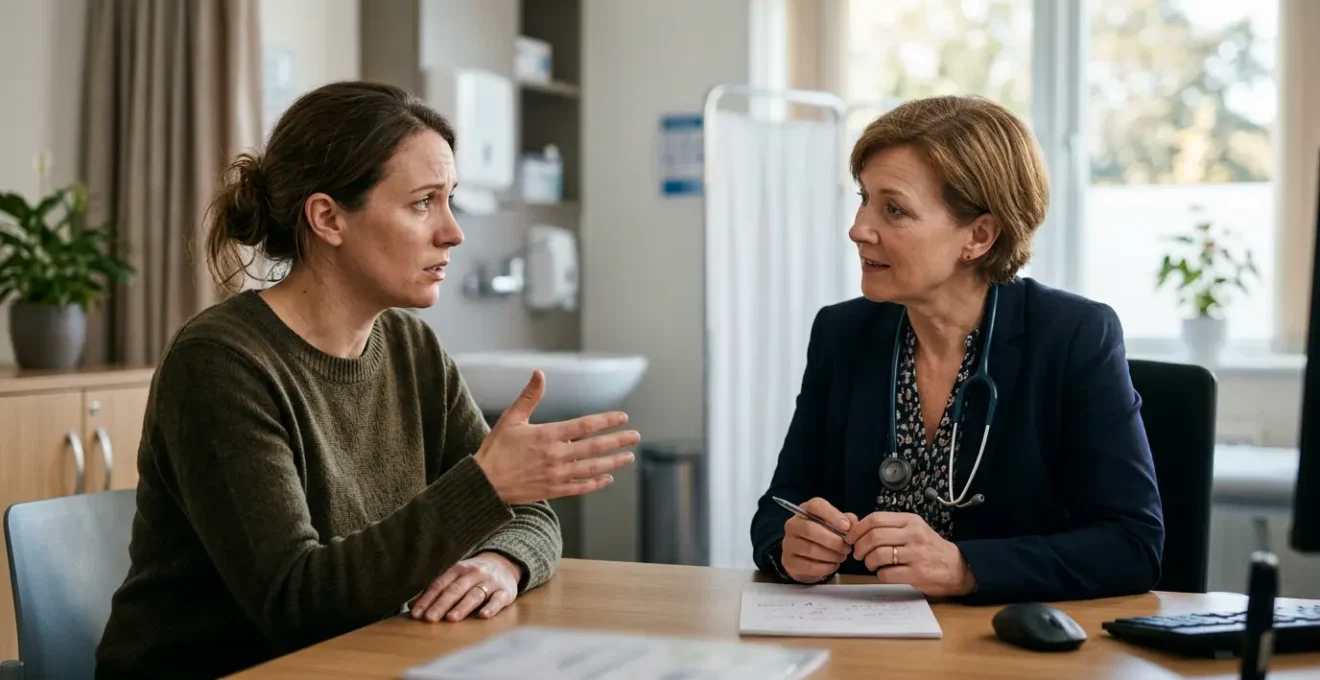
Many parents feel frustrated by the GP-led system, viewing it as a barrier to specialist care. The key isn’t to demand or fight the system, but to understand it. This guide, from a GP’s perspective, explains the clinical reasoning behind referrals. By learning how to build a clear « evidence dossier » for your child’s chronic condition, you can transform your GP from a perceived gatekeeper into your most effective partner in securing the right specialist care.
As a General Practitioner, I often meet parents who are understandably frustrated. In many countries, you can book an appointment directly with a paediatrician. In the UK, the system is different. The GP is the first port of call for nearly all childhood illnesses, and this can feel like a roadblock when you’re worried about your child and believe they need specialist attention. You might feel unheard, or that your concerns are being dismissed, especially when dealing with a chronic issue that isn’t improving.
The common advice to « just talk to your GP » often falls short because it doesn’t explain how to make that conversation productive. The reality is that GPs operate within a specific clinical framework. We aren’t gatekeepers trying to block access; we are navigators trying to direct your child to the right level of care at the right time, while managing the vast majority of conditions effectively in primary care.
But what if the key wasn’t to fight for a referral, but to build a case for one? The secret to navigating this system effectively is to shift your mindset from confrontation to collaboration. Instead of viewing your GP as an obstacle, you can learn to see them as a partner. To do this, you need to understand the « referral threshold »—the clinical line we need to see crossed to justify specialist involvement. This guide will walk you through why the system works this way, how to gather the evidence your GP needs, and what your rights are if you disagree with a decision. We’ll turn your parental instinct into a compelling clinical argument.
This article will provide a clear roadmap, explaining the structure of paediatric care in the NHS and offering practical steps to ensure your child’s health concerns are addressed effectively. From understanding your GP’s role to navigating the referral systems and even considering private options, you’ll gain the confidence to work with your healthcare team.
Summary: Understanding the UK Paediatric Referral Pathway
- Why Does Your GP Manage 90% of Paediatric Cases Without a Specialist?
- How to Navigate the ‘Choose and Book’ System for Your Child’s Referral?
- Refused a Referral: What Are Your Rights to a Second Medical Opinion?
- How to Create a Shared Care Plan for Asthma Between Home, School, and GP?
- Video Consultations for Kids: When Are They Safe and When Do You Need Face-to-Face?
- How to Get a Referral to Great Ormond Street Hospital Without Private Insurance?
- Which Consultant Letters Carry the Most Weight for an EHCP Application?
- NHS vs Private Paediatrics: Which Care Path Suits Your Family Budget?
Why Does Your GP Manage 90% of Paediatric Cases Without a Specialist?
It’s a common question in my practice: « Why can’t we just see a paediatrician? » The structure of the NHS is built on a foundation of generalist expertise. Your GP is trained to diagnose and manage a very broad spectrum of conditions across all ages. This « primary care » model is designed to be efficient, resolving the vast majority (around 90%) of health issues without needing to escalate to hospital specialists. For children, this includes everything from common infections and minor injuries to managing stable long-term conditions like eczema or asthma.
The core reason for this approach is clinical appropriateness and resource management. A specialist paediatrician’s time is a finite resource, reserved for complex, rare, or difficult-to-manage cases. My role as a GP is to be the first-line diagnostician, to investigate symptoms, and to try established, evidence-based treatments. A referral is made when we cross a certain « referral threshold. » This isn’t an arbitrary line; it’s a clinical judgement based on specific criteria. We are looking for clear indicators that primary care treatments have been exhausted or that the child’s condition presents with red flags suggesting a more complex underlying issue.
To help you understand what goes through my mind, here are the key factors that push a case toward a specialist referral. This is the evidence that helps me justify the decision to the hospital or community paediatric team:
- Failure of two or more first-line treatments prescribed by the GP.
- The condition is directly impacting school attendance or academic performance.
- Symptoms are crossing multiple body systems (e.g., persistent rashes and gut issues combined).
- There are signs of delayed or atypical development in more than one area (e.g., speech and motor skills).
- There are genuine concerns about a neurodevelopmental condition (like Autism or ADHD) or a physical disability.
Understanding these points is the first step in building a clinical partnership with your GP. When you can frame your concerns using this language, you are no longer just a worried parent; you are an informed partner in your child’s care.
How to Navigate the ‘Choose and Book’ System for Your Child’s Referral?
Once your GP agrees that a referral is clinically necessary, the next step often involves the NHS e-Referral Service, commonly known as ‘Choose and Book’. This system is designed to give patients more control and choice over their care. Instead of the GP simply sending a letter to a default local hospital, you are given the tools to select where your child will be seen from a list of clinically appropriate options. This is a crucial moment of empowerment in your child’s healthcare journey.
After the referral is made, you should receive a Unique Booking Reference Number (UBRN) and a password from the practice. With these details, you can log in to the online portal or call the service to see the available choices. The system will present a list of hospitals and clinics that can provide the specialist care your child needs. This is your opportunity to do some research. You can check Care Quality Commission (CQC) ratings for different hospitals and even look up waiting times for specific departments on the NHS website, allowing you to make an informed decision rather than a passive one.

This process is about more than just logistics; it’s an exercise in system navigation. By actively participating, you take ownership of the pathway. To do this effectively, follow these steps:
- Receive your UBRN and password from your GP, typically within two weeks of the referral decision.
- Access the NHS e-Referral portal online or call their booking line.
- Log in using your child’s date of birth, the UBRN, and the password.
- Carefully review the list of available hospitals. Consider location, waiting times, and any specialist reputation.
- Cross-reference your preferred options with CQC ratings and patient reviews to make an informed choice.
- Choose your appointment. Some may be ‘directly bookable’ for an immediate slot, while others are ‘deferred to provider’, meaning the hospital will contact you.
- Confirm your selection and make a secure note of all the appointment details.
Refused a Referral: What Are Your Rights to a Second Medical Opinion?
It can be incredibly disheartening to have a referral request for your child refused. You’ve brought your concerns, but the GP has concluded that the « referral threshold » hasn’t been met. It’s important to understand that this is a clinical judgement, not a personal dismissal. However, you are not at a dead end. The NHS constitution gives you rights, and there is a clear process to follow if you disagree with the decision.
Your first step should always be collaborative. Ask the GP to explain their clinical reasoning clearly. Why do they feel a referral isn’t necessary at this stage? What is their alternative management plan? Understanding their perspective is key. However, if you remain convinced that a specialist opinion is needed, you are entitled to ask for a second opinion from another healthcare professional. As NHS England guidance states, your right to ask for a referral is clear, even if the decision to grant it rests on clinical judgement.
You’re entitled to ask for a referral for specialist treatment on the NHS. However, whether you’ll get the referral depends on what your GP feels is clinically necessary in your case.
– NHS England, NHS Referrals for Specialist Care guidance
If a conversation doesn’t resolve the issue, you need a structured plan. Panicking or becoming confrontational is rarely effective. Instead, approaching it methodically demonstrates that you are a serious and informed advocate for your child. This turns a dispute into a formal process, which the practice must take seriously.
Your 5-Step Escalation Plan for a Refused Referral
- Request Formal Reasons: Ask your GP for a formal written explanation for the refusal. This letter should reference your child’s specific symptoms and your concerns, forcing a documented clinical justification.
- Seek a Second Opinion: Book an appointment with a different GP at the same practice. A fresh pair of eyes might see things differently, and this is your right as a patient.
- Lodge a Formal Complaint: If you are still unsatisfied, submit a formal written complaint to the Practice Manager. Detail your concerns, the steps you’ve taken, and reference your rights as an NHS patient.
- Contact PALS: Get in touch with your local Patient Advice and Liaison Service (PALS). They can’t force a referral but can advise you on the correct procedures and ensure the practice has followed them.
- Escalate to the Ombudsman: As a final resort, if you feel the process has been unfair or improperly handled, you can escalate the issue to the Parliamentary and Health Service Ombudsman (PHSO).
How to Create a Shared Care Plan for Asthma Between Home, School, and GP?
For chronic conditions like asthma, care doesn’t just happen in the clinic. It’s a 24/7 responsibility shared between you, your child, the school, and your GP. This is the essence of a « shared care » model. A crucial tool in making this work is the Individual Healthcare Plan (IHP). This document is more than just a piece of paper; it’s the foundation of your « evidence dossier » and a powerful instrument for demonstrating the real-world impact of your child’s condition to your GP.
An IHP is a formal document created for the school, detailing every aspect of your child’s health needs. It’s often developed with the School Nurse and the Special Educational Needs Coordinator (SENCo), who are legally responsible for its implementation. When you bring a well-documented IHP to your GP appointment, it transforms the conversation. It’s no longer just you saying « my child is coughing a lot »; it’s a formal record showing, for example, that your child requires their reliever inhaler three times a week during school hours or misses PE lessons due to symptoms. This is concrete, quantifiable evidence.
This is particularly vital when you’re seeking a referral. If the IHP demonstrates that the condition is impacting learning, causing frequent absence, or requiring emergency interventions despite following the GP’s initial treatment plan, it provides powerful justification that the referral threshold has been met. This is where medical and educational needs intersect, and according to NHS community paediatric service guidelines, this link is crucial for securing the right support, including for Education, Health, and Care Plans (EHCPs).
To be effective, the IHP must be comprehensive. It should include:
- Medical Details: A clear diagnosis, known triggers, typical symptoms, and emergency warning signs.
- Daily Management: The full medication schedule, including dosages, times, and how the medication is stored at school.
- Emergency Procedures: A step-by-step action plan for staff, including who to contact and precisely when to call 999.
- Staff Training: A record of which staff members are trained to support your child and when that training needs to be refreshed.
- Impact on Learning: Specific details on how the condition affects concentration, physical activity, and attendance, and what adjustments are needed.
Video Consultations for Kids: When Are They Safe and When Do You Need Face-to-Face?
The rise of telehealth has changed how we access healthcare, and video consultations can be incredibly convenient for routine follow-ups or simple queries. However, when it comes to children, especially those who are non-verbal or have ambiguous symptoms, a screen can be a significant barrier. As a parent, it’s vital to know when a video call is appropriate and when you should insist on a face-to-face appointment. Your parental instinct is a valid and important diagnostic tool.
For a video consultation to be successful, you need to be prepared. This means having a good internet connection, being in a quiet and well-lit room, and having some basic tools to hand. A simple penlight or your phone’s torch can be invaluable for helping me see a rash or look in your child’s throat. Having a thermometer ready is also essential. This preparation helps bridge the physical gap and allows for a more thorough remote assessment.

However, there are clear limits. Certain symptoms and conditions simply cannot be assessed safely over video. A GP needs to be able to physically examine a child to check for things like breathing difficulty, abdominal tenderness, or a non-blanching rash. Furthermore, assessments for potential neurodevelopmental conditions like Autism or ADHD absolutely require in-person observation to evaluate play, interaction, and non-verbal cues. Based on paediatric referral pathway guidance, a traffic light system is a useful way to think about it:
- GREEN (Safe for Video): Medication reviews for a stable condition, discussing follow-up plans, assessing simple rashes without other symptoms (fever, illness).
- AMBER (Use with Caution): New coughs without any breathing difficulty, minor behavioural concerns, skin conditions that need a clear visual assessment.
- RED (Demand Face-to-Face): Any difficulty breathing, a non-blanching rash (one that doesn’t fade under pressure), severe or localised pain, high fever in a very young baby, or any symptom that triggers your strong parental instinct that something is seriously wrong.
Remember, you have the right to request a face-to-face appointment if you feel a video call is clinically inappropriate for your child’s issue. A clear and polite « I appreciate the offer of a video call, but I’m not comfortable that my child can be assessed properly. I’d like to book an in-person appointment » is a perfectly reasonable request.
How to Get a Referral to Great Ormond Street Hospital Without Private Insurance?
Great Ormond Street Hospital (GOSH) holds an almost mythical status for parents in the UK. It represents the pinnacle of paediatric care, and it’s natural to want that level of expertise for your child. However, getting an NHS referral to GOSH is not a straightforward process. It’s crucial to understand its specific role within the NHS to manage your expectations and navigate the system correctly.
GOSH is not a local hospital; it is a national tertiary and quaternary care centre. This means its purpose is to handle only the most complex cases that cannot be managed by local paediatric specialists. A GP cannot simply refer a child with a common or even a challenging condition directly to GOSH. The pathway is hierarchical and strict: your GP must first refer your child to your local hospital’s paediatric department. Only if the specialists there determine that the condition is exceptionally rare, complex, or requires multi-disciplinary input beyond their capabilities will they then make an onward referral to a national centre like GOSH.
The GOSH Referral Pathway
The referral process follows a strict hierarchy. A GP must refer to a local paediatrician at a District General Hospital first. This local specialist team will then manage the child’s care. They will only refer on to GOSH if they have exhausted their own expertise and resources. The referring doctor from the local hospital must provide clear evidence that the child’s condition is too complex for them to handle before GOSH will even consider accepting the referral. Direct GP referrals are almost never accepted.
The conditions that typically meet this high bar are specific and severe. As outlined in GOSH’s clinical referral criteria, the hospital accepts tertiary referrals for a narrow range of highly specialised services. These include things like complex craniofacial surgery, treatment for very rare genetic disorders, childhood cancers, and advanced neuromuscular conditions. If your child’s condition, while serious, can be competently managed by the team at your local hospital, a referral to GOSH will not be considered appropriate by the NHS.
Which Consultant Letters Carry the Most Weight for an EHCP Application?
When you are applying for an Education, Health, and Care Plan (EHCP) for your child, the quality of your supporting evidence is everything. The application requires input from multiple professionals, but a letter from a medical consultant can be incredibly powerful—if it’s the right kind of letter. Not all reports are created equal, and understanding what the Local Authority is looking for can make the difference between a successful application and a refusal.
The most impactful letters are those that are specific, quantifiable, and directly link the medical diagnosis to the child’s educational needs. A vague letter stating « This child has Autism Spectrum Disorder » is far less useful than one that says, « Due to his ASD, this child has significant sensory processing difficulties. He requires a low-arousal environment and access to a sensory break-out space at least twice a day to be able to access the curriculum. » The key is to translate the diagnosis into functional impact.
Letters from NHS consultants, particularly community paediatricians or specialists from Child and Adolescent Mental Health Services (CAMHS), carry significant weight. However, the system is under immense pressure. Research from 2024 highlighted that over 88% of principal educational psychologists reported difficulty recruiting, leading to long waits and variable quality in assessment advice. This makes strong, clear medical evidence even more critical to anchor your case.
Key Elements of a Powerful Consultant Letter for EHCP:
- A Clear Diagnosis: The specific medical condition is clearly stated.
- Functional Impact: It details exactly how the condition affects the child’s ability to learn, socialise, and manage the school day.
- Quantified Needs: It specifies the « what, when, and how often » of the support required (e.g., « needs 25 hours of 1:1 support, » « requires speech and language therapy twice a week »).
- Professional Recommendations: It makes clear, actionable recommendations for the provision that should be in the EHCP.
When you attend a consultant appointment, go prepared. Bring a list of your child’s specific difficulties at school and ask the consultant if they can include recommendations for educational support in their report. This proactive approach is part of building your robust « evidence dossier. »
Key takeaways
- The UK’s GP-led system is designed for efficiency, with GPs managing most cases and referring only when a « referral threshold » is met.
- True partnership with your GP, built on providing a clear « evidence dossier » of symptoms and impacts, is more effective than demanding a referral.
- You have the right to a second opinion and a formal complaints process if a referral is refused. The NHS ‘Choose and Book’ system empowers you to select the hospital.
NHS vs Private Paediatrics: Which Care Path Suits Your Family Budget?
When you’re faced with long waiting lists and feel your child isn’t getting the help they need, it’s natural to consider private healthcare. This decision involves a significant trade-off between speed and cost. While the NHS is free at the point of use, the private sector offers rapid access to specialists, but at a substantial financial price. Understanding the full picture is essential for making a decision that’s right for your family’s health and budget.
The pressure on NHS services is undeniable. Recent according to NHS England operational performance data showed that over a million referrals were waiting for a first appointment with community health services, highlighting the capacity challenges that lead to long waits. The private sector bypasses these queues, often offering a specialist appointment within a week or two, compared to the 18-week target on the NHS. However, this speed comes at a cost, as detailed in the comparison below.
| Cost Element | NHS Pathway | Private Pathway |
|---|---|---|
| Initial Consultation | Free at point of care | £200-£400 |
| Follow-up Appointments | Free at point of care | £150-£300 per visit |
| Blood Tests | Free when clinically necessary | £100-£300 per panel |
| MRI/CT Scans | Free when referred | £500-£1500 |
| Prescriptions | Free for under-16s | Full private prescription cost (no NHS subsidy) |
| Waiting Time (non-urgent) | Target: 18 weeks from GP referral to treatment start | Typically 1-2 weeks |
| Educational Support Reports (EP, OT) | Via NHS/school (free if available) | Rarely covered by insurance; £500-£1200 per report |
For many families, a full private pathway is unaffordable. However, this doesn’t mean it’s an all-or-nothing choice. A growing number of parents are using a « hybrid strategy » to get the best of both worlds.
The Hybrid Strategy: Using a Private Diagnosis to Unlock NHS Care
Many families find success by paying for a single private consultation to get a quick, definitive diagnosis and a detailed management plan. They then bring this comprehensive report from the private specialist back to their NHS GP. While the GP is not obligated to follow the private recommendations, a credible, well-reasoned report from a specialist provides powerful evidence and a clear directive. This can significantly speed up access to NHS-funded therapies, medications, and ongoing support, as the GP now has the specialist justification they need to act.
Ultimately, the goal is the same whether on the NHS or privately: to get the best possible care for your child. Use this guide to prepare for your next appointment, build your evidence dossier, and start fostering a true clinical partnership with your GP today.